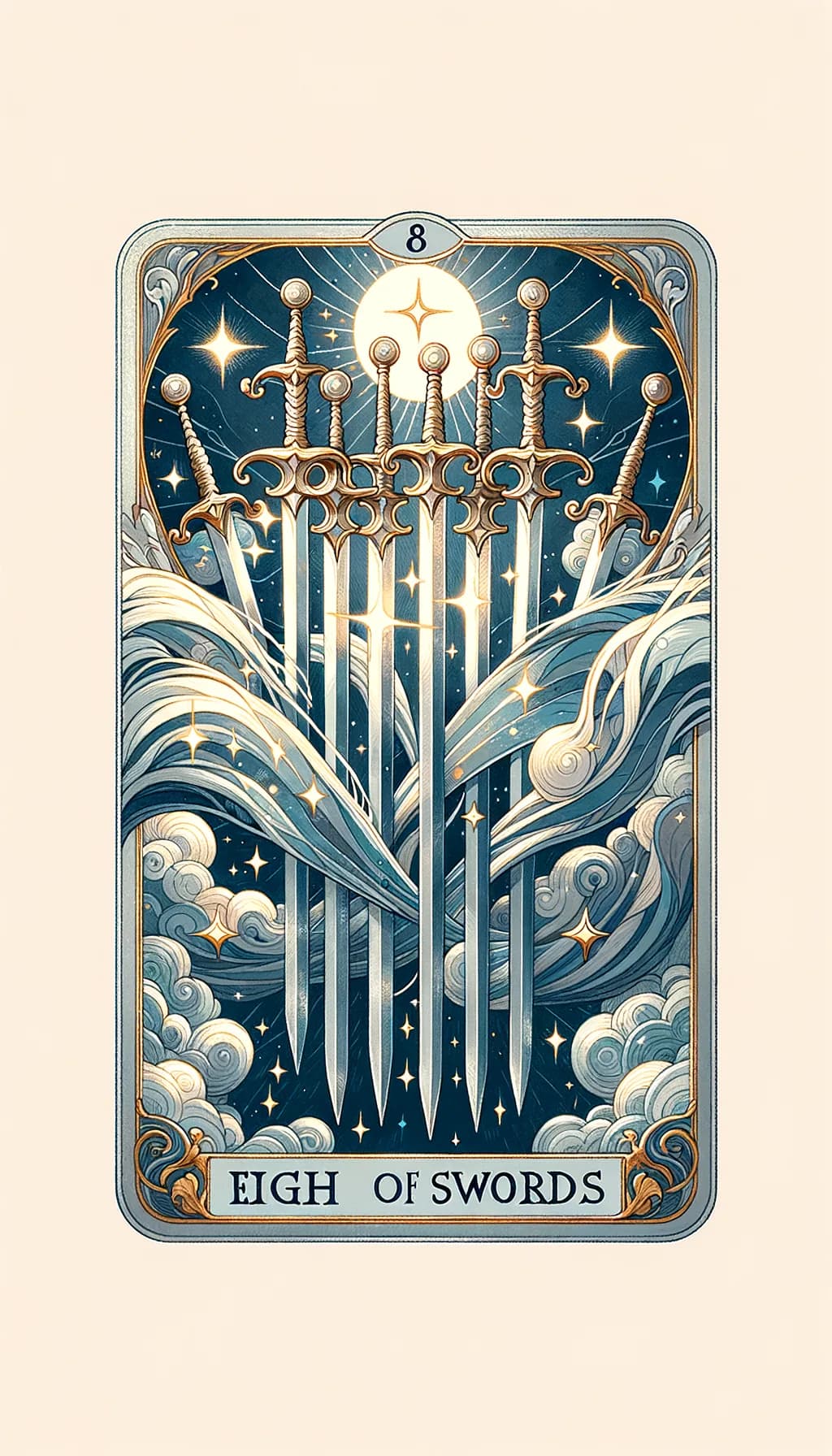
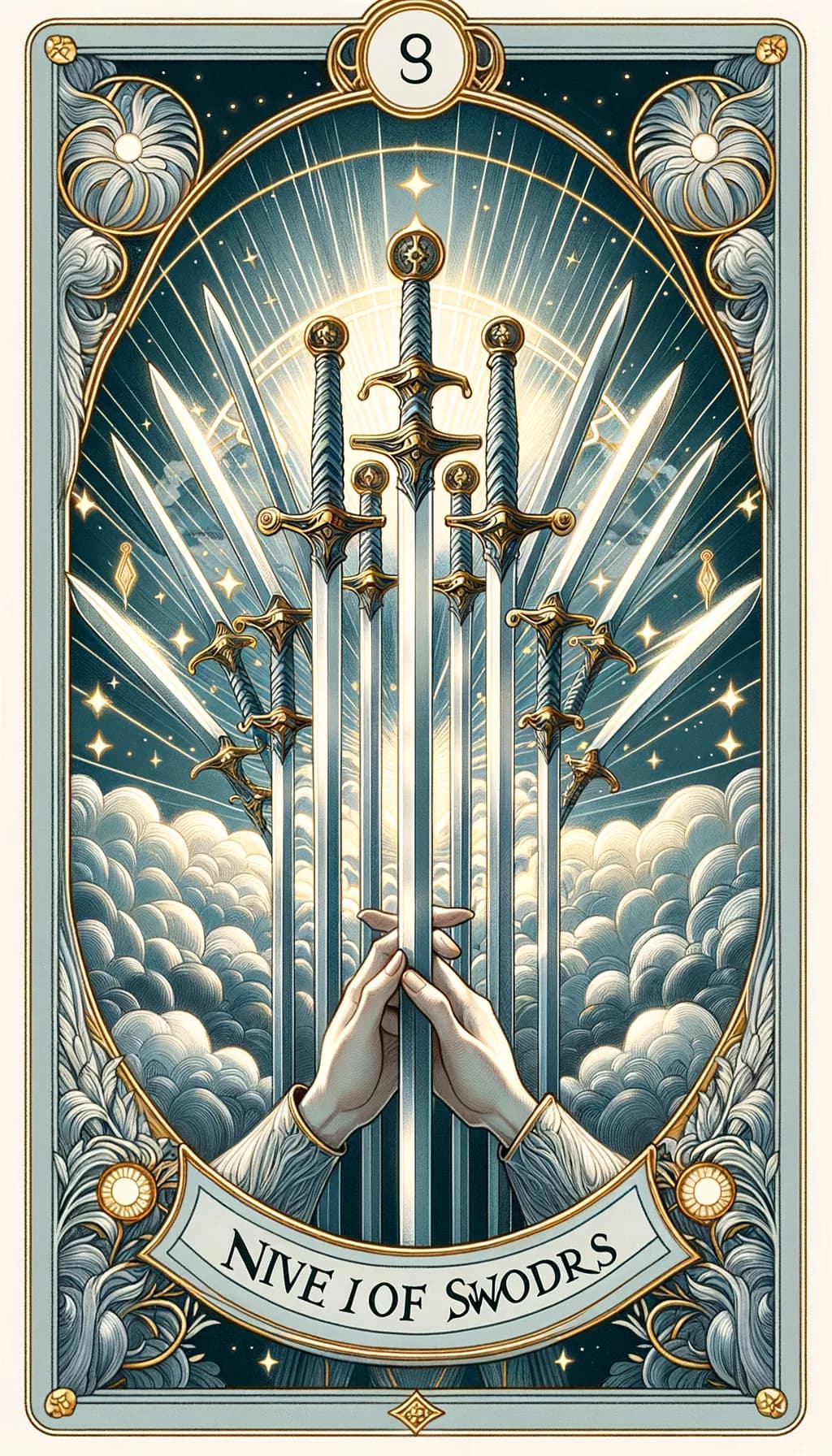
Nine of Swords Tarot Card
Yes or No: No
The Nine of Swords indicates that fear-based thinking is dominating the situation, making clear perception and confident action impossible right now. This 'no' reflects the card's core teaching: decisions made from a state of acute anxiety are rarely sound. The outcome you're asking about is obscured by catastrophic projection rather than informed by balanced assessment. Before seeking a definitive answer, address the anxiety itself — what feels like an impossible situation at 3 AM often reveals workable solutions by morning.
My thoughts are visitors in the night, not architects of my fate — I choose to meet them with witness rather than warfare.
Element
Air
Free Nine of Swords Reading
Premium AI Reading
Understanding Nine of Swords
In the Rider-Waite-Smith deck, a figure sits bolt upright in bed, face buried in hands, while nine swords hang horizontally on the pitch-black wall behind them — a visual vocabulary of nocturnal torment that Pamela Colman Smith rendered with unflinching precision. What makes this image so psychologically arresting is the contrast between the figure's obvious distress and the orderly arrangement of the swords: these are not weapons attacking from outside but thoughts organized and mounted like trophies in the sufferer's own mind. The bedroom, humanity's most intimate space, has become a theater of self-persecution. Waite described this card's divinatory meaning as 'death, failure, miscarriage, delay, deception, disappointment, despair' — yet he also noted that these are largely projections, fears magnified by darkness rather than confirmed by daylight. The quilt draped over the figure's lower body bears an intricate pattern of roses and zodiacal signs stitched against a background of alternating squares, suggesting that even in the grip of anguish, the cosmic order persists and beauty endures beneath consciousness. The carved panel at the bed's base depicts one figure with a sword standing over a defeated opponent — an image that mirrors the dreamer's internal battle, where one part of the psyche dominates and tortures another. Assigned to Mars in Gemini in the Golden Dawn system, the Nine of Swords channels martial aggression into Mercury's domain of thought, producing the relentless inner combatant who wages war through words, memories, and hypothetical catastrophes. In the Thoth tradition, Aleister Crowley titled this card 'Cruelty' — not cruelty inflicted by others, but the savage precision with which an intelligent mind can dismantle its own peace. Understanding this card requires recognizing that the suffering it depicts is entirely real even when the threats producing it are not, a distinction that forms the foundation for genuine healing.
Symbolism & Imagery
overview
The nine swords mounted on the black wall function as a catalog of accumulated mental burdens — each blade representing a distinct worry, regret, or fear that the figure has internalized and preserved rather than released. Their horizontal arrangement suggests thoughts laid out methodically, not chaotic but obsessively organized, reflecting how anxiety creates its own perverse logic. The absolute blackness behind the swords indicates the absence of perspective that darkness brings; without external reference points, the mind fills the void with its worst projections. The figure's posture — spine curved forward, hands pressed against the face — is the universal gesture of someone who cannot bear to look at what their mind is showing them, a futile attempt to shut out images generated from within. The quilt's rose motif, recurring throughout the RWS Swords suit, references the Rosicrucian symbol of spiritual beauty emerging through suffering, while the zodiacal squares suggest that this anguish follows recognizable cycles and seasons rather than being permanent. The carved bed panel showing combat between two figures serves as the card's hidden narrative: the unconscious conflict that fuels the conscious anxiety, unresolved power dynamics or past defeats that replay themselves when the waking mind relaxes its guard. Yellow — the color of Air and intellect — appears in the bed frame, grounding the scene firmly in the mental realm and confirming that this is suffering born of thought rather than circumstance.
Nine of Swords Upright
The Nine of Swords upright appears when mental suffering has reached a fever pitch — not a vague sense of unease but the specific, grinding experience of lying awake at 3 AM while your mind constructs elaborate worst-case scenarios with prosecutorial precision. This card frequently surfaces during periods of genuine crisis — awaiting medical test results, anticipating a difficult conversation, processing betrayal or loss — but its core teaching is that the anticipatory suffering almost always exceeds the actual event. In practical readings, it often indicates someone replaying a past mistake on an endless loop, each repetition adding new layers of self-recrimination. The figure cannot see the swords behind them; they face forward into darkness, meaning the threats feel omnipresent precisely because they cannot be examined directly. Common manifestations include insomnia driven by racing thoughts, panic attacks triggered by hypothetical futures, guilt that metastasizes into shame, and the particular loneliness of believing your pain is too extreme or too shameful to share. The Nine of Swords does not dismiss this suffering as imaginary — the anguish is completely authentic. But it insists that the stories generating the anguish deserve scrutiny. When this card appears, ask what specific thought keeps recurring and whether it has been tested against evidence rather than accepted as fact simply because it feels overwhelming.
Love & Relationships
In romantic readings, the Nine of Swords identifies the specific torture of relationship anxiety — checking your partner's phone while they sleep, catastrophizing silence into evidence of infidelity, or replaying an argument and constructing increasingly devastating interpretations of what was meant. For those in partnerships, this card often signals that unspoken fears are creating more damage than the issues themselves; one partner lies awake imagining abandonment while the other sleeps unaware that anything is wrong. The card points to attachment wounds being activated — not by present circumstances but by echoes of past rejection or childhood insecurity projected onto the current relationship. For single individuals, the Nine of Swords frequently represents the paralyzing fear that prevents dating entirely: the conviction that vulnerability will inevitably produce pain, reinforced by mental rehearsals of rejection that feel as real as actual experience. This card urges naming the specific fear aloud to a partner or trusted confidant, because anxiety thrives in silence and withers under direct examination.
Career & Work
Professionally, the Nine of Swords manifests as the Sunday-night dread that tightens your chest before the workweek begins, the obsessive rehearsal of a presentation that strips away confidence with each mental run-through, or the persistent conviction that you will be exposed as incompetent despite evidence of competence. This card appears frequently for people experiencing workplace bullying, where the psychological impact follows them home and infiltrates their sleep. It also surfaces for entrepreneurs whose financial anxiety about their venture has crossed from productive concern into paralytic rumination. The Nine of Swords in career contexts often indicates that the actual work problem is solvable, but the mental anguish surrounding it has grown so large that it obscures practical solutions. Perfectionism and imposter syndrome are common drivers — the sufferer's own high standards become the swords mounted on the wall. Taking one concrete action, however small, often breaks the cycle more effectively than continued analysis.
Finances
The Nine of Swords in financial readings pinpoints money anxiety that has detached from the actual numbers — the person who avoids opening bank statements, who catastrophizes about retirement while earning a stable income, or who lies awake calculating scenarios that assume every possible variable will go wrong simultaneously. This card suggests your financial fear may be disproportionate to your actual situation. The prescription is radical: open the statements, run the real numbers, consult a financial advisor. Anxiety feeds on ambiguity, and concrete data — even unfavorable data — provides a foundation for action that formless dread cannot.
Health
The Nine of Swords directly addresses the physical toll of chronic mental distress: cortisol-driven insomnia, tension headaches that settle behind the eyes, bruxism from jaw-clenching during fitful sleep, and the digestive disruption that accompanies sustained anxiety. This card frequently appears alongside health anxiety specifically — the person who Googles every symptom into a terminal diagnosis. It strongly encourages professional mental health support, particularly cognitive behavioral therapy, which directly addresses the catastrophic thinking patterns this card depicts. Sleep hygiene becomes critical: the bedroom must be reclaimed as a place of rest rather than a theater of worry.
Nine of Swords Reversed
The Nine of Swords reversed operates along two distinct axes, and context determines which applies. In its healing expression, this reversal marks the moment when someone finally reaches out — makes the therapy appointment, confides in a friend, starts medication, or simply recognizes that their catastrophic thoughts are distortions rather than prophecies. The swords on the wall begin to seem like relics of a mental habit rather than immutable truths. Dawn is breaking, not because the problems have vanished but because the sufferer has gained enough distance from their anguish to see it as a pattern rather than reality itself. Recovery from anxiety is rarely linear, and this card acknowledges that healing involves setbacks, but the trajectory has shifted toward relief. In its shadow expression, however, the reversed Nine of Swords can indicate anxiety that has been driven underground rather than resolved — someone who numbs their distress through substances, compulsive distraction, or rigid denial rather than genuine processing. The swords haven't disappeared; they've simply been turned face-down. This version often appears for people who dismiss their mental health struggles as weakness, who minimize genuine trauma, or who have become so accustomed to chronic anxiety that they no longer recognize it as abnormal. The reversal asks: is the silence you're experiencing actual peace, or just exhaustion's imitation of it?
Love & Relationships
In romantic contexts, the reversed Nine of Swords can indicate the welcome easing of relationship anxiety — trust beginning to replace suspicion, or the courage to have a vulnerable conversation that dispels the fears constructed during sleepless nights. Past relationship trauma is being actively processed rather than projected onto the current partner. However, this reversal sometimes signals the opposite: someone who suppresses legitimate relationship concerns to avoid conflict, or who has become so numbed by previous heartbreak that they cannot access the emotional signals warning them about genuine red flags. The distinction lies in whether relief comes from honest engagement or avoidance — ask whether you're feeling better because you've communicated or because you've stopped caring.
Career & Work
The reversed Nine of Swords in career readings often indicates workplace anxiety that is finally being managed through practical intervention — boundary-setting with a demanding boss, completion of a dreaded project, or the decision to leave a toxic environment. Burnout recovery is underway. Alternatively, it may signal someone who has dissociated from career stress rather than addressing it, going through professional motions while internally checked out. If work has simply stopped mattering rather than stopped being stressful, the card warns that suppression will eventually demand a reckoning more disruptive than the original anxiety.
Finances
Financially, the reversed Nine of Swords indicates you're gaining perspective on money worries and perhaps taking practical steps to address financial concerns. Your anxiety about money may be diminishing as you develop a clearer financial plan or realize your situation isn't as dire as feared. Be careful not to swing too far toward financial denial or recklessness in reaction to previous worry.
Health
Health-wise, this reversal often indicates improvement in mental health symptoms or successful treatment of anxiety and depression. You may be sleeping better, feeling more optimistic, or seeing results from therapy or medication. However, don't abandon healthy practices or professional support too quickly—maintain the habits that are helping you heal.
Nine of Swords: Yes or No?
The Nine of Swords indicates that fear-based thinking is dominating the situation, making clear perception and confident action impossible right now. This 'no' reflects the card's core teaching: decisions made from a state of acute anxiety are rarely sound. The outcome you're asking about is obscured by catastrophic projection rather than informed by balanced assessment. Before seeking a definitive answer, address the anxiety itself — what feels like an impossible situation at 3 AM often reveals workable solutions by morning.
Nine of Swords Combinations
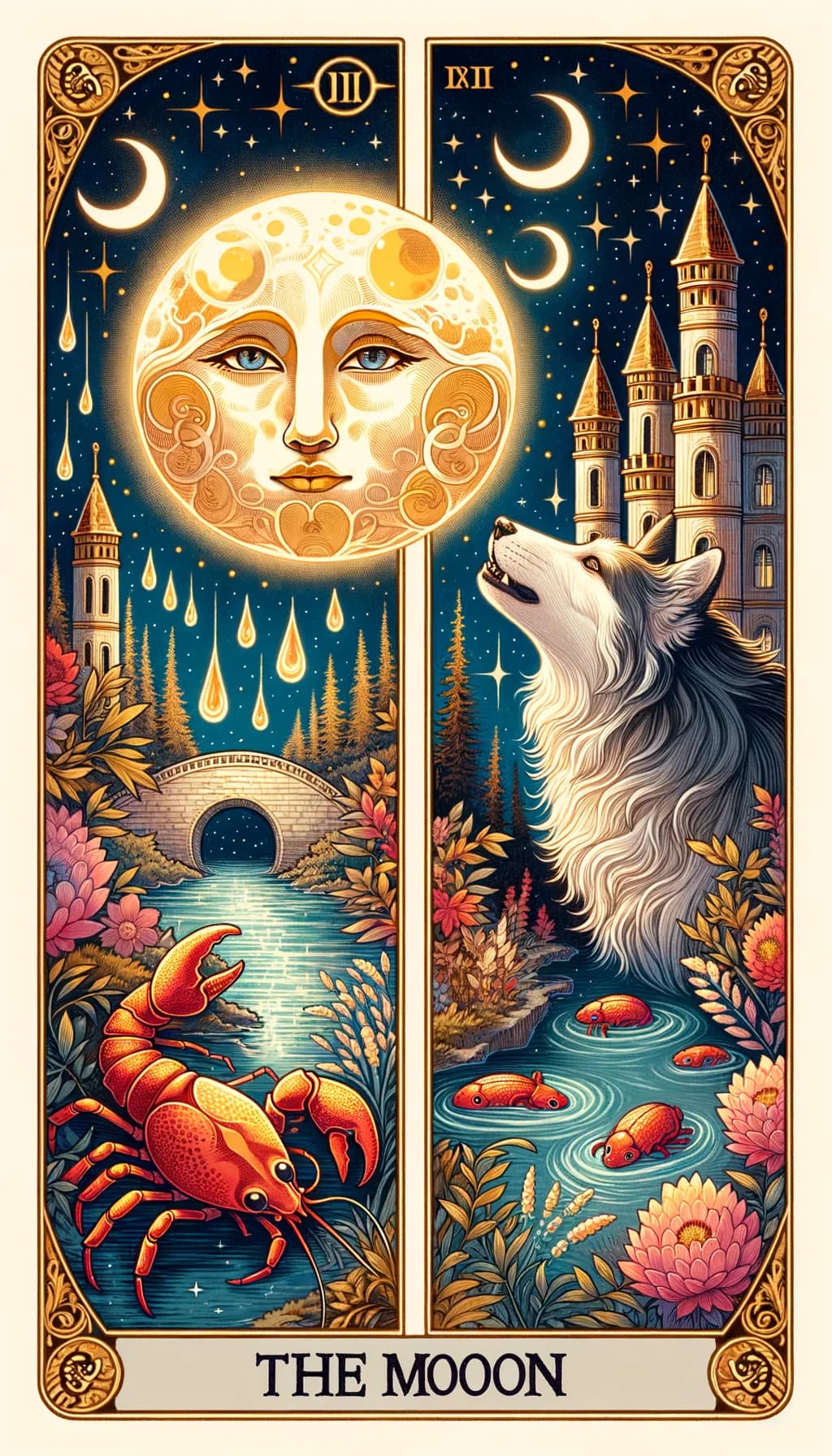
This pairing creates a double layer of psychological distortion — the Moon's illusions feed the Nine's anxious mind with shadowy, half-formed fears that resist rational examination. Together they indicate a period where the unconscious is producing powerful material (dreams, phobias, irrational convictions) that the conscious mind cannot process alone. Professional therapeutic support is almost certainly needed; willpower and logic alone cannot navigate this terrain.
Read full combination →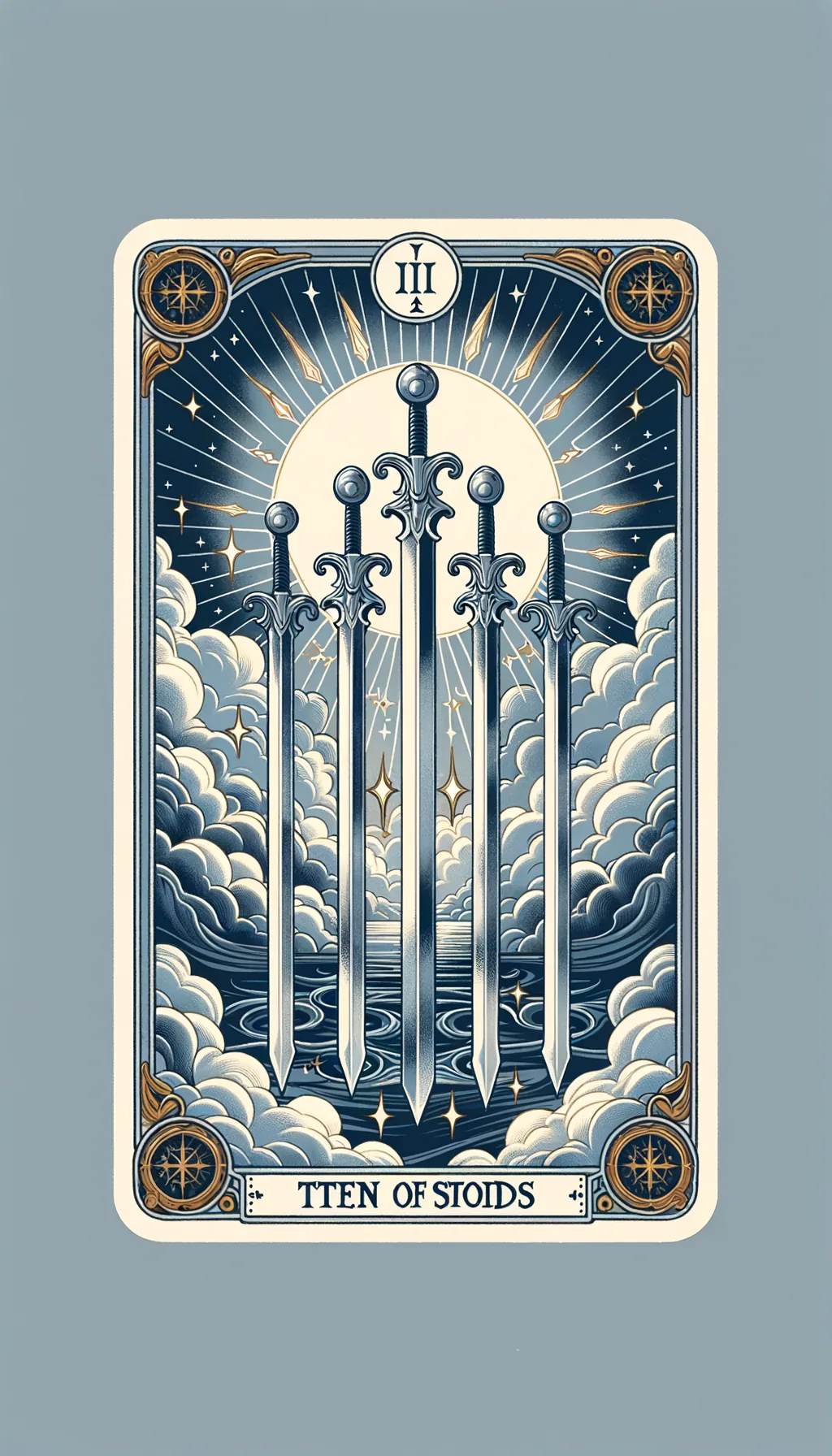
The Nine's anticipatory dread meets the Ten's actual ending, and paradoxically this combination often brings relief. The feared catastrophe either arrives and proves survivable, or the mental anguish itself reaches its absolute limit and exhausts itself. This pairing marks the bottom of the cycle — painful but definitive. What follows is genuine recovery rather than the Nine's endless loop of anticipated disaster, because reality has replaced speculation.
Read full combination →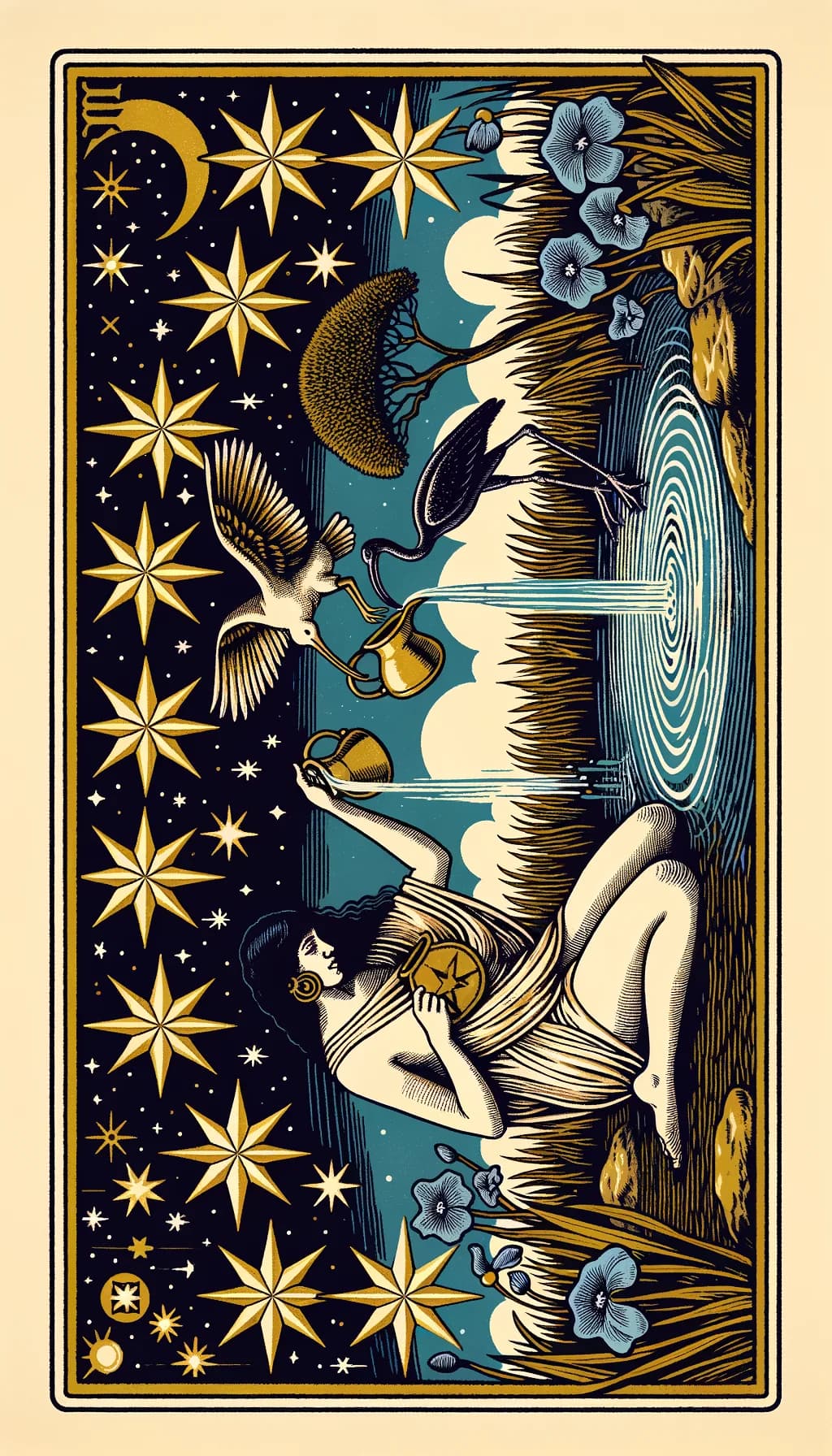
One of the most healing combinations in the tarot — the Star's serene, renewing energy enters the Nine's dark bedroom like the first light of dawn. This pairing indicates that hope and healing are not just possible but actively arriving. It often appears when someone begins therapy, finds a spiritual practice that genuinely helps, or experiences the particular grace of realizing that suffering has carved out a deeper capacity for compassion and wisdom.
Read full combination →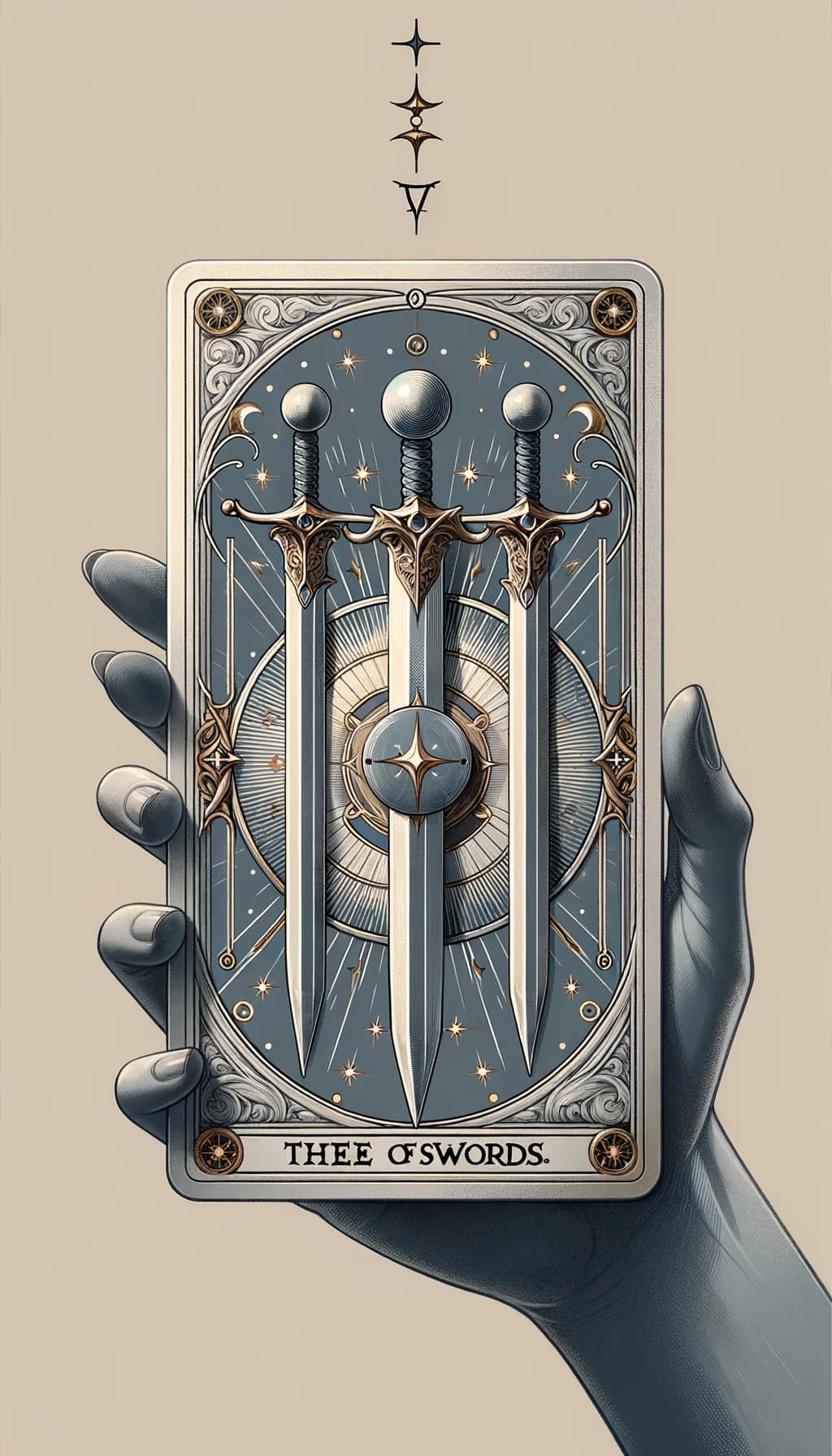
This combination identifies grief as the root of the Nine's nocturnal anguish — a heartbreak, betrayal, or loss that has not been fully mourned. The Three's clean wound has festered into the Nine's chronic mental distress because the original pain was never given adequate space or expression. Healing requires returning to the source: acknowledging what was lost and allowing sorrow rather than converting it into anxiety.
Read full combination →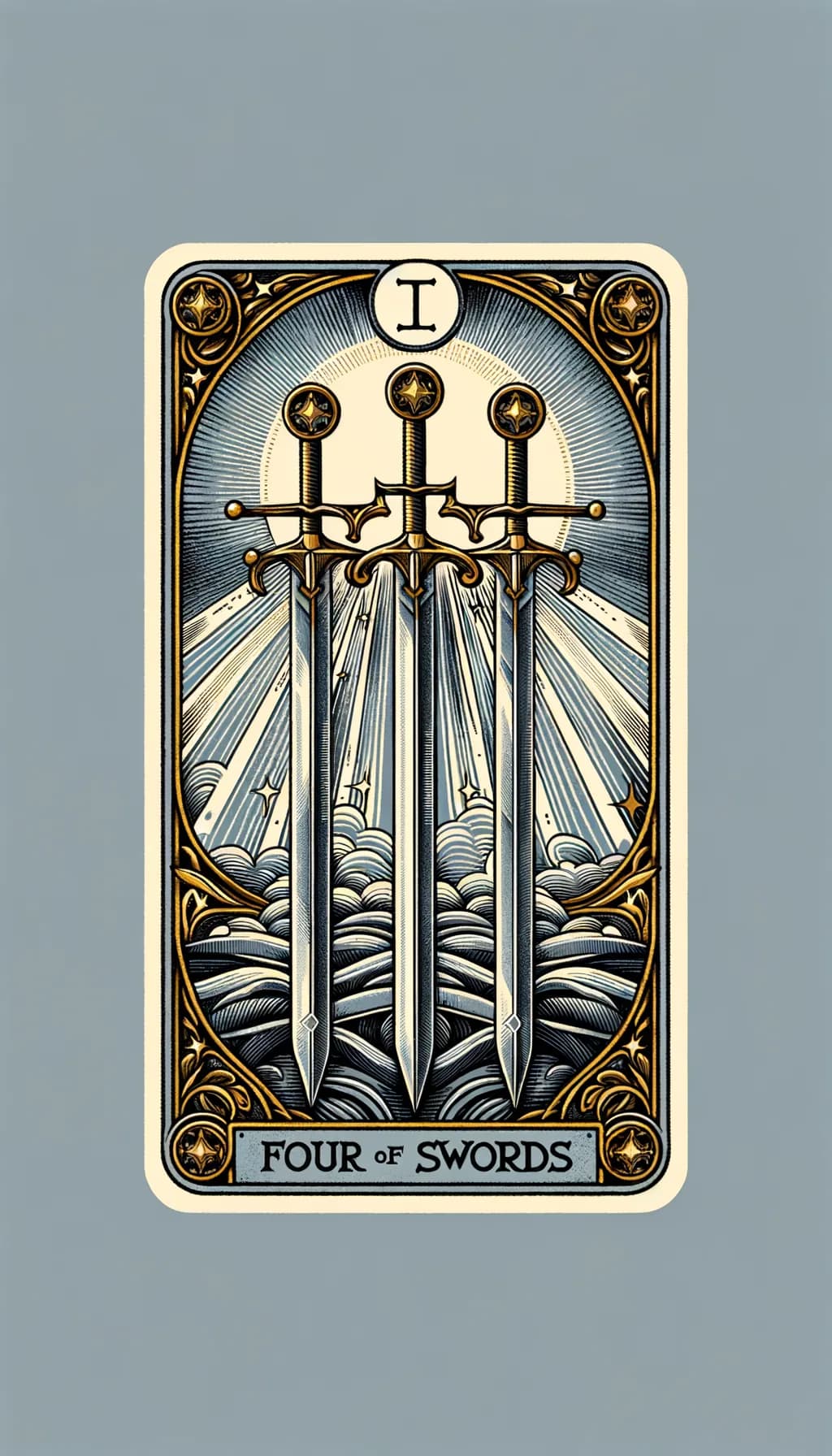
The Four's prescribed rest directly answers the Nine's sleepless torment, making this combination a strong indicator that deliberate withdrawal and recovery are both urgently needed and immediately available. Meditation, retreat, temporary leave from work, or simply granting yourself permission to do nothing for a defined period will interrupt the anxiety cycle. The Four promises that stillness is not stagnation but medicine.
Read full combination →Journal Prompts for Nine of Swords
Write down the exact thought that woke you or kept you awake most recently — then list three pieces of concrete evidence that contradict it and three that support it, examining whether fear or fact holds more weight.
Identify whose voice your inner critic sounds like — a parent, a teacher, an ex-partner — and write a letter to that voice explaining what you needed to hear from them instead of criticism.
Describe a past situation where your worst-case-scenario thinking proved dramatically wrong — what actually happened, and what did you learn about the gap between anticipated and actual suffering?
Reading Insights for Nine of Swords
Card Advice
When the Nine of Swords appears in a reading, resist the impulse to immediately reassure. The card demands that you first validate the suffering — this person is genuinely anguished, and minimizing their experience with premature optimism will break trust. Acknowledge the pain specifically: 'This card shows real mental distress; you're not imagining how hard this is.' Then gently introduce the card's diagnostic insight: the swords are on the wall behind the figure, meaning the threats exist in the mind's architecture rather than in the present moment. Ask the querent to name their three most persistent fears — externalizing them begins to break their hypnotic power. Positionally, the Nine of Swords in a past position indicates unprocessed trauma still influencing present behavior. In a present position, it describes acute current suffering. In a future position, it warns that current avoidance will produce a crisis of anxiety if underlying issues aren't addressed. Pay close attention to surrounding cards: Cups nearby suggest emotional roots, Pentacles point to material causes, and other Swords indicate the anxiety has built a self-reinforcing intellectual framework that may require professional dismantling. The Nine of Swords is one of the few cards where recommending professional mental health support is not overstepping the reader's role — it is the card's own prescription.
As an Outcome
As an outcome, this card suggests that mental health challenges may dominate the situation's resolution. Addressing anxiety and worry directly will be crucial for any positive progress. The situation itself may be less dire than your mind is projecting, but the suffering caused by the worry is entirely real and deserves compassionate attention. Progress comes through distinguishing between legitimate concerns that require action and manufactured fears that feed on attention, then directing your energy accordingly toward practical solutions rather than endless rumination.
Nine of Swords as a Person
The Nine of Swords personality is the deeply sensitive thinker whose rich inner life becomes a double-edged gift — capable of extraordinary insight and creativity but equally prone to spiraling anxiety and self-torment. This person often lies awake processing the day's events, replaying conversations, and anticipating future difficulties with vivid, worst-case-scenario detail. Their intelligence works against them in moments of vulnerability, constructing elaborate catastrophes that feel devastatingly real. Yet this same sensitivity often makes them profoundly empathetic, artistically gifted, and attuned to subtleties that others miss entirely.
Draw Nine of Swords in Your Reading
Ready to see how Nine of Swords appears in context? Get a personalized AI-powered tarot reading now.