Four of Swords Tarot Card
Yes or No: Maybe
The Four of Swords withholds a definitive answer because you are not currently in the mental state to receive one clearly. This is neither refusal nor delay for its own sake — the card recognizes that decisions made from exhaustion carry a distorted signature. Wait until you have genuinely rested, then revisit the question. The answer that emerges from a restored mind will feel qualitatively different from any conclusion forced through fatigue. If your question concerns whether to rest, the answer is an unequivocal yes.
I lay down my swords willingly, knowing that the clarity I seek is forged in silence, not in struggle.
Element
Air
Free Four of Swords Reading
Premium AI Reading
Understanding Four of Swords
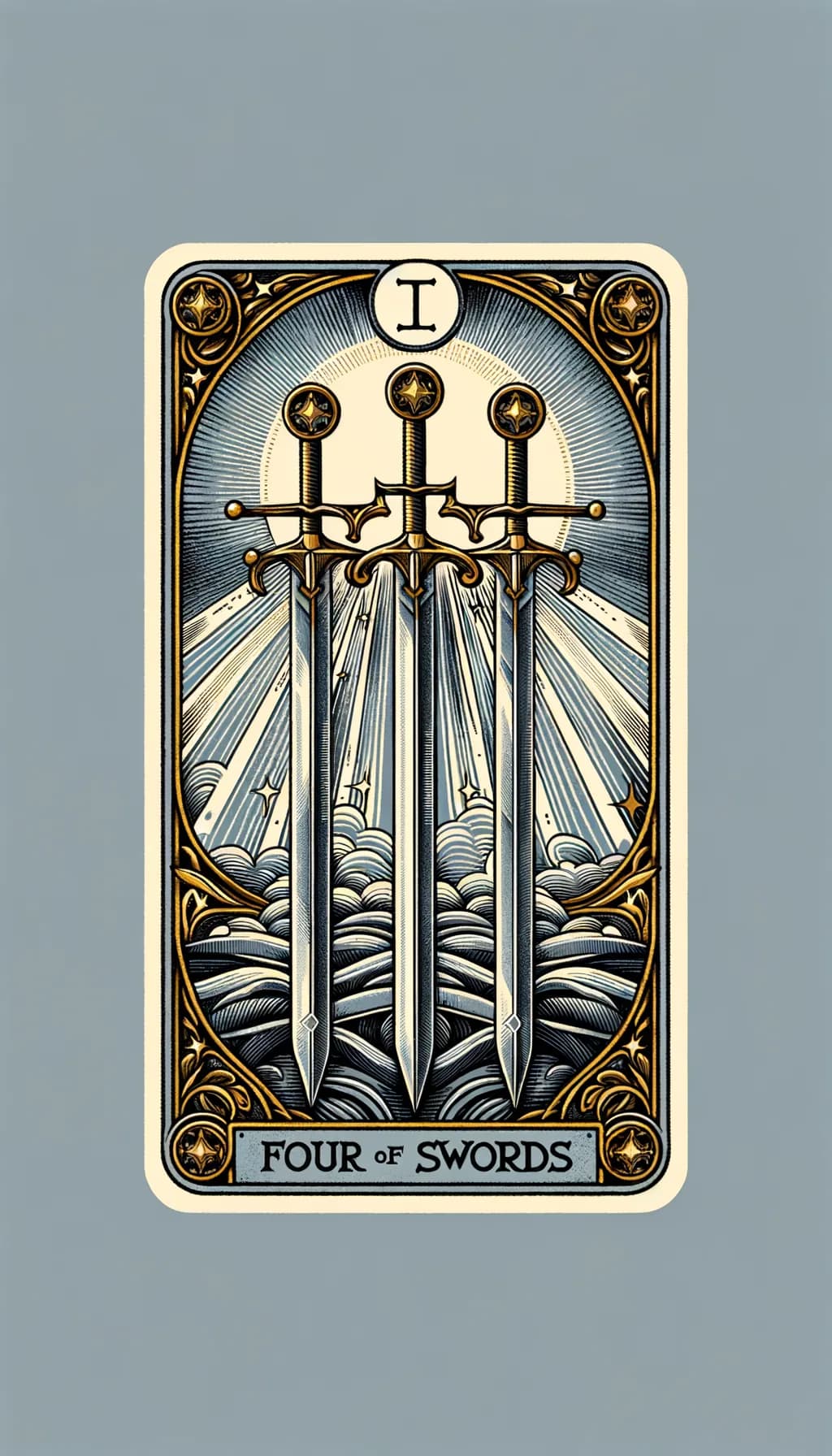
In Pamela Colman Smith's illustration, a stone effigy of a knight lies in solemn repose within a church interior — hands pressed together in prayer, a single sword mounted horizontally beneath the slab, while three swords hang vertically on the wall above. The scene is unmistakably funerary yet paradoxically alive: a stained glass window in the upper left depicts a figure kneeling before a haloed saint, bathing the stone chamber in warm color that contrasts sharply with the grey stillness of the tomb. This is not death but deliberate dormancy — the knight has consciously laid down arms. Arthur Edward Waite described this card as representing 'vigilance, retreat, solitude, hermit's repose, exile' and notably added 'the tomb' to his divinatory meanings, linking rest with the sacred enclosure of consecrated ground. In the Golden Dawn system, this card corresponds to Jupiter in Libra in the third decanate, marrying Jupiter's expansive wisdom with Libra's pursuit of equilibrium — suggesting that this rest produces not mere recovery but philosophical insight and restored sense of justice. The number four across all tarot suits signifies structure, stability, and consolidation: the Fours of Cups, Pentacles, and Wands each depict a pause in their element's energy, but in Swords — the suit of intellect, conflict, and mental anguish — this pause carries particular urgency. After the piercing grief of the Three of Swords, the Four offers sanctuary. The knight's prayer posture distinguishes this from unconscious collapse; this is the disciplined practitioner who knows that the sword's edge is honed not through relentless use but through intervals of careful, intentional stillness within protected walls.
Symbolism & Imagery
overview
The tomb effigy is the card's central paradox: a figure carved in stone yet depicted in a posture of active devotion, hands clasped in prayer rather than crossed in death. Smith drew the knight in full armor beneath his shroud, indicating readiness to rise — this rest is tactical, not terminal. The three swords mounted on the dark wall behind represent the mental wounds and conflicts that precipitated this withdrawal; their vertical orientation suggests they remain active concerns, suspended but unresolved, awaiting the knight's return. The single horizontal sword beneath the effigy functions as both literal and symbolic foundation — it is the one clear truth or decision the knight carries into his retreat, the baseline of mental clarity upon which recovery builds. The stained glass window is compositionally crucial: it introduces the only warm tones and organic forms in an otherwise austere, geometric scene. The kneeling figure receiving blessing from a saint suggests that this rest opens channels to grace, intuition, or transpersonal guidance unavailable during active combat. The church or chapel setting is deliberate — medieval churches offered legal sanctuary to those fleeing persecution, and Smith invokes this tradition to frame the Four of Swords as a protected space where ordinary rules of engagement are temporarily suspended. The stone walls and floor create a sealed container, an alchemical vas hermeticum where the lead of exhaustion can slowly transmute into the gold of renewed mental acuity.
Four of Swords Upright
The Four of Swords upright appears when the querent's nervous system has reached a threshold where continued engagement will produce diminishing returns or outright breakdown. This is not a suggestion to rest — it is the tarot's equivalent of a doctor ordering bedrest. Concrete scenarios include the entrepreneur who has launched a business and now needs to step entirely away from decision-making for a defined period; the student who must stop studying the night before an exam and trust what has already been absorbed; the parent emerging from a custody battle who needs weeks of minimal social contact to recalibrate. The card frequently surfaces during post-crisis recovery: after a job loss, a medical diagnosis, a painful breakup, or any event that has consumed excessive mental bandwidth. What distinguishes the Four of Swords from simple exhaustion is its emphasis on conscious, boundaried withdrawal rather than collapse. The knight chose to enter the chapel; the door can be opened again. This card often precedes periods of remarkable clarity — clients report that solutions to months-old problems simply appear after honoring the Four's prescription. The mechanism is neurological as much as spiritual: sustained stress narrows cognitive focus through cortisol flooding, while genuine rest restores access to lateral thinking, creative association, and intuitive processing. The card asks you to trust that strategic inaction is itself a form of power, and that the world will not collapse during your absence from its demands.
Love & Relationships
In romantic readings, the Four of Swords identifies relationships that need a deliberate cooling period — not the anxious silence of avoidance but a mutually acknowledged pause where both partners stop processing, analyzing, and negotiating. This card appears frequently after intense arguments, painful revelations, or periods where a couple has been 'working on the relationship' so relentlessly that the relationship itself has become exhausting. The prescription is specific: stop talking about the problems for a defined period and simply coexist in quieter modes — cooking together without deep conversation, watching films, taking separate walks. For singles, this card signals that the constant swiping, dating, and post-date analysis has fragmented your sense of self. The Four of Swords asks you to spend time alone without the agenda of self-improvement or preparing for future partnership. Let your emotional identity consolidate without the pressure of performance. The person who eventually meets you after this period will encounter someone integrated and present rather than scattered and searching.
Career & Work
Professionally, the Four of Swords appears when you have been operating in crisis mode so long that it has become your default — answering emails at midnight, volunteering for every project, equating busyness with value. The card specifically counsels using accumulated leave, declining new commitments for a defined period, or requesting a lateral move away from high-pressure responsibilities. It frequently appears for healthcare workers, teachers, first responders, and anyone in caregiving professions approaching clinical burnout. If you are facing a major career decision — accepting a promotion, changing industries, starting a business — the Four advises postponing the choice until you can think about it without anxiety coloring every consideration. Strategic delay here is not indecision; it is the recognition that exhausted minds make poor long-term commitments. The breakthrough insight about your career direction will arrive during a walk, in the shower, or upon waking — never during another frantic brainstorming session.
Finances
The Four of Swords in financial readings advises a moratorium on significant monetary decisions. Do not invest, refinance, make large purchases, or restructure debt while mentally depleted — financial anxiety distorts risk assessment, making both excessive caution and impulsive spending more likely. This is the time to automate existing financial systems and step away from portfolio monitoring. The clarity needed for sound financial strategy will return once your nervous system has recovered, and the cost of waiting is almost always less than the cost of a stress-driven mistake.
Health
The Four of Swords is the tarot's most direct health card, often appearing when the body is signaling through insomnia, tension headaches, digestive disruption, or immune suppression that the mind's pace is unsustainable. It specifically recommends restorative practices over stimulating ones — yoga nidra rather than intense exercise, guided meditation rather than productivity podcasts before sleep, and genuine digital disconnection rather than merely switching from work screens to entertainment screens. If you are recovering from surgery, illness, or injury, this card validates that healing requires significantly more rest than your impatient mind believes.
Four of Swords Reversed
The Four of Swords reversed describes a specific and uncomfortable condition: the mind that cannot rest despite knowing it must. This is qualitatively different from simply being busy — it is the experience of lying awake at 3 AM with thoughts cycling through the same anxious loops, or sitting in meditation while your internal monologue accelerates rather than quiets. The reversed card frequently appears alongside clinical anxiety, burnout that has progressed past the point where simple rest can resolve it, or trauma responses where the nervous system remains locked in hypervigilance regardless of external safety. In another manifestation, this reversal indicates that a necessary period of rest has calcified into avoidance. The knight has been lying on the tomb so long that rising feels impossible — the contemplative retreat has become a prison of inertia. Someone pulled this card reversed may be using spiritual language to justify withdrawal from responsibilities they find frightening: calling isolation 'boundary-setting,' labeling avoidance of difficult conversations as 'protecting my energy.' The reversal can also indicate forced emergence from rest before recovery is complete — being pulled back into a stressful work environment during medical leave, or having your quiet mourning period disrupted by external demands. In each case, the reversal points to a broken relationship between activity and rest that requires conscious intervention, often professional support, rather than more willpower or another meditation app.
Love & Relationships
In love readings, the reversed Four of Swords often reveals emotional stonewalling disguised as self-care. One partner has retreated into such thorough emotional withdrawal that the other feels abandoned, yet any attempt to reconnect is met with claims of needing space. This dynamic can persist indefinitely if unaddressed, as the withdrawing partner finds genuine relief in isolation while the pursuing partner's anxiety intensifies. Alternatively, this reversal appears when someone cannot stop ruminating about a relationship — replaying conversations, analyzing text messages, constructing imagined scenarios — turning what should be restful solitude into an echo chamber of romantic obsession. For those newly single, it may indicate an inability to grieve a lost relationship because you immediately filled the void with activity, denying yourself the necessary processing time.
Career & Work
Professionally reversed, the Four of Swords warns that you are either returning to work before genuine recovery has occurred — restarting after burnout without changing the conditions that caused it — or using the concept of rest to procrastinate on career moves that frightten you. The entrepreneur who endlessly researches instead of launching, the employee who keeps postponing the difficult conversation with management about workload — both embody this reversal. If chronic workplace anxiety follows you home every evening and infiltrates your weekends despite your best relaxation efforts, this card reversed suggests the problem is structural, not personal, and no amount of meditation will substitute for changing your actual circumstances.
Finances
Financially, the reversed Four of Swords suggests that avoidance isn't serving your monetary wellbeing. You might be postponing important financial decisions indefinitely, or using spiritual beliefs to justify financial inaction when practical steps are needed. Sometimes this reversal indicates financial anxiety that's preventing the mental peace necessary for clear money decisions.
Health
Health-wise, the reversed Four of Swords often points to chronic insomnia, anxiety disorders, or an overactive nervous system that won't settle down. You might be trying various relaxation techniques without success, or conversely, you could be sleeping too much as an escape from health issues that need attention. This card reversed often calls for professional help in achieving the mental peace that seems elusive.
Four of Swords: Yes or No?
The Four of Swords withholds a definitive answer because you are not currently in the mental state to receive one clearly. This is neither refusal nor delay for its own sake — the card recognizes that decisions made from exhaustion carry a distorted signature. Wait until you have genuinely rested, then revisit the question. The answer that emerges from a restored mind will feel qualitatively different from any conclusion forced through fatigue. If your question concerns whether to rest, the answer is an unequivocal yes.
Four of Swords Combinations
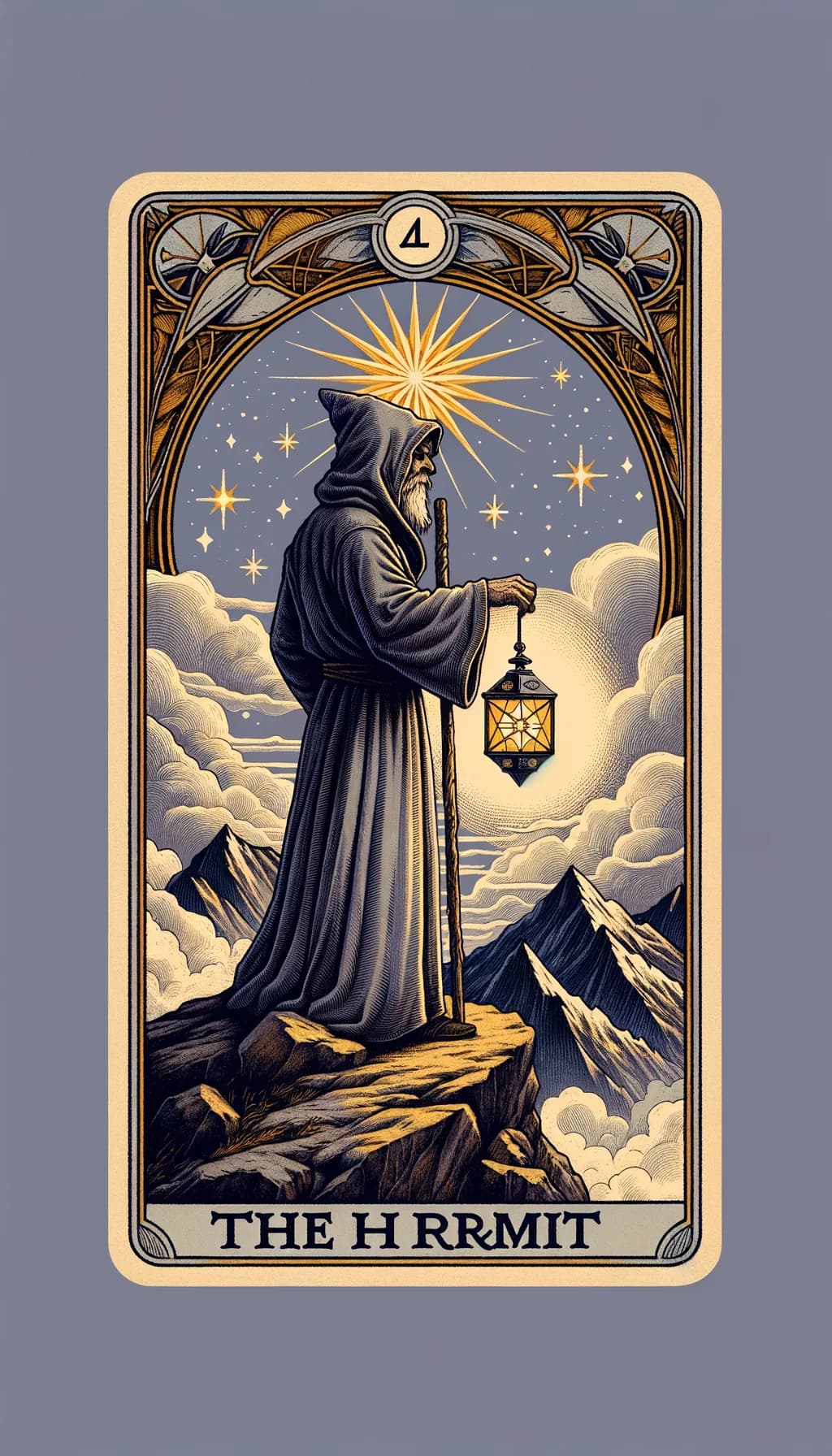
This pairing amplifies solitary withdrawal into a full spiritual sabbatical. Where the Four of Swords alone suggests days or weeks of rest, combined with The Hermit the timeline extends and the purpose deepens — this is not recovery but pilgrimage. Expect a period of genuine soul-searching that fundamentally alters your relationship with solitude and inner wisdom. The combination often appears before major life philosophy shifts.
Read full combination →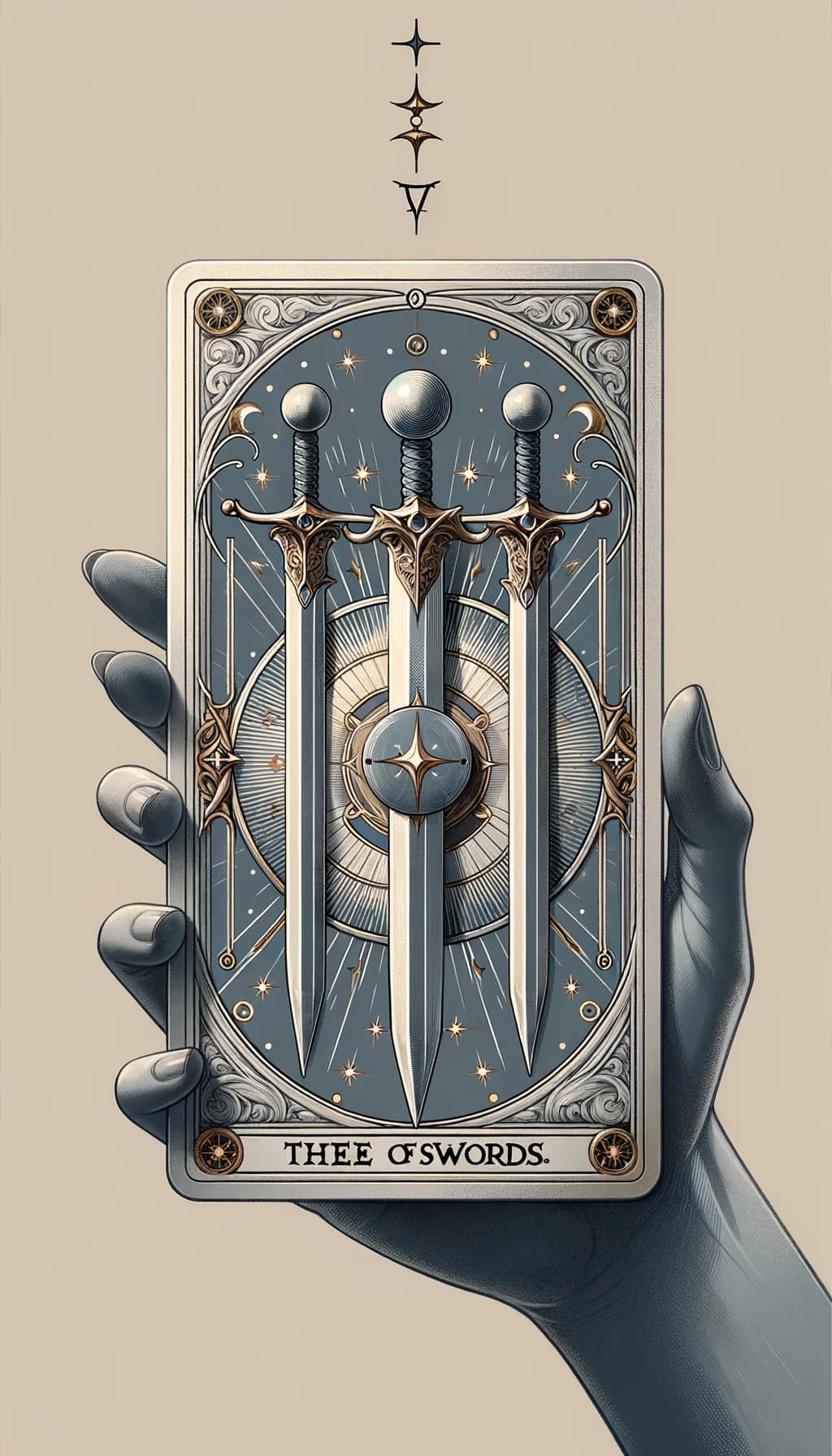
The narrative sequence is clear: the Three's heartbreak or betrayal has driven you into the Four's sanctuary. This combination validates that grief requires structured, protected time rather than forced resilience. The healing is genuine but incomplete — the three swords still hang on the wall, and this pairing asks you to rest with your pain rather than rush past it, trusting that mourning has its own timeline.
Read full combination →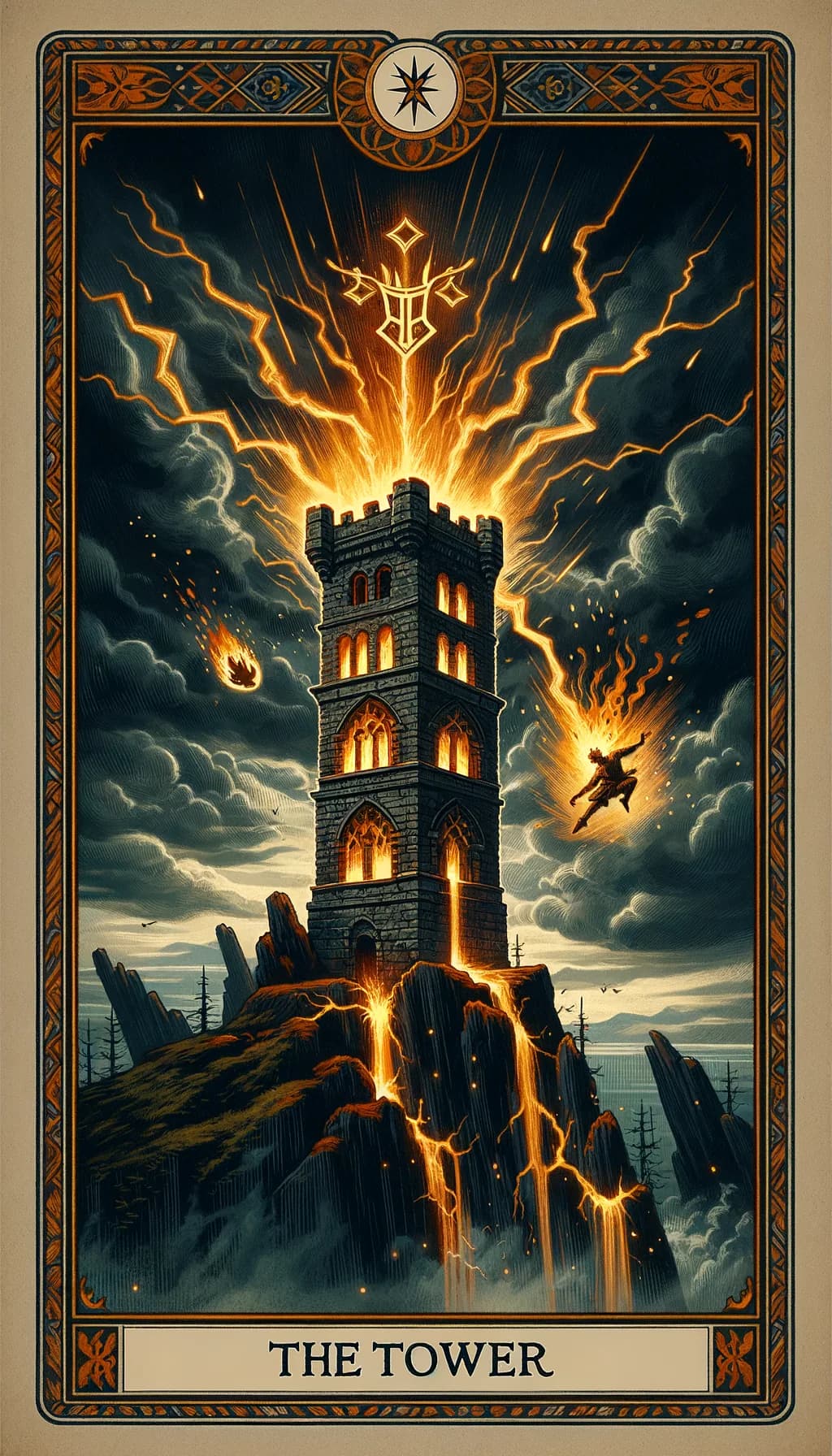
The Tower's catastrophic disruption followed by the Four of Swords describes the shell-shocked aftermath of sudden upheaval — job loss, relationship explosion, or identity crisis. The Four here is not optional but medically necessary; your system has absorbed a shock and needs time before it can process what happened. Do not attempt to rebuild yet. The rubble must settle before you can assess what remains standing.
Read full combination →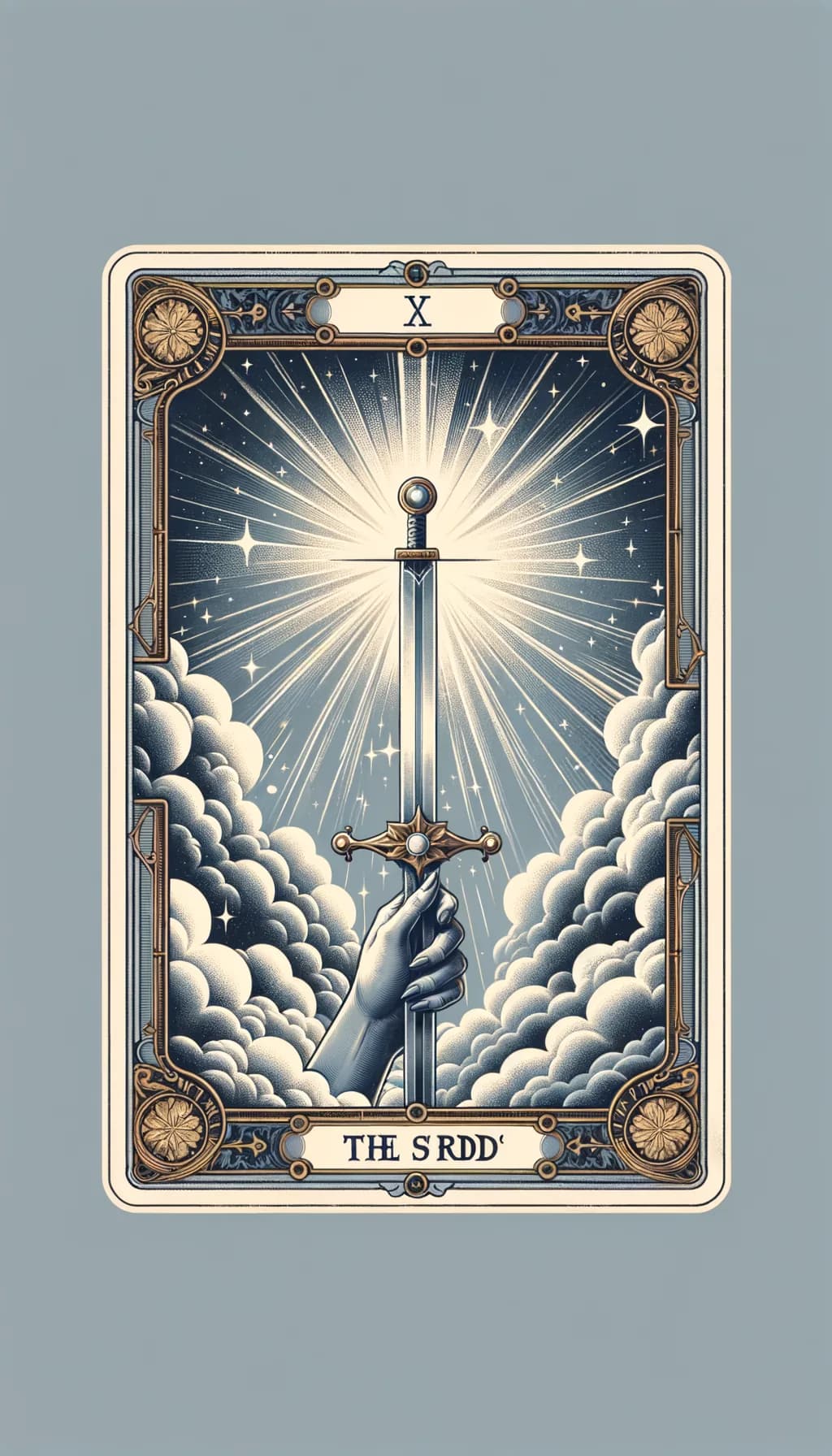
This powerful combination promises that the rest period will culminate in a breakthrough of mental clarity. The Ace represents the emergence of a single, luminous insight that cuts through previous confusion. Together, these cards describe the classic pattern of creative or intellectual incubation: you step away from a problem, and the solution crystallizes during stillness. Trust the process — the Ace is forming in the silence.
Read full combination →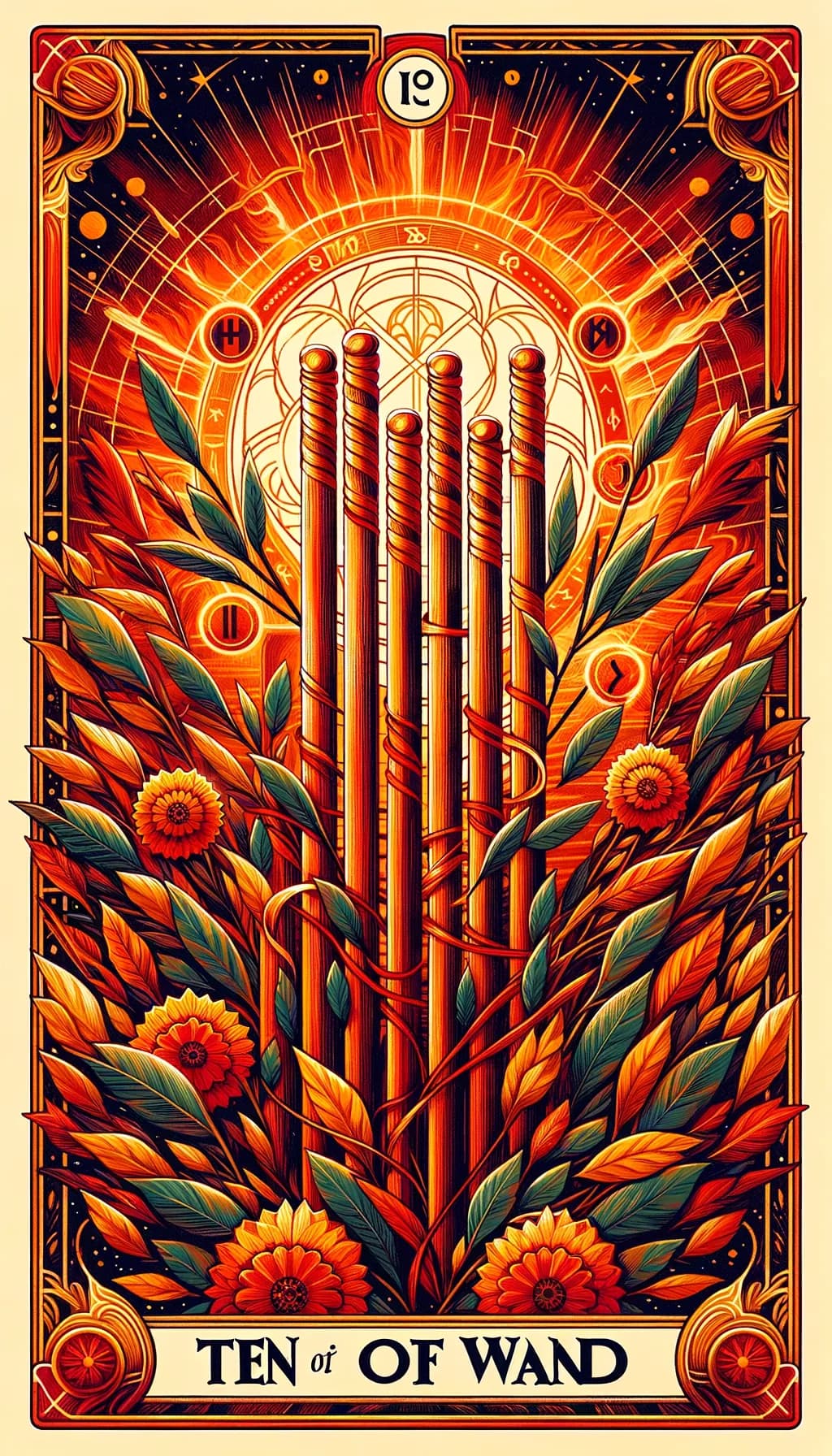
The Ten of Wands reveals why the Four of Swords is appearing: you have been carrying an unsustainable burden of responsibilities, obligations, or self-imposed pressures. This combination is the tarot's burnout diagnosis. The Ten identifies the cause — chronic overcommitment — while the Four prescribes the remedy. Until you set down the ten wands, even temporarily, no amount of weekend relaxation will penetrate the accumulated exhaustion.
Read full combination →Journal Prompts for Four of Swords
What specific mental burden have I been carrying that I could consciously set down for the next two weeks, and what would I need to arrange or communicate to make that possible?
When was the last time I experienced genuine mental silence — not distraction, not entertainment, but actual quiet — and what emerged from that stillness that surprised me?
If I imagine the three swords hanging on the wall as my three most persistent worries, what would I name each one, and how does it feel to acknowledge that they can remain suspended without my active attention?
Reading Insights for Four of Swords
Card Advice
When the Four of Swords appears in a spread, immediately assess the surrounding cards for context about what drove the querent to this point of exhaustion. Cards from the Swords suit nearby suggest mental overwork or conflict; Cups suggest emotional depletion; Wands indicate creative or energetic burnout; Pentacles point to physical exhaustion or financial stress. The card's position matters enormously: in a past position, the rest has already occurred and the querent should be emerging; in the present, it is the immediate prescription; in a future position, it warns that current pace is unsustainable and rest will become necessary whether chosen or forced. Pay attention to the querent's resistance — people who need the Four of Swords most often reject its message, insisting they cannot afford to stop. Gently point out that the knight's armor indicates he will fight again; this is not retirement but tactical recovery. Ask specifically about sleep quality, screen time habits, and whether they have taken genuine time off in recent months. The Four of Swords frequently appears as a timing card suggesting that three to four weeks of reduced activity will produce the desired shift.
As an Outcome
This situation will resolve through patience and peaceful reflection rather than forceful action. Trust that stepping back will ultimately lead to better results. The answers you seek are already forming in your subconscious mind, and they will surface once you stop forcing them through sheer mental effort. When you return to active engagement, you will do so with renewed energy, sharper perception, and a sense of inner peace that makes your next steps feel natural and confident.
Four of Swords as a Person
The Four of Swords personality is the contemplative strategist who understands that sustained excellence requires regular intervals of deliberate rest. This person practices the art of strategic withdrawal, knowing when to step back from the fray to recharge their mental batteries. They are often drawn to meditation, mindfulness practices, or scholarly pursuits that nourish the inner life. Others sometimes mistake their quietness for disengagement, but beneath the stillness lies a mind actively processing, integrating, and preparing for its next brilliant contribution.
Draw Four of Swords in Your Reading
Ready to see how Four of Swords appears in context? Get a personalized AI-powered tarot reading now.