The Devil Tarot Card
Yes or No: No
The Devil delivers a firm 'no,' indicating that the situation in question is entangled with compulsion, hidden dependency, or motivations rooted in fear rather than genuine desire. Before proceeding, ask whether you are choosing this freely or whether attachment, habit, or anxiety is making the decision for you. If your question concerns breaking free from something restrictive, however, The Devil paradoxically affirms that liberation is overdue—the answer is 'no' to continuing as you are.
I name the chains I have mistaken for safety, and in naming them, I reclaim the hand that forged them as the same hand that holds the key.
Element
Earth
Planet
Capricorn
Numerology
The number 15 reduces to 6 (1+5), representing harmony and responsibility, yet here it's distorted by material obsession. This duality shows how positive energies can become corrupted when we lose spiritual perspective.
Free The Devil Reading
Premium AI Reading
Understanding The Devil
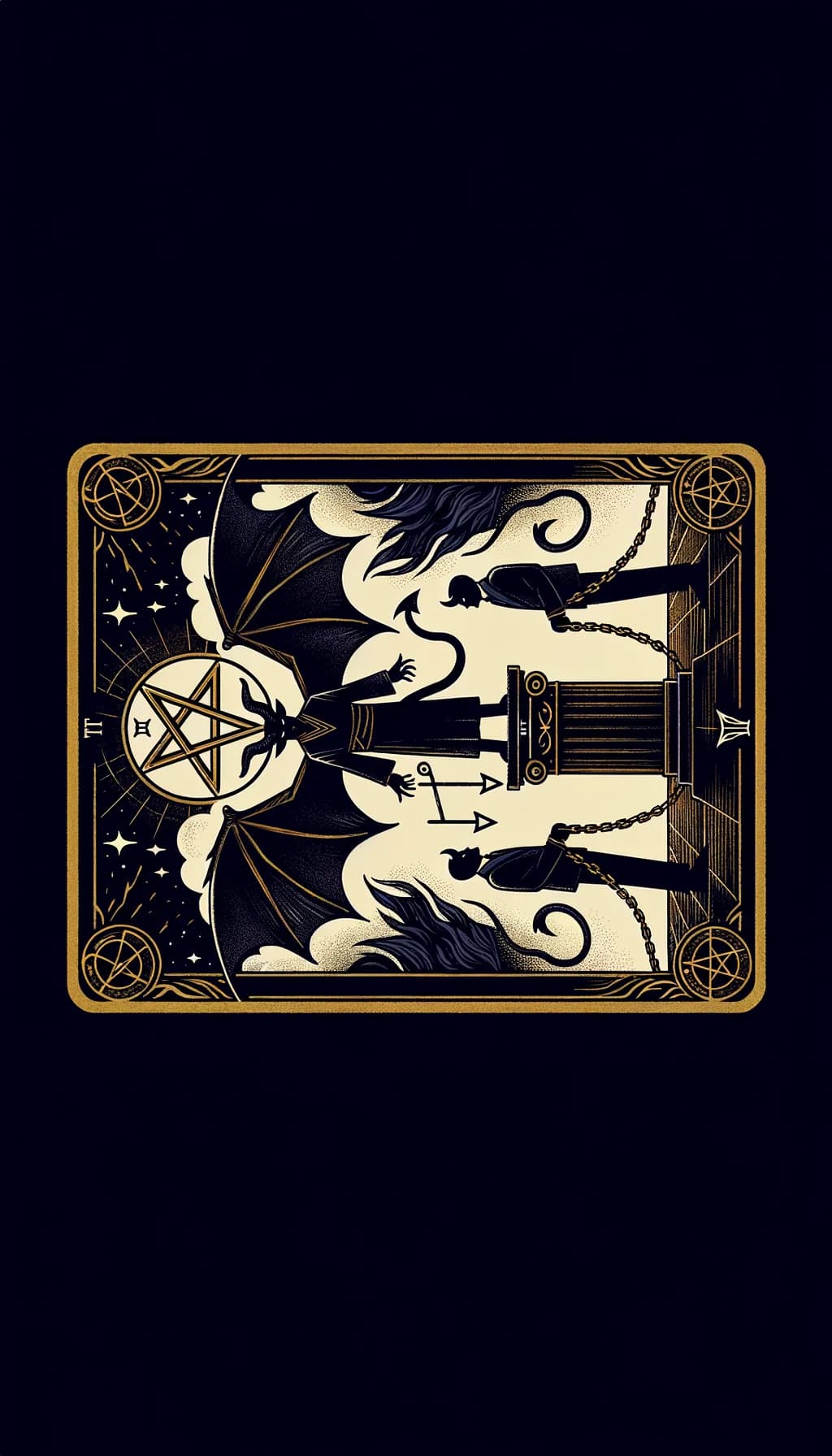
The Devil, card XV of the Major Arcana, confronts the querent with one of the most psychologically complex images in the Rider-Waite-Smith deck. Pamela Colman Smith's illustration deliberately echoes the composition of The Lovers (card VI)—the angel Raphael replaced by a crouching Baphomet figure perched on a half-cube of black stone, the conscious and unconscious lovers now naked, horned, and chained loosely at the neck to the devil's pedestal. This visual inversion is no accident: where The Lovers presented a choice made in full awareness under divine blessing, The Devil shows what happens when that same choice calcifies into compulsion. The Baphomet's right hand rises in a dark parody of the Hierophant's blessing, but the palm bears no sacred symbol—only openness, as if to say 'there is nothing hidden here; you chose this.' The inverted pentagram blazing between the goat's horns signals spirit subordinated beneath the four material elements, a precise inversion of the upright pentagram's meaning in Western esoteric tradition. The figure's torch points downward, igniting the male figure's tail, suggesting that what we mistake for illumination is actually inflaming our lowest appetites. Waite himself wrote that this card represents 'the Dweller on the Threshold,' the shadow that must be confronted before genuine initiation can proceed. Astrologically ruled by Capricorn—the ambitious, structure-building earth sign governed by Saturn—The Devil reveals how discipline and ambition, when severed from ethical grounding, become instruments of entrapment. The card's number, 15, reduces to 6, linking it numerologically back to The Lovers and reinforcing the theme that bondage begins as choice. This is not a card about external evil descending upon the helpless; it is the unflinching mirror held up to the places where you have traded your sovereignty for comfort, sensation, or the illusion of security.
Symbolism & Imagery
overview
The Baphomet figure synthesizes multiple occult traditions—Éliphas Lévi's androgynous goat of Mendes merged with medieval depictions of Satan—but in Smith's rendering, the creature appears almost bored, its bat wings (symbols of vampiric energy drain, not angelic flight) spread casually rather than menacingly. The half-cube throne is deliberately incomplete, representing imperfect knowledge of the material world; the Baphomet rules only the visible, tangible realm and claims authority it does not fully possess. The male and female figures wear loose chains around their necks—a detail Waite emphasized as central—and have grown tails: the man's tail ends in flames (uncontrolled desire), the woman's in grapes (intoxication and Dionysian excess). Their horns are small, suggesting they are gradually becoming more like the thing that enslaves them through prolonged proximity. Neither figure attempts to lift the chains, indicating the hypnotic quality of habituated bondage. The inverted pentagram on the Baphomet's brow specifically references black magic in Golden Dawn symbolism—the willful reversal of spiritual priorities. The dark background, absent of landscape or horizon, removes all context and perspective, mirroring how addiction and obsession narrow the field of vision until nothing exists beyond the immediate craving. The raised right hand mimics a mudra of teaching, suggesting The Devil offers a curriculum—one written in the language of suffering, consequence, and eventual self-knowledge.
The Devil Upright
When The Devil appears upright, it identifies a specific area of your life where a pattern has crossed from voluntary engagement into compulsive repetition. This is not abstract moralizing—it points to the concrete mechanism by which you stay trapped. Perhaps you refresh social media for the hundredth time knowing it amplifies your anxiety. Perhaps you return to the same argument with your partner, playing a script both of you could recite from memory. Perhaps you accept another project at work despite being at capacity, because saying no feels more threatening than burnout. The Devil's genius is precision: it doesn't say 'you have problems.' It says 'this specific dynamic has you in a loop, and you are more complicit than you want to admit.' Capricorn's influence here manifests as the rigid structures you've built around your coping mechanisms—the routines that protect the addiction, the rationalizations that insulate the behavior from scrutiny. The card asks you to notice the moment of choice that still exists within the compulsion—the half-second before you pick up the phone, pour the drink, send the message. That micro-moment is the loose chain. The Devil upright does not condemn; it diagnoses. It names the shadow contract you have signed and invites you to read the fine print. Liberation begins not with dramatic escape but with the quiet, uncomfortable admission: I am participating in this.
Love & Relationships
In love readings, The Devil upright describes relationships characterized by trauma bonding, anxious-avoidant attachment loops, or sexual intensity substituting for emotional intimacy. One partner may hold disproportionate power—controlling finances, social connections, or the emotional thermostat of the household—while the other accommodates out of fear rather than love. The 'chain' often manifests as shared secrets, financial entanglement, children, or simply the terror of starting over. For singles, this card frequently appears when someone is pursuing a person who is unavailable—married, emotionally shut down, or interested only in physical encounters—while telling themselves this time will be different. The Devil in love readings asks a brutal question: are you attracted to this person, or are you attracted to the familiar feeling of longing, chaos, or unworthiness they activate in you? Distinguishing between genuine passion and compulsive reenactment of old wounds is the work this card demands.
Career & Work
Professionally, The Devil upright often identifies golden handcuffs—the six-figure salary at a company whose values sicken you, the prestigious title that requires you to betray colleagues, the business partnership sustained by mutual blackmail of shared poor decisions. It also appears when workaholism has become the socially acceptable addiction, when eighty-hour weeks are worn as badges of honor while relationships and health quietly disintegrate. In entrepreneurial contexts, this card warns about cutting ethical corners for short-term revenue—aggressive sales tactics, misleading marketing, exploiting employees or contractors. The Devil in career readings frequently surfaces when someone knows exactly what they should do but the financial or status implications of doing it feel impossible to accept. Notice whether your professional identity has become a cage: you are not your job title, and security purchased at the cost of integrity eventually bankrupts both.
Finances
The Devil in financial readings pinpoints spending as self-medication—the dopamine hit of online shopping, the lifestyle inflation that ensures you never accumulate savings despite rising income. It warns specifically about debt structures designed to keep you paying interest indefinitely, predatory lending, and financial arrangements where someone else profits from your continued indebtedness. Gambling, speculative crypto trades driven by FOMO, and 'retail therapy' that compounds the very stress it claims to relieve all fall under this card's domain. Examine which purchases you make from genuine need and which you make to temporarily silence anxiety or emptiness.
Health
The Devil in health contexts directs attention to substance dependency (alcohol, nicotine, prescription medication misuse), process addictions (food, sex, exercise taken to compulsive extremes), and the physical consequences of chronic stress maintained by refusal to change circumstances. It often appears when someone has been ignoring medical advice because compliance would require abandoning a habit they're not ready to release. Mental health manifestations include obsessive thought patterns, rumination loops, and the kind of depression that is less about sadness than about the exhaustion of maintaining an inauthentic life. The body keeps the score, and The Devil asks what score yours is keeping.
Spirituality
Spiritually, The Devil represents being disconnected from your higher self and trapped in lower vibrational patterns of thinking and being. You may feel cut off from divine guidance, cynical about spiritual matters, or convinced that life is nothing more than material struggle and survival. This card can indicate spiritual bypassing—using spiritual practices to avoid dealing with practical responsibilities or shadow work. Alternatively, it might suggest being drawn to spiritual practices for ego gratification rather than genuine growth. Religious guilt, shame, or fear-based spiritual beliefs that keep you small rather than empowering your divine nature are common themes. The Devil challenges you to reclaim your spiritual sovereignty and remember that you are far more than your limiting beliefs or past mistakes would suggest.
The Devil Reversed
The Devil reversed does not simply mean 'freedom'—it describes the specific, often grueling process of disentanglement from deeply rooted patterns. This reversal frequently appears during the early, most uncomfortable stages of change: the first weeks of sobriety when every cell craves the substance, the raw vulnerability after leaving a controlling partner, the identity crisis that follows quitting a career you'd built your self-concept around. The chains are coming off, but the marks they left remain tender. Psychologically, this reversal indicates that the unconscious material The Devil upright conceals is now becoming conscious—you can see the pattern clearly for the first time, which is simultaneously liberating and deeply uncomfortable. There may be shame, grief for lost time, or anger at yourself for 'allowing' the situation to persist. The Devil reversed counsels that this discomfort is not failure but evidence of healing; the wound hurts more when it's being cleaned than when it was festering beneath a bandage. In some readings, this reversal warns of a near-relapse or the seductive pull of returning to the known prison rather than facing the unknown freedom. The question becomes: can you tolerate the temporary emptiness that follows release, or will you fill it with the next available chain? True liberation requires sitting with the void long enough for something authentic to grow in its place.
Love & Relationships
The Devil reversed in love readings often marks the moment someone finally sees a toxic dynamic clearly enough to act. This might mean ending a relationship built on manipulation, recognizing your own codependent patterns in therapy, or having the pivotal conversation where both partners acknowledge the power imbalance and commit to restructuring the relationship. For those leaving abusive situations, this card validates that the decision is correct while acknowledging the complicated grief of releasing someone you genuinely loved alongside the harm they caused. For singles, The Devil reversed suggests you're becoming conscious of your 'type'—not the surface preferences, but the deeper wound-pattern that has been selecting your partners—and are actively choosing differently, even when healthier options feel unfamiliar and therefore less exciting.
Career & Work
Professionally, The Devil reversed often coincides with resignation letters, whistleblowing, or the quiet decision to stop participating in workplace dynamics that violate your values. This might look like declining the promotion that would require relocating your family for the third time, setting firm boundaries around after-hours communication, or finally pursuing the career change you've been researching for years. The discomfort here is real: there may be financial consequences, social pressure, or the terrifying freedom of no longer defining yourself by your professional role. Trust that the temporary instability of honest change creates more durable foundations than the false stability of compliant misery.
Finances
Financially, this card represents taking control of destructive spending patterns, paying off debt, or breaking free from financial obligations that have kept you trapped in unsatisfying work. You're developing a healthier relationship with money, seeing it as a tool for creating the life you want rather than an end in itself. Get-rich-quick schemes no longer hold appeal as you commit to building wealth through ethical means and patient investment in your skills and future.
Health
In health matters, The Devil reversed indicates recovery, breaking free from addictive behaviors, or finding effective treatment for chronic conditions. You're taking responsibility for your wellbeing and no longer using health challenges as excuses for limiting your life. This card suggests that healing is possible and that you have more control over your physical and mental health than you previously believed.
The Devil: Yes or No?
The Devil delivers a firm 'no,' indicating that the situation in question is entangled with compulsion, hidden dependency, or motivations rooted in fear rather than genuine desire. Before proceeding, ask whether you are choosing this freely or whether attachment, habit, or anxiety is making the decision for you. If your question concerns breaking free from something restrictive, however, The Devil paradoxically affirms that liberation is overdue—the answer is 'no' to continuing as you are.
The Devil Combinations
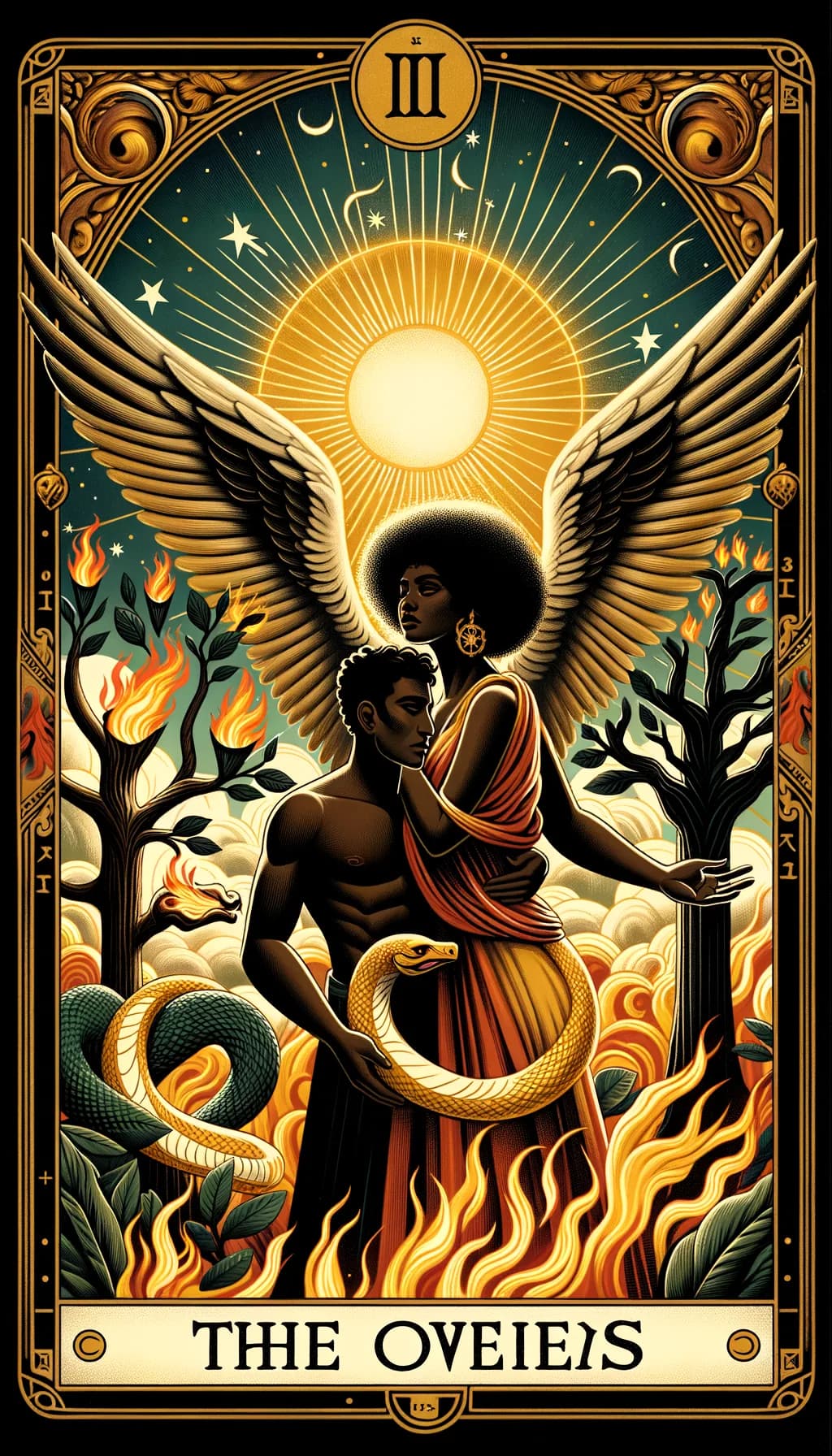
This pairing is the axis on which both cards turn—The Lovers' conscious choice degenerating into The Devil's compulsive attachment. Together they ask whether a relationship or decision that began in authentic connection has gradually calcified into obligation, dependency, or habit. The path back to The Lovers' freedom requires re-choosing consciously rather than defaulting to what's familiar.
Read full combination →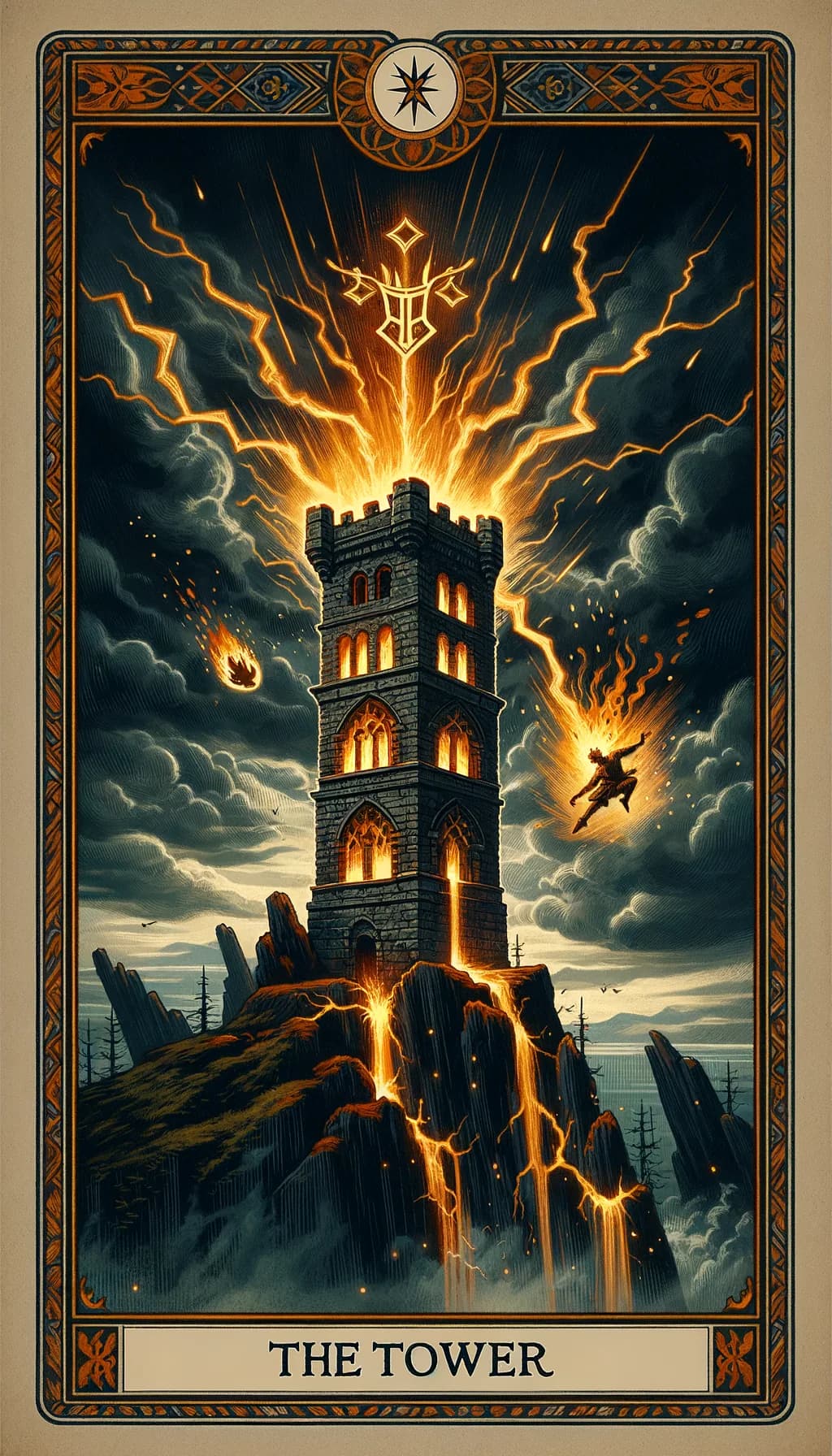
The Devil followed by The Tower describes a violent rupture from bondage—the addiction hitting bottom, the affair being discovered, the company collapsing under its own corruption. Liberation arrives not through graceful transition but through crisis that makes the old pattern physically impossible to maintain. The destruction, though traumatic, serves as the intervention your conscious mind was too compromised to initiate.
Read full combination →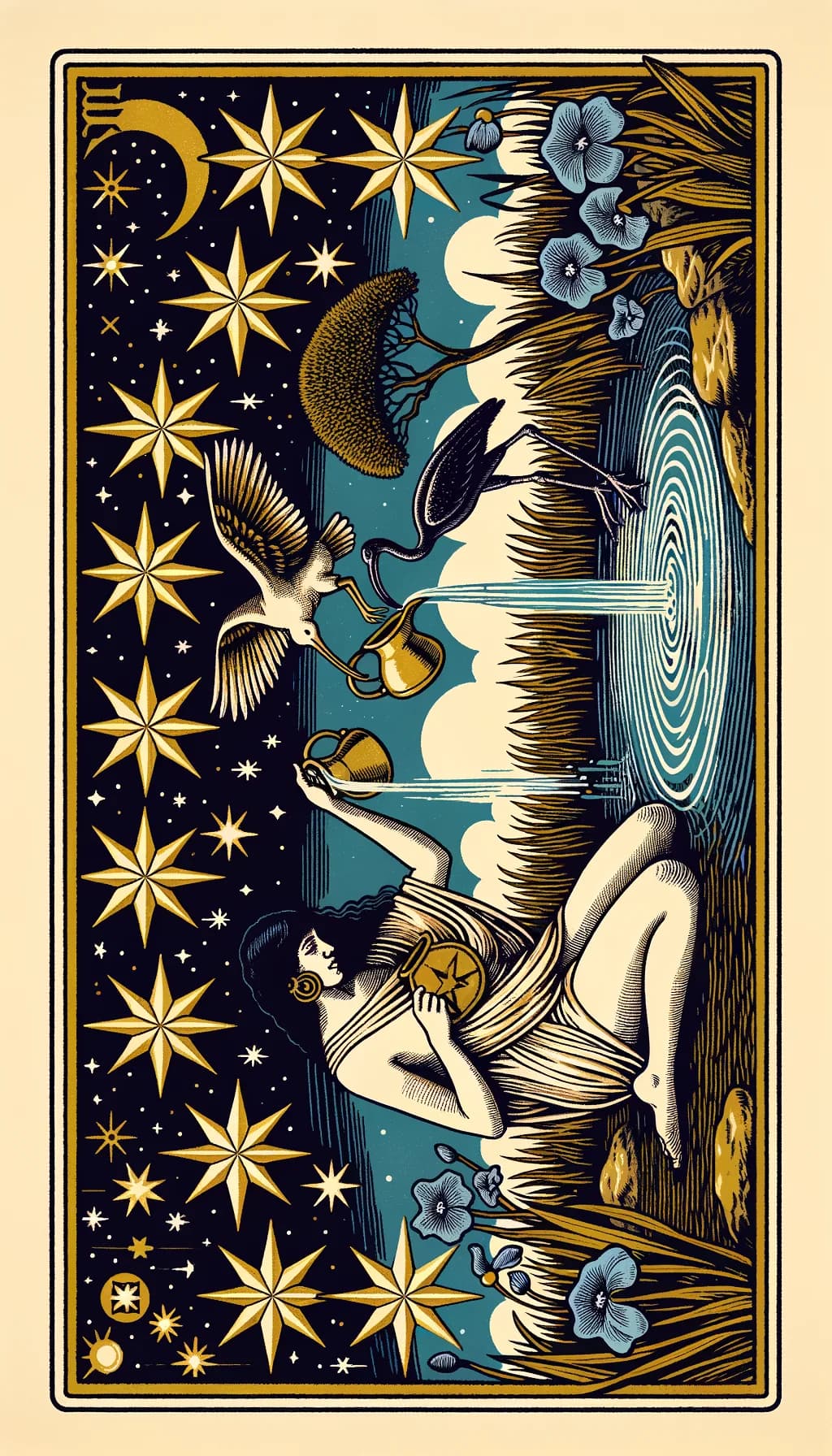
When The Devil precedes The Star, the reading maps a complete healing arc: from bondage through release to renewal. The Star's quiet, vulnerable hope is earned rather than naive, representing the clarity and tenderness that emerge specifically because the shadow work of The Devil has been honestly undertaken. This combination often appears in recovery narratives and post-trauma growth.
Read full combination →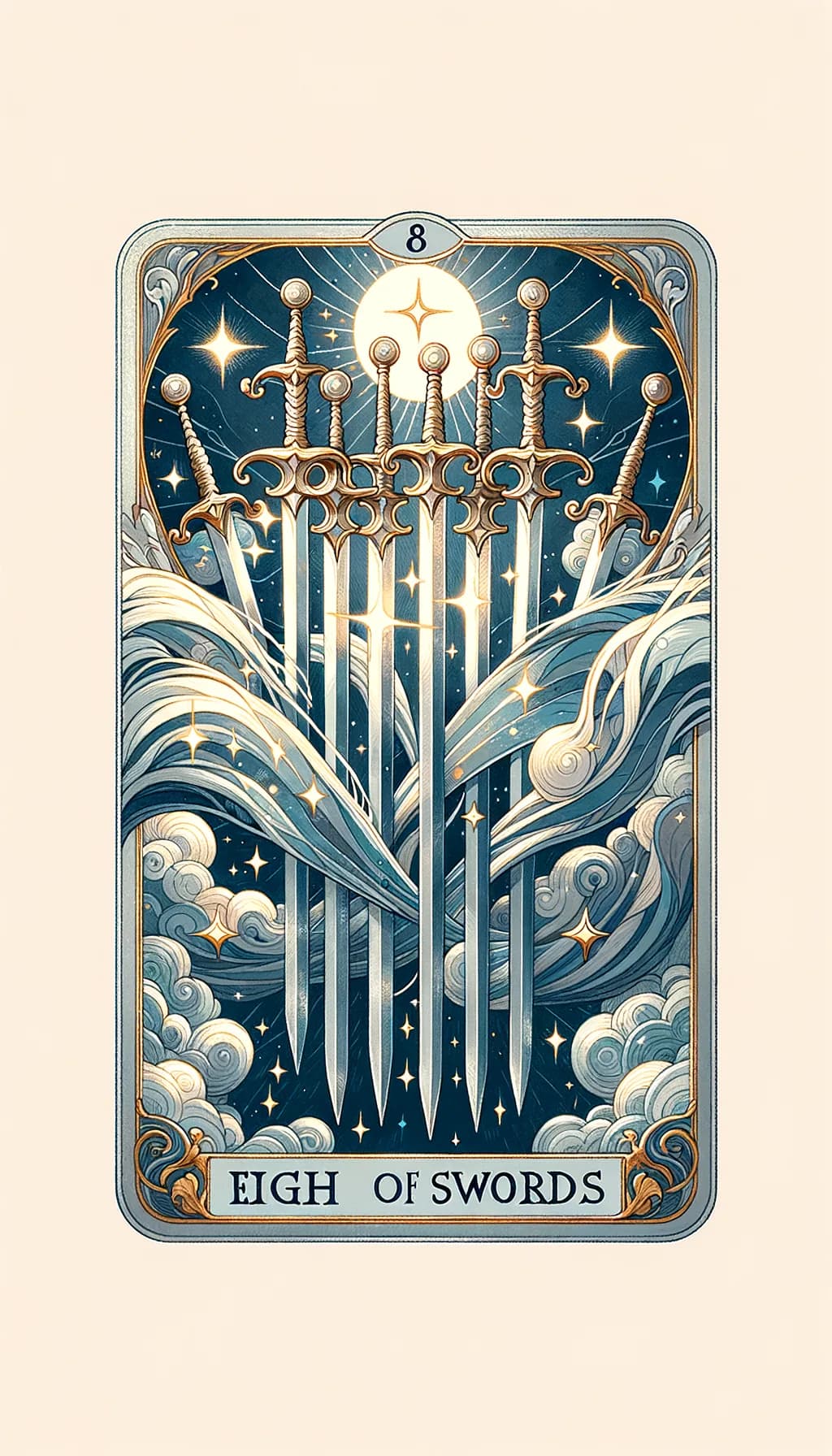
Both cards depict self-imposed imprisonment, but their combination intensifies the message: mental restriction (Eight of Swords) reinforces behavioral bondage (The Devil) in a feedback loop. The thoughts justify the behavior, the behavior reinforces the thoughts. Breaking free requires disrupting the cognitive pattern first—challenging the beliefs that insist escape is impossible before attempting to change the behavior.
Read full combination →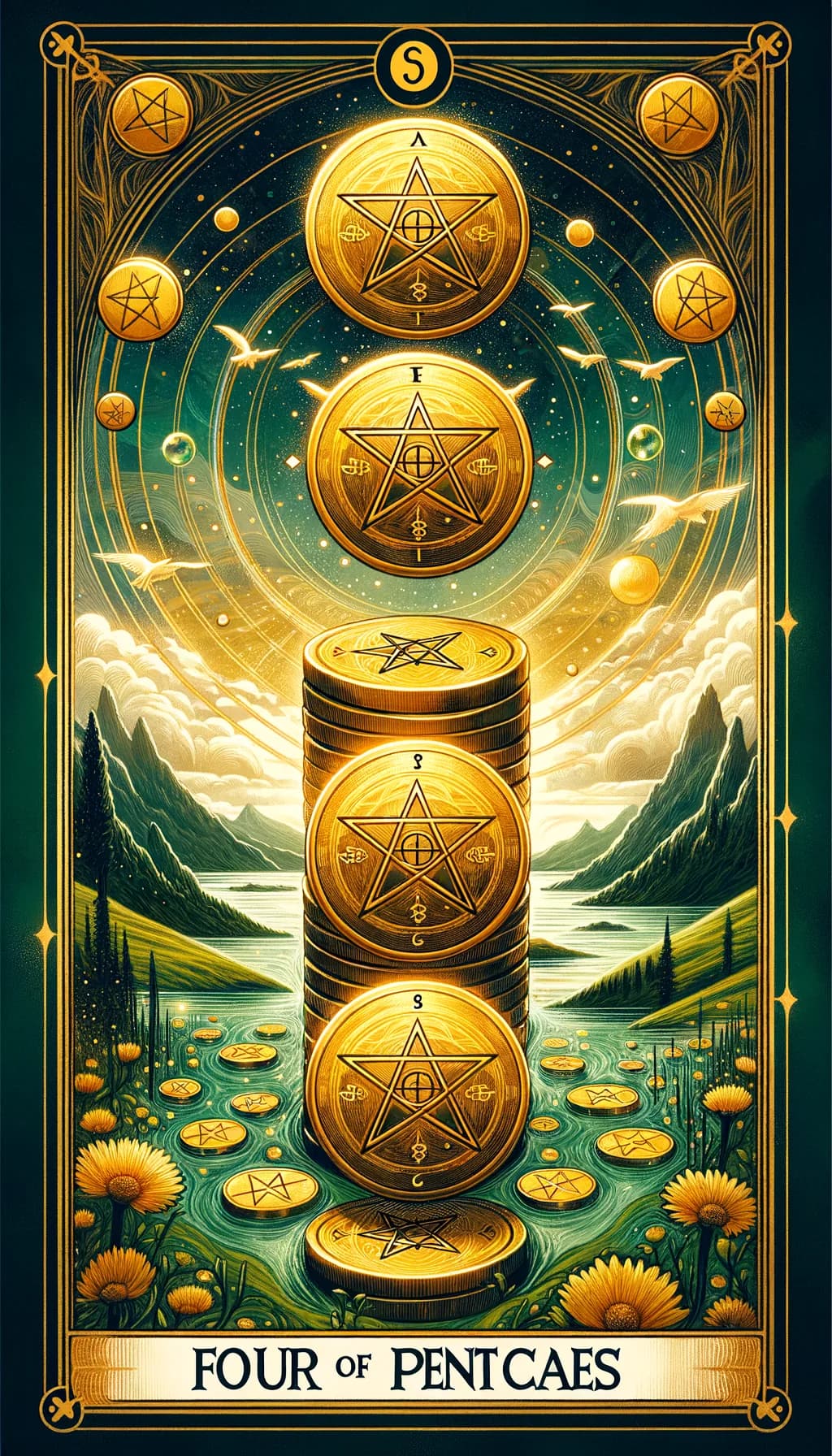
This combination reveals attachment to material security as the specific chain binding you. The Four of Pentacles' fear of loss feeds The Devil's promise that accumulation equals safety. Together they describe hoarding—of money, possessions, or control—driven by scarcity mentality. The combination asks what would remain of your identity if your financial safety net disappeared, and whether that question terrifies you more than it should.
Read full combination →Journal Prompts for The Devil
Identify one behavior you repeat despite knowing it harms you—trace it backward to the first time it felt like a solution rather than a problem, and write about what need it originally served.
If the loose chains in The Devil card represent the gap between compulsion and choice, describe the specific micro-moment in your most persistent pattern where you could still choose differently—what does that moment feel like in your body?
Write a letter from your shadow self to your conscious self explaining why it has maintained the pattern you most want to break, approaching it with curiosity rather than judgment.
Reading Insights for The Devil
Card Advice
When The Devil appears in a spread, resist the impulse to assign it generically to 'something bad.' Instead, look at the surrounding cards to identify the specific chain. Cards from the suit of Cups nearby suggest emotional dependency or addictive relationship patterns. Pentacles point to material entrapment—debt, consumerism, career bondage. Swords indicate obsessive thought loops or intellectual rationalizations protecting a harmful behavior. Wands suggest passion or ambition that has become compulsive rather than creative. Note the card's position: in a past position, it identifies the origin of current limitation; in present, it names the active pattern; as an outcome, it warns where the current trajectory leads without intervention. Pay attention to whether the querent responds to this card with recognition or defensive denial—the emotional charge it produces in a reading is itself diagnostic information. Never use this card to shame a querent; frame it as the shadow work invitation it genuinely is. Ask: 'Where in your life do you feel you should be able to stop but can't?' The answer will locate the card's specific meaning with precision no generic interpretation can achieve.
As an Outcome
As an outcome, The Devil suggests that without conscious intervention, current patterns will continue to create limitation and bondage. However, this card also offers the opportunity for profound liberation if you're willing to face difficult truths.
The Devil as a Person
Someone who embodies The Devil energy may appear charismatic and confident but often struggles with addiction, control issues, or using others for personal gain. They can be magnetically attractive yet emotionally unavailable, offering excitement but little genuine intimacy.
Draw The Devil in Your Reading
Ready to see how The Devil appears in context? Get a personalized AI-powered tarot reading now.