The Hanged Man Tarot Card
Yes or No: Maybe
The Hanged Man does not answer your question — it questions your question. The framing of your inquiry may contain assumptions that need to be examined before any answer becomes useful. If you are asking whether to act, the answer is 'not yet.' If you are asking whether to wait, the answer is 'yes, but actively, not passively.' The card suggests that when the perspective shift completes, the question itself may dissolve, replaced by a clarity that makes the original either/or irrelevant.
I release my grip on how things should be and discover the profound wisdom hidden in what actually is.
Element
Water
Planet
Neptune
Numerology
The number 12 represents completion and spiritual fulfillment, suggesting that through willing sacrifice and surrender, we achieve a higher understanding. It's the number of cosmic order and enlightenment through release.
Free The Hanged Man Reading
Premium AI Reading
Understanding The Hanged Man
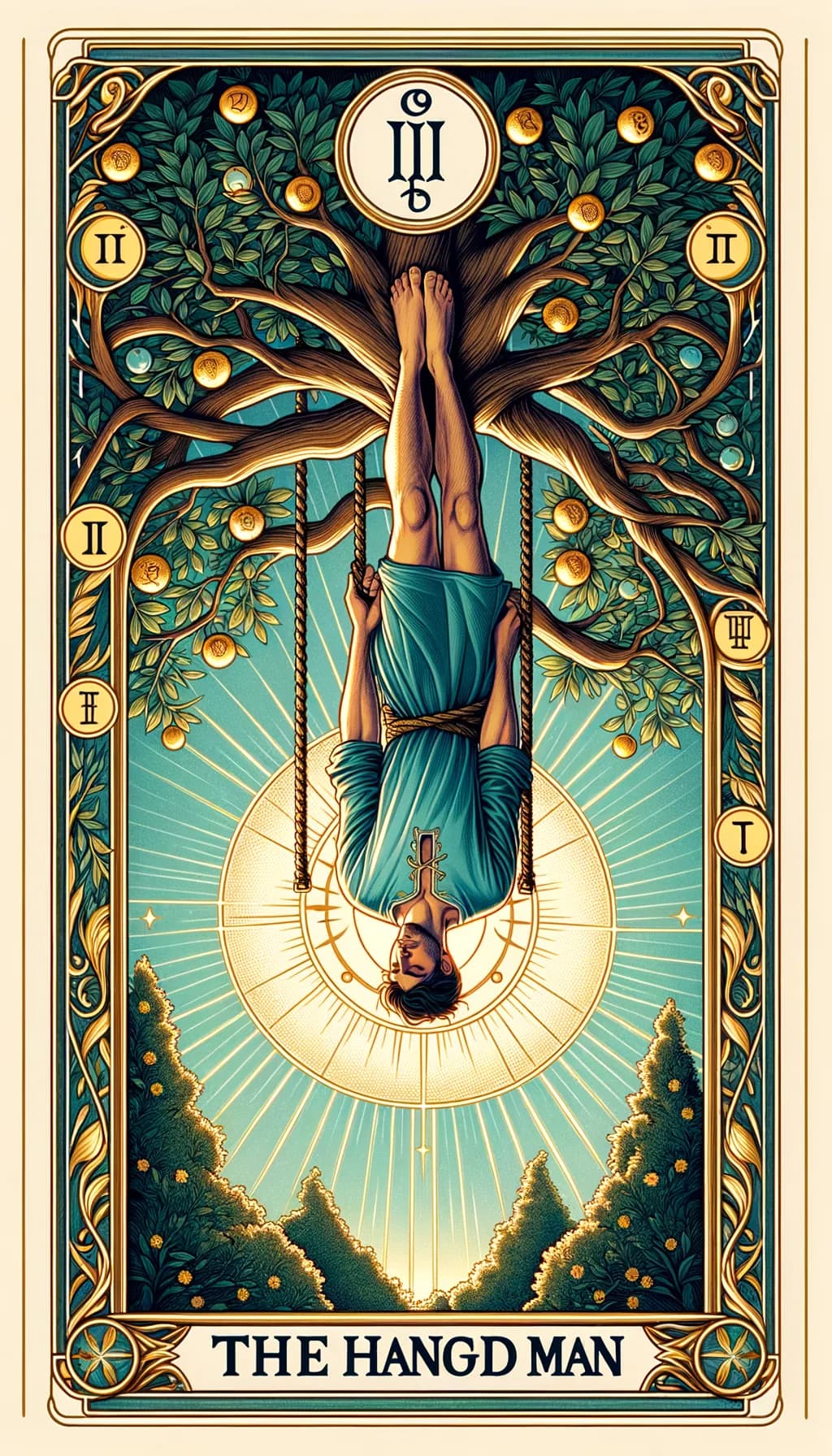
In Pamela Colman Smith's iconic illustration, a young man hangs upside-down from a living T-shaped tau cross, his right foot bound to the crossbar while his left leg bends behind the right to form a precise triangle — the same inverted figure found in medieval depictions of the traitor's punishment, yet here rendered with absolute serenity. His arms are folded behind his back, forming a second, hidden triangle, and together these geometries echo the alchemical symbol for water descending into fire. The figure's face bears no grimace; instead, a radiant golden nimbus encircles his head, the same aureole reserved for saints in Renaissance iconography. Waite himself wrote that this card expresses "the relation between the Divine and the Universe in one aspect," deliberately distancing it from the common fortune-telling interpretation of mere delay or punishment. The tau cross sprouts green leaves on both sides, indicating that the structure supporting this voluntary ordeal is organic and alive — it is Yggdrasil, the Norse World Tree upon which Odin hung for nine nights to receive the runes of wisdom. Neptune's rulership dissolves the boundaries between self and cosmos, and the Water element suggests that the Hanged Man inhabits the realm of the unconscious, where rational thought yields to intuitive knowing. His blue tunic — the color of spiritual knowledge — contrasts with his red leggings, signifying that worldly passion and material will have been deliberately subordinated to contemplative understanding. This is not paralysis; it is the mystic's chosen posture of receptivity, a deliberate inversion of ordinary consciousness that reveals what the upright world conceals.
Symbolism & Imagery
overview
The tau cross, or T-cross, is one of the oldest sacred symbols in Western esotericism, predating the Latin cross and associated with the Hebrew letter Tav, meaning 'mark' or 'seal' — the sign placed on the foreheads of the righteous in Ezekiel 9:4. Its living branches, depicted with precisely twelve leaf-clusters in many RWS printings, correspond to the card's number and the twelve signs of the zodiac, suggesting cosmic completeness. The figure's crossed leg creates an inverted numeral four, linking to The Emperor's structured authority now deliberately overturned. His hidden hands form a downward-pointing triangle behind his back, the alchemical glyph for Water, reinforcing Neptune's dissolving influence. The golden nimbus is not decorative — it represents the lux occulta, the hidden light that Kabbalists associate with the path of Mem on the Tree of Life, the maternal water that connects Geburah (severity) to Hod (splendor). The figure's serene expression amid physical discomfort echoes the Stoic concept of apatheia and the yogic practice of tapas, voluntary austerity undertaken for spiritual refinement. His blue garment represents passive receptivity to divine influx, while the red of his lower body anchors the card in embodied experience — this is not escapist transcendence but incarnate wisdom, gained through the body's willingness to endure what the mind cannot yet comprehend.
The Hanged Man Upright
When The Hanged Man appears upright, you are in a period where conventional problem-solving has reached its limit and only a radical shift in viewpoint will break the impasse. This is not advice to simply 'be patient' — it is a specific instruction to deliberately abandon your current frame of reference. A project manager who keeps optimizing timelines may need to question whether the project itself is the right one. A person trapped in a recurring argument with a family member may need to stop trying to win and instead ask what losing would actually teach them. The Hanged Man often appears when someone is clinging to sunk costs — emotional, financial, or temporal investments that logic says to protect but wisdom says to release. Neptune's influence here creates a fog around rational analysis, meaning that spreadsheets, pro-and-con lists, and strategic planning will not illuminate the way forward. Instead, the breakthrough arrives through dreams, meditation, synchronicities, or the quiet voice that speaks when the analytical mind finally exhausts itself. Concretely, this card frequently signals a voluntary pause: taking a sabbatical, stepping back from a leadership role, choosing not to respond to a provocation, or declining an opportunity that looks attractive on paper but feels wrong in the body. The sacrifice is real — you will lose something of value — but what you gain is a perspective that makes the loss intelligible and even welcome.
Love & Relationships
In romantic readings, The Hanged Man upright describes the specific dynamic of one partner needing to release their agenda for the relationship to deepen. This goes beyond compromise — it asks you to genuinely consider that your partner's vision of the relationship might be more accurate than yours. For couples stuck in repetitive conflict cycles, this card points to the person who needs to stop defending their position first, not because they are wrong, but because the act of surrender itself will change the relational field. For singles, The Hanged Man often appears when someone has been dating according to a rigid checklist or timeline. The card asks you to suspend those criteria entirely — not lower your standards, but recognize that the filtering mechanism itself may be eliminating the very person who would challenge and expand you. Relationships that begin during a Hanged Man period tend to develop slowly, often through friendship or shared spiritual practice rather than immediate romantic chemistry.
Career & Work
Professionally, The Hanged Man upright frequently appears when someone is experiencing a period of organizational limbo — a restructuring, a hiring freeze, a project placed on indefinite hold. Rather than frantically networking or sending out resumes to escape the discomfort, this card advises using the suspension productively. The most valuable career pivots often emerge from periods of enforced stillness: the laid-off executive who finally writes the book, the sidelined employee who develops expertise in an overlooked area that later becomes critical. This card also appears for people considering a deliberate professional sacrifice — accepting a lower salary for meaningful work, leaving a prestigious firm for a startup, or choosing part-time work to pursue education. The Hanged Man validates these choices, suggesting they will yield returns that cannot be measured on a conventional career trajectory but will prove deeply fulfilling.
Finances
Financially, The Hanged Man signals that your current money situation requires you to question fundamental assumptions rather than optimize within your existing framework. This might mean recognizing that your spending habits reflect values you no longer hold, or that your savings strategy serves anxiety rather than genuine security. The card advises against major transactions during this period — not because they would fail, but because your understanding of value itself is in flux. Wait until the new perspective crystallizes before committing significant resources.
Health
The Hanged Man in health readings points specifically to conditions that worsen with aggressive intervention and improve with rest, surrender, and alternative approaches. Autoimmune disorders, stress-related inflammation, insomnia, and chronic pain conditions are particularly associated with this card. The body is asking you to stop fighting it and start listening. Consider practices that invert your usual relationship with your body — restorative yoga, floatation therapy, acupuncture, or extended fasting under supervision — modalities where doing less accomplishes more than doing more.
Spirituality
Spiritually, The Hanged Man upright represents a profound initiation into higher consciousness through the practice of conscious surrender. This card appears when you're ready to release old spiritual beliefs or practices that no longer serve your growth and open yourself to new levels of understanding. The spiritual journey requires periods of apparent inaction where deep transformation occurs in the invisible realms of consciousness. You're being called to trust in divine timing and surrender your personal will to higher guidance. This may involve letting go of ego-driven spiritual pursuits and embracing a more humble, receptive approach to mystical experience. The Hanged Man teaches that enlightenment comes not through struggle but through willing sacrifice of everything that keeps you separate from your true nature. Use this time for deep meditation, contemplation, and inner listening. Your spiritual growth during this period may not be dramatic or visible to others, but it will be profound and lasting. Trust that this suspended moment is preparing you for a significant spiritual breakthrough.
The Hanged Man Reversed
The Hanged Man reversed describes three distinct conditions that require careful differentiation in a reading. The first is stalling — using spiritual language to justify avoidance, telling yourself you are 'surrendering' when you are actually terrified of making a decision. The second is meaningless suffering — enduring hardship that serves no developmental purpose, staying in a situation that depletes you without any corresponding growth in wisdom or character. The martyr complex lives here: the parent who sacrifices everything for their children while resenting them, the employee who works unpaid overtime while growing increasingly bitter. The third condition is the end of a legitimate suspension period — the gestation is complete and it is now time to act, but you have become so comfortable in the liminal space that re-engaging with the world feels threatening. Neptune reversed can manifest as delusion, self-deception, and the inability to distinguish genuine spiritual experience from escapist fantasy. Practically, this reversal often appears when someone needs to stop meditating on their problems and start solving them, stop journaling about their feelings and start communicating them directly, or stop waiting for a sign and recognize that the absence of a sign is itself the message. The reversed Hanged Man can also indicate that a sacrifice you made was not honored — you gave something up expecting a return that never came, and now you must grieve that loss without the consolation of meaning.
Love & Relationships
In love, the reversed Hanged Man exposes martyrdom dynamics with surgical precision. One partner is making sacrifices that the other neither requested nor appreciates, building a ledger of resentment that will eventually demand repayment. This card reversed often appears in relationships where one person has abandoned their own needs, interests, and friendships to serve the relationship, only to discover that their partner feels suffocated rather than grateful. For singles, this reversal can indicate someone who has been 'waiting' for love to find them for so long that passivity has calcified into identity. The card challenges you to distinguish between genuine openness and fear of rejection disguised as spiritual detachment. Taking concrete action — initiating a conversation, joining a community, being honest about what you want — is now necessary.
Career & Work
Professionally reversed, The Hanged Man warns against paralysis by analysis or using indecision as a strategy. You may be stuck in a role you have outgrown, telling yourself you are waiting for the right moment to leave while the right moment recedes further into the future. This reversal also flags the danger of professional martyrdom — taking on others' workloads, accepting unfair conditions, volunteering for thankless tasks in the hope of eventual recognition. The recognition is not coming. The card demands you stop sacrificing and start advocating for yourself with the same energy you have been giving to patience.
Finances
Financially, The Hanged Man reversed suggests that either excessive control or complete avoidance around money matters is creating problems. You may be forcing financial solutions that aren't sustainable or refusing to make necessary sacrifices that would improve your long-term financial health. This card reversed can indicate impatience with slow financial progress, leading to risky decisions or get-rich-quick schemes. Sometimes it suggests being stuck in old financial patterns even when they're clearly not working, refusing to see money management from a fresh perspective.
Health
In health matters, The Hanged Man reversed indicates that resistance to lifestyle changes or treatment approaches is prolonging wellness challenges. You may be fighting against your body's natural healing process or refusing to address underlying emotional or spiritual issues that affect your physical health. This reversal can suggest impatience with slow healing, leading to pushing yourself too hard or abandoning beneficial treatments prematurely. Sometimes it indicates being stuck in unhealthy patterns because change feels too difficult or uncertain.
The Hanged Man: Yes or No?
The Hanged Man does not answer your question — it questions your question. The framing of your inquiry may contain assumptions that need to be examined before any answer becomes useful. If you are asking whether to act, the answer is 'not yet.' If you are asking whether to wait, the answer is 'yes, but actively, not passively.' The card suggests that when the perspective shift completes, the question itself may dissolve, replaced by a clarity that makes the original either/or irrelevant.
The Hanged Man Combinations
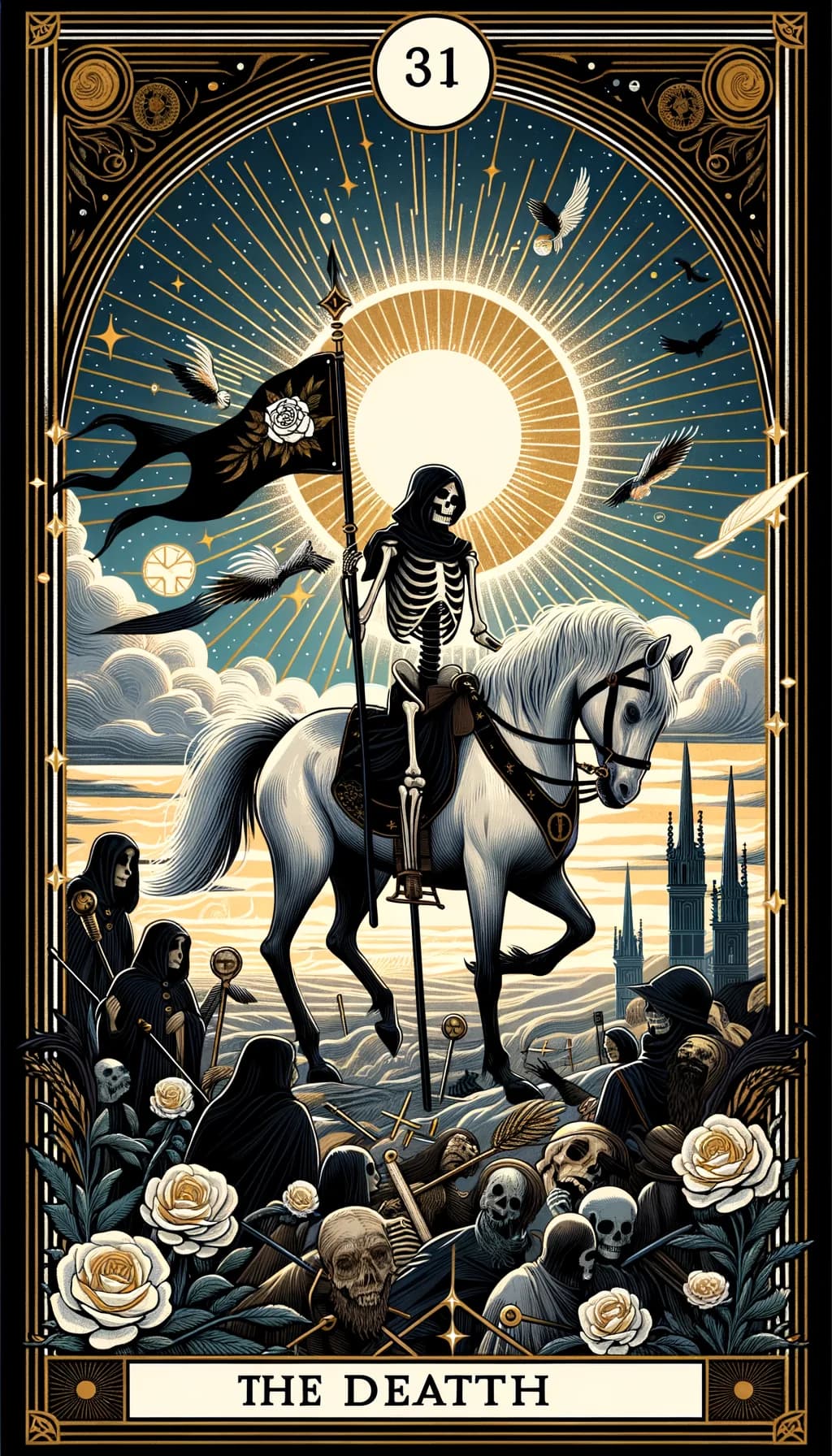
The Hanged Man followed by Death describes the complete arc of ego dissolution: first the voluntary surrender of perspective (XII), then the involuntary stripping away of identity (XIII). Together they indicate a profound psychospiritual death-rebirth process that cannot be rushed or controlled. This pairing often appears during life events like divorce, spiritual emergencies, or the collapse of a long-held worldview.
Read full combination →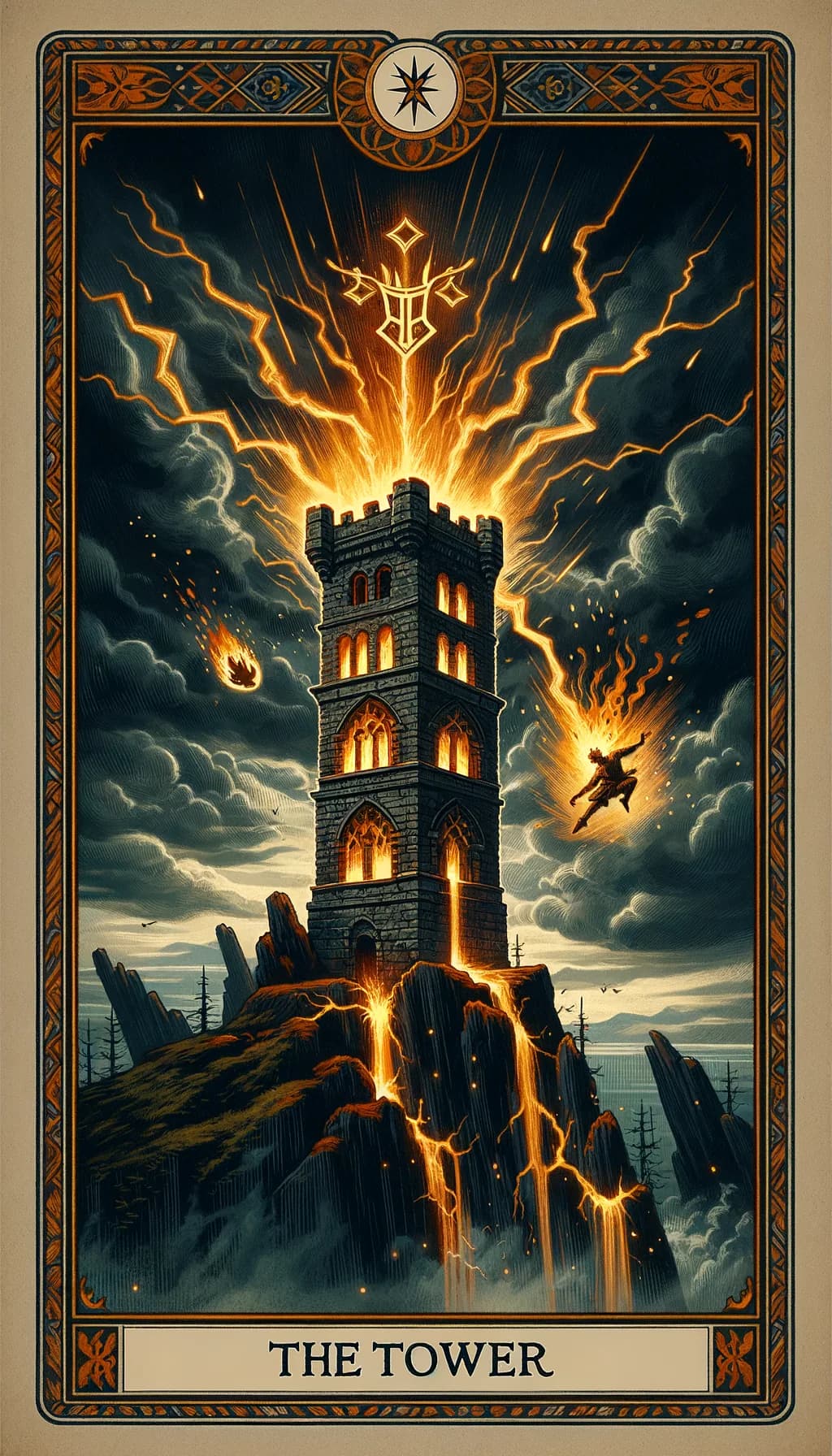
When The Hanged Man pairs with The Tower, it suggests that refusing to surrender voluntarily will result in forced disruption. The Tower arrives to shatter what the Hanged Man was gently asking you to release. If The Hanged Man comes after The Tower, it indicates that the shock has created the conditions for genuine contemplation — the destruction was necessary to make you stop and truly see.
Read full combination →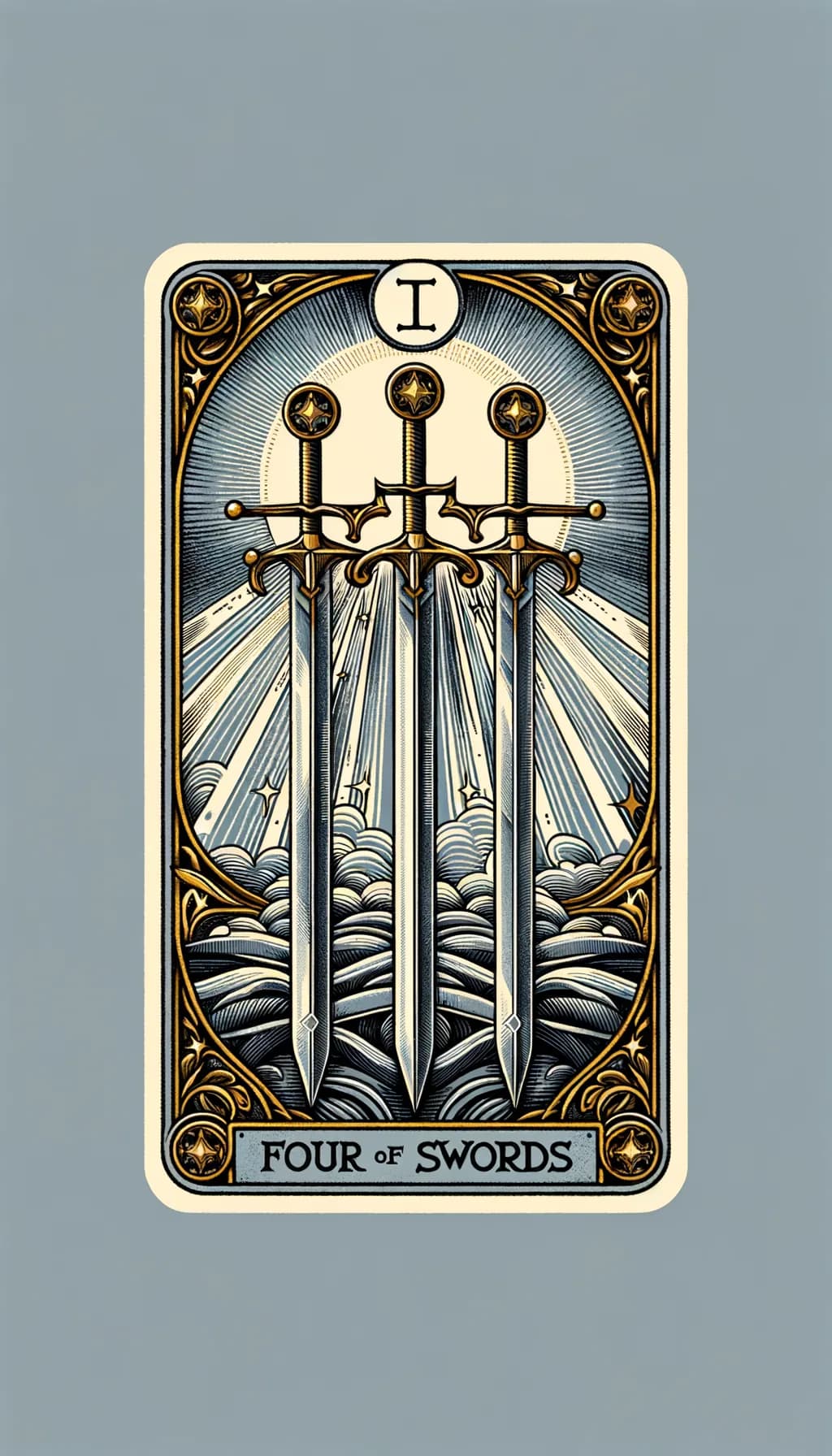
This combination doubles down on the message of deliberate withdrawal, but adds a specifically mental dimension. The Hanged Man's spiritual suspension paired with the Four of Swords' enforced mental rest indicates a period of complete retreat — possibly a meditation retreat, hospitalization, or voluntary isolation. The insight gained during this combined stillness will be unusually clear and actionable.
Read full combination →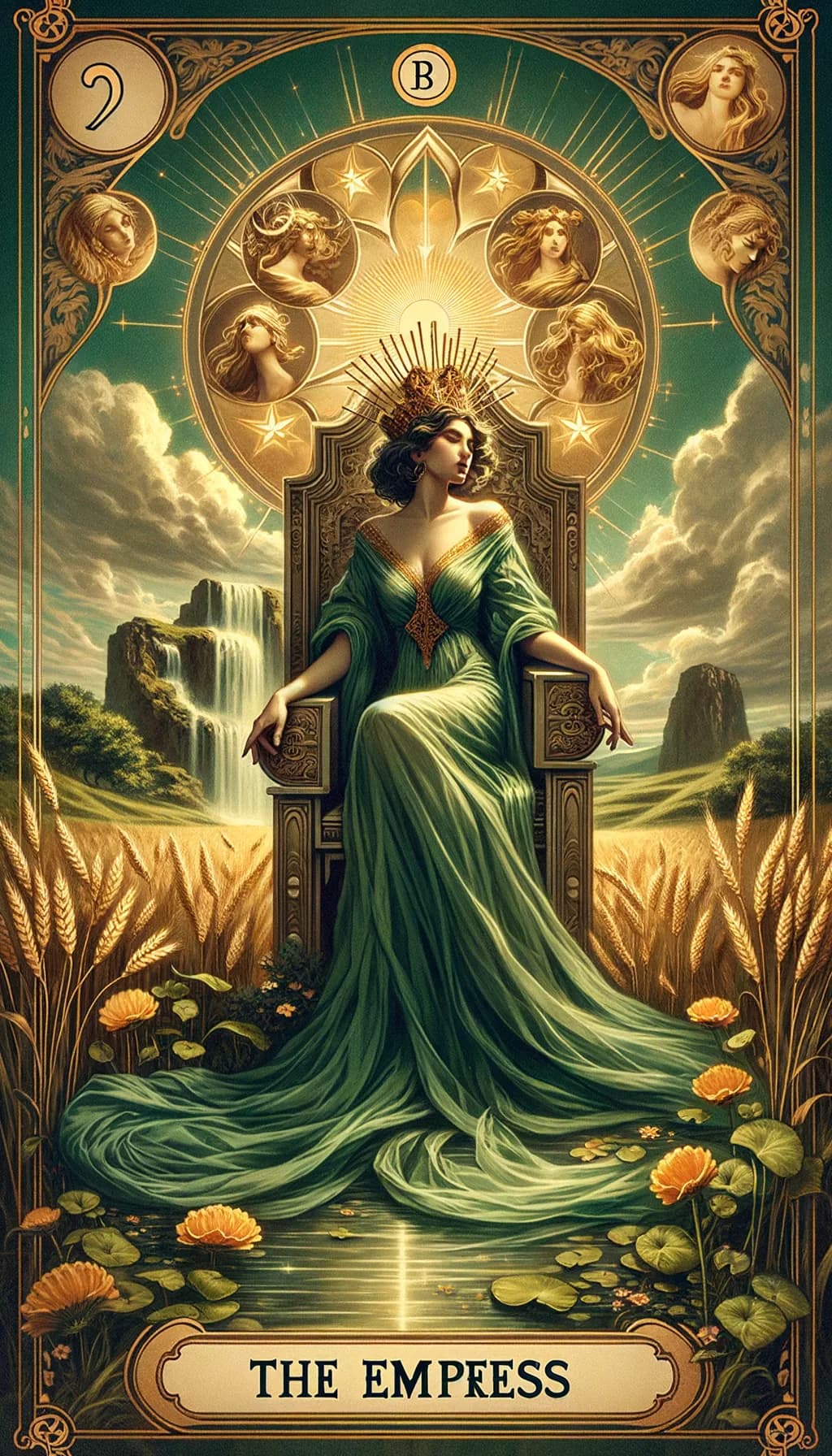
The Hanged Man with The Empress suggests that the period of suspension is specifically gestational — something creative, relational, or literally biological is developing in the darkness and cannot be hurried. The Empress confirms that the sacrifice is feeding new life. This pairing often appears during pregnancy, the early stages of a creative project, or the slow cultivation of a relationship that will eventually flourish abundantly.
Read full combination →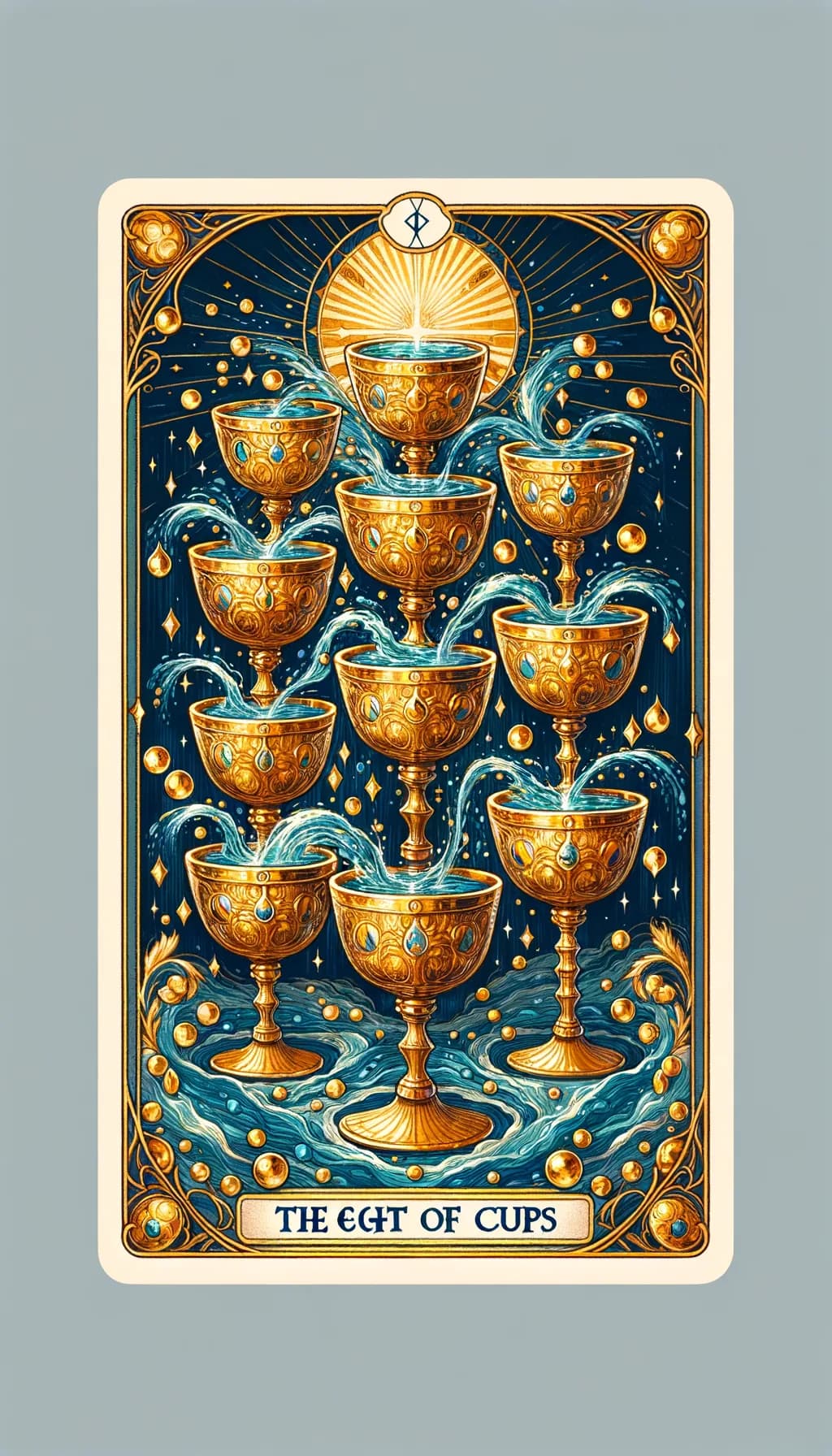
Together, these cards describe someone who must first accept the need to walk away (Eight of Cups) and then endure the disorientation of the transition (Hanged Man), or vice versa. The emotional departure depicted in the Eight becomes spiritualized by the Hanged Man's influence, elevating a personal loss into a soul-level initiation. This combination frequently appears when leaving a religion, a long marriage, or a homeland.
Read full combination →Journal Prompts for The Hanged Man
What specific belief, relationship pattern, or life strategy would I need to completely abandon in order to see my current situation with genuinely fresh eyes — and what am I afraid would happen if I actually let it go?
Describe a past experience where being forced to wait or being denied something I desperately wanted ultimately revealed a truth I could not have accessed any other way. What parallels exist with my current circumstances?
If I imagined my life from the perspective of someone who holds the exact opposite values and priorities that I do, what would they see that I am currently blind to — and what uncomfortable truth might their viewpoint contain?
Reading Insights for The Hanged Man
Card Advice
When The Hanged Man appears in a spread, first identify what the querent is gripping most tightly — that is precisely what the card asks them to release. Look at surrounding cards to determine whether the suspension is beginning, ongoing, or ending. Cards of action (Wands, Chariot, Knights) nearby suggest the querent is fighting the pause, while cards of rest (Four of Swords, the Moon, the Star) confirm that the surrender is already underway. Pay attention to the card's position: in a past position, it indicates a sacrifice already made whose fruits are now manifesting; in a present position, it asks for immediate surrender; in a future position, it warns that a period of voluntary or involuntary suspension is approaching. Ask the querent directly: 'What would you do if you stopped trying to fix this situation?' Their answer often reveals the very insight the card is pointing toward. In yes/no readings, treat The Hanged Man as a 'not yet' rather than a 'no.' In timing questions, it suggests delays measured in weeks to months, governed by internal readiness rather than external circumstances.
As an Outcome
As an outcome, The Hanged Man suggests that patience and surrender will ultimately lead to a breakthrough or new perspective that couldn't have been forced. The situation will resolve in its own perfect timing.
The Hanged Man as a Person
Someone who embodies The Hanged Man is deeply spiritual, patient, and wise, possessing the rare ability to find peace in uncertainty. They understand that life's greatest gifts often come through surrender rather than struggle.
Draw The Hanged Man in Your Reading
Ready to see how The Hanged Man appears in context? Get a personalized AI-powered tarot reading now.