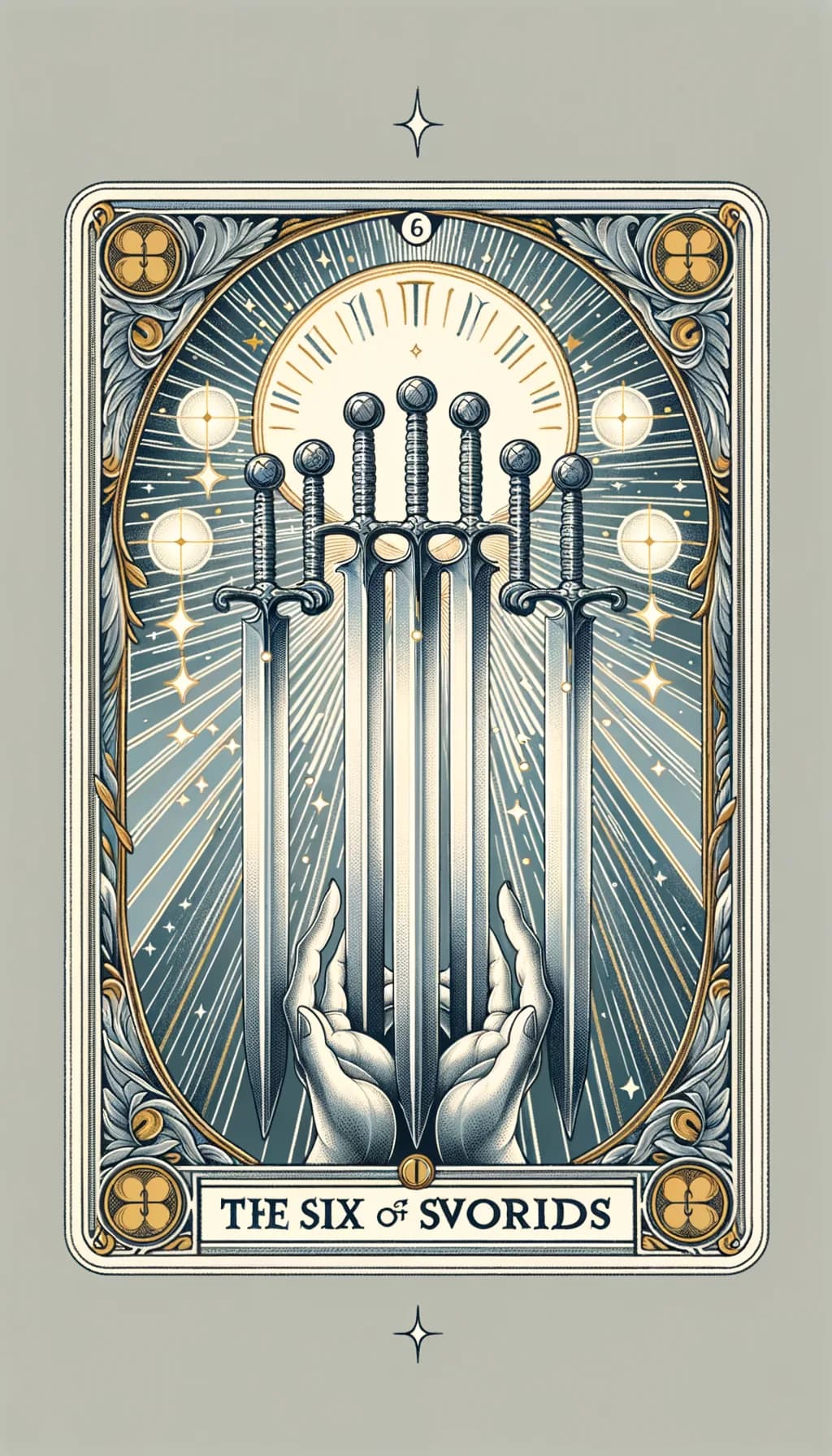
Six of Swords Tarot Card
Yes or No: Yes
The Six of Swords offers a qualified yes — the situation will improve, but through gradual transition rather than sudden resolution. Expect the path forward to feel sobering rather than celebratory. Progress is real but measured, and the outcome depends on your willingness to accept guidance and carry your past experiences consciously rather than abandoning or denying them. If your question involves leaving, moving, or seeking help, the affirmative is stronger.
I carry what I have learned without letting it sink me, and I trust the steady hands that guide me toward calmer waters.
Element
Air
Free Six of Swords Reading
Premium AI Reading
Understanding Six of Swords
In the Rider-Waite-Smith deck, Pamela Colman Smith painted one of tarot's most hauntingly quiet images: a cloaked ferryman poles a flat-bottomed boat across grey-green water, carrying a hunched woman and small child toward a distant, tree-lined shore. Six swords stand embedded in the hull before them, their blades piercing the wood yet somehow not sinking the vessel. This paradox is the card's central teaching — we can carry our wounds forward without being destroyed by them, provided we keep moving. The water on the right side of the boat is visibly choppy and agitated, while the water ahead and to the left lies smooth and still. Smith's deliberate compositional choice creates a literal crossing from turbulence to calm, one of the few cards where the landscape itself narrates the emotional arc.
Waite described this card tersely as 'journey by water, route, way, envoy, commissionary, expedient,' but also noted its connection to a 'declaration, confession, publicity' — hinting that the passage depicted involves some form of truth-telling or emotional disclosure that precedes departure. In the Golden Dawn tradition, this card corresponds to Mercury in Aquarius, combining the messenger god's capacity for intellectual detachment with the Water Bearer's humanitarian vision. The decanate assigns it to roughly January 20 through February 18, the heart of winter when the world appears most barren yet the days are already lengthening. This seasonal resonance matters: the Six of Swords is not spring's arrival but winter's slow pivot toward it, the unseen turning point when survival begins shifting toward recovery. Numerologically, six in the suit of Swords brings Tiphareth's harmony to the realm of the mind — the first moment of balanced perspective after the devastating losses of the Four and Five of Swords. In readings, this card consistently appears at the threshold between crisis and convalescence, when the hardest decision has already been made and the quiet, unglamorous work of moving forward has begun.
Symbolism & Imagery
overview
The flat-bottomed boat is not a grand vessel but a humble ferry — practical, low to the water, designed for crossing rather than voyaging. This specificity matters: the Six of Swords depicts a passage between two known shores, not an open-ocean adventure into the unknown. The six swords planted upright in the bow serve double duty as both cargo and mast-like structures; they are the mental burdens (memories, beliefs, painful truths) that travel with the passengers but are positioned ahead of them rather than behind, suggesting these experiences now face forward as navigational instruments rather than backward as wounds. The ferryman stands at the stern, actively poling — this is not a passive drift but requires skilled effort and knowledge of the waterway. His hooded cloak obscures identity, evoking Charon, the psychopomp of Greek mythology who ferried souls across the River Styx, but also any therapist, mentor, or trusted guide whose personal identity matters less than their function. The woman's bowed posture and the child tucked against her body convey grief's physicality — the way sorrow literally curves the spine and draws the arms inward. Smith rendered the distant shore with minimal detail: a few trees, a gentle rise of land. This vagueness is intentional. The destination does not need to be paradise; it only needs to be elsewhere, away from what caused harm. The color palette — muted greys, steely blues, pale greens — reinforces the emotional tenor: not despair, not joy, but the drained neutrality that follows intense suffering.
Six of Swords Upright
The Six of Swords upright marks the moment when you have stopped fighting the storm and started rowing away from it. In practical terms, this card appears when someone has made the difficult decision to leave — a relationship, a city, a job, a belief system, a version of themselves — and is now in the liminal space between what was and what will be. The journey is neither exciting nor triumphant. It feels like sitting in an airport terminal at 4 AM with everything you own in two suitcases: exhausting, disorienting, but undeniably necessary. This card frequently surfaces during relocations after divorce, the first weeks of sobriety, the quiet period after leaving an abusive household, or the strange calm that follows a mental health crisis when medication or therapy begins stabilizing the mind. The six swords in the boat acknowledge that you cannot cross this water unburdened. You bring your memories, your patterns, your hard-won knowledge of what went wrong. The card's wisdom is that carrying these things consciously — upright, visible, accounted for — is fundamentally different from being unconsciously controlled by them. Seek guidance during this passage. The ferryman exists for a reason: therapists, sponsors, trusted friends, spiritual directors, immigration lawyers, financial planners — whoever possesses the specific expertise your particular crossing requires. This is not the time for rugged individualism. Accept the help that enables safe passage.
Love & Relationships
In love readings, the Six of Swords upright often appears when one or both partners have decided to move past a significant rupture — infidelity, a prolonged period of disconnection, or a crisis that tested the relationship's foundation. This is not the passionate reunion of reconciliation cards; it is the sobered, committed decision to try couples therapy, to have the honest conversation that has been avoided for months, to relocate together for a fresh start. For those leaving relationships, this card validates the departure without demonizing what is being left behind. You loved someone; it did not work; you are allowed to grieve and move forward simultaneously. Singles encountering this card are typically in active recovery from past heartbreak — not yet ready for a new relationship but consciously doing the inner work that will make one possible. The card counsels patience with this in-between state rather than rushing to fill the emptiness.
Career & Work
Professionally, the Six of Swords describes a deliberate career transition motivated by the recognition that your current environment is untenable. This might look like accepting a lateral move to escape a toxic manager, transitioning from a high-paying but soul-crushing corporate role into work aligned with your values, or relocating for a position that offers stability after a period of professional chaos. The card also appears for consultants, interim managers, and anyone whose professional role involves guiding organizations through difficult transitions. If you are between jobs, this card suggests the gap itself serves a purpose — use it to process what went wrong in your previous position so you do not replicate those dynamics. Seek career counseling or mentorship; the ferryman figure indicates that professional guidance accelerates this crossing significantly.
Finances
Financially, the Six of Swords indicates a period of slow, methodical recovery rather than sudden windfalls. You may be working with a debt consolidation plan, following a structured budget for the first time, or gradually rebuilding savings after a financial crisis. The card validates that incremental progress counts. Moving from drowning in debt to treading water is genuine improvement, even if the distant shore of financial security remains on the horizon. Professional financial guidance — a credit counselor, accountant, or financial planner — is strongly indicated.
Health
The Six of Swords in health readings points to the convalescent phase — you have survived the acute crisis and entered recovery. This applies equally to physical rehabilitation after surgery or injury, the stabilization period when psychiatric medication reaches therapeutic levels, or the early months of addiction recovery when sobriety feels fragile but is holding. Follow your treatment plan with diligence. The card emphasizes that healing requires active cooperation with your healthcare providers, not passive waiting for improvement to arrive on its own.
Six of Swords Reversed
The Six of Swords reversed does not simply mean 'stuck' — it describes the specific agony of knowing you need to leave but being unable to execute the departure. The boat has turned back, or perhaps never launched. There are several distinct manifestations. First, you may be returning to a harmful situation you previously left: going back to the ex who hurt you, rejoining the company you escaped, relapsing into patterns you had begun to outgrow. The familiar dysfunction exerts a gravitational pull that the unknown shore cannot match. Second, the reversal can indicate that someone you trusted to guide your transition — a therapist, mentor, lawyer, or friend — has failed you, leaving you adrift without the navigational support you needed. Third, this card reversed sometimes describes internal resistance to processing grief. You are attempting to cross the water without loading the swords into the boat, trying to move forward while refusing to acknowledge what you are carrying. This produces a peculiar stuckness where you physically relocate or logically change circumstances but emotionally remain anchored to the same turbulent waters. The reversed Six of Swords asks uncomfortable questions: What would you lose by actually healing? Whose identity depends on remaining wounded? What secondary gains does staying in crisis provide? Sometimes we resist peaceful shores because we have built our entire sense of self around surviving the storm, and calm waters feel like an identity death we are not prepared for.
Love & Relationships
In love readings reversed, the Six of Swords reveals the painful cycle of leaving and returning to relationships that have already proven harmful. You may be romanticizing the past, remembering only the good and minimizing the damage. For couples, this reversal suggests that attempts at reconciliation or therapy are not gaining traction because one or both partners are not genuinely willing to do the difficult emotional work required. Old arguments resurface in identical patterns. For singles, this card reversed often indicates unprocessed attachment wounds — perhaps from childhood rather than recent relationships — that create an unconscious template drawing you toward partners who replicate familiar pain. The crossing cannot happen until you honestly inventory what you are carrying.
Career & Work
Professionally reversed, the Six of Swords describes remaining in a work situation you know is damaging because the alternative feels too uncertain. You may have interviewed elsewhere, even received offers, but something pulls you back — financial fear, loyalty to colleagues, the devil-you-know mentality. Alternatively, you may have changed jobs only to find yourself in an eerily similar toxic dynamic, suggesting the pattern originates internally rather than externally. Career transitions attempted under this reversal tend to stall or circle back. Honest self-assessment about what you contribute to workplace dysfunction is necessary before the next crossing attempt.
Finances
Financially, the reversed Six of Swords indicates continued money struggles despite efforts to improve your situation. You might be receiving poor financial advice or refusing to accept help that could genuinely improve your circumstances. This reversal can suggest that you're not learning from past financial mistakes and continue making poor money decisions.
Health
Health-wise, this reversal suggests difficulty recovering from illness or setbacks in your healing journey. You might be resistant to treatment recommendations or not following through with recovery plans. It can indicate that mental health issues are persisting despite support, possibly because you're not ready to do the deep work required for healing.
Six of Swords: Yes or No?
The Six of Swords offers a qualified yes — the situation will improve, but through gradual transition rather than sudden resolution. Expect the path forward to feel sobering rather than celebratory. Progress is real but measured, and the outcome depends on your willingness to accept guidance and carry your past experiences consciously rather than abandoning or denying them. If your question involves leaving, moving, or seeking help, the affirmative is stronger.
Six of Swords Combinations
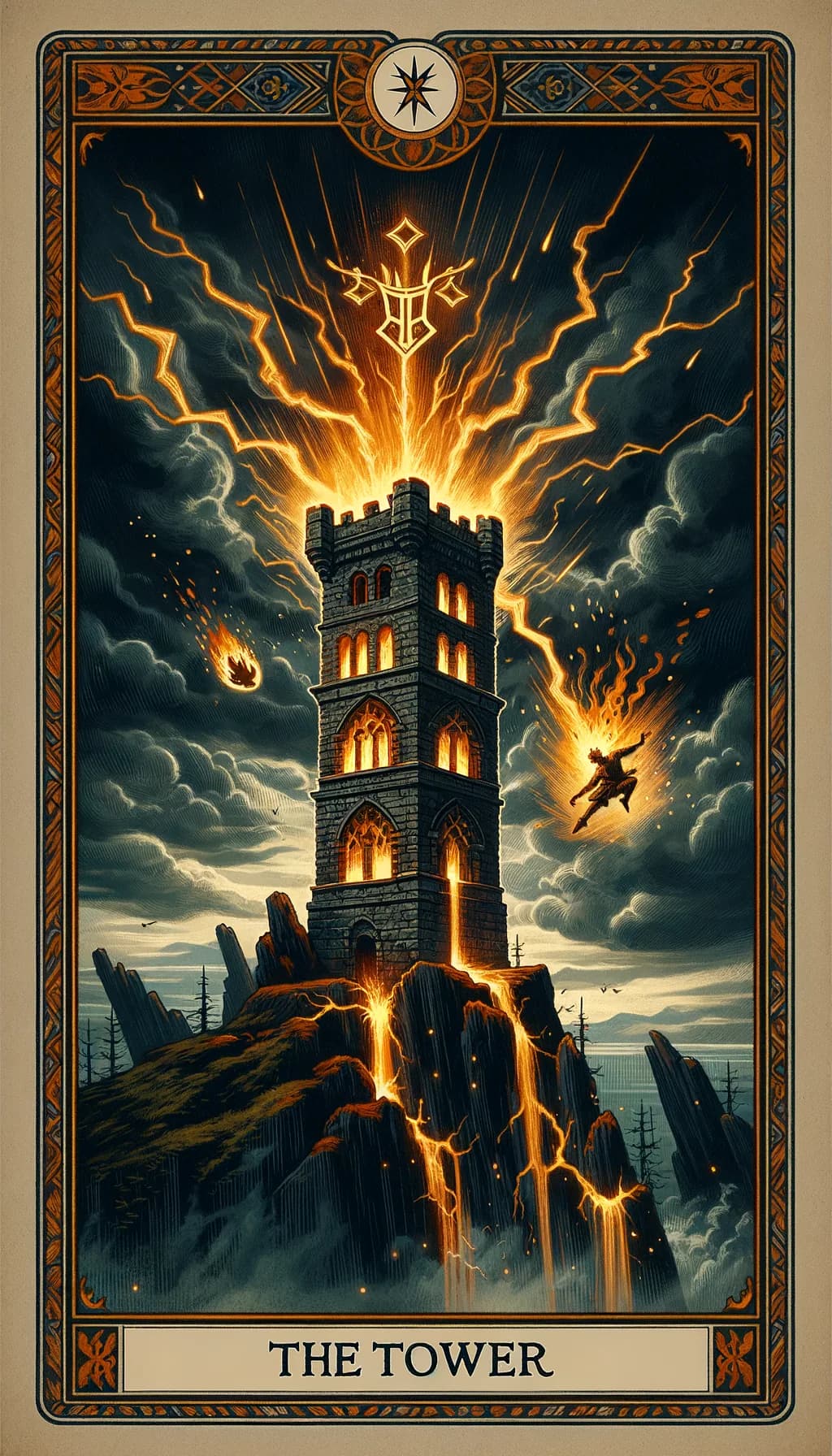
The Tower's sudden destruction creates the conditions that make the Six of Swords' departure both necessary and possible. Together they describe a forced evacuation — you did not choose to leave, but the burning structure behind you leaves no alternative. This pairing often appears during abrupt relationship endings, unexpected layoffs, or crises that demolish the status quo. The Six of Swords promises that even unwilling departures lead somewhere calmer.
Read full combination →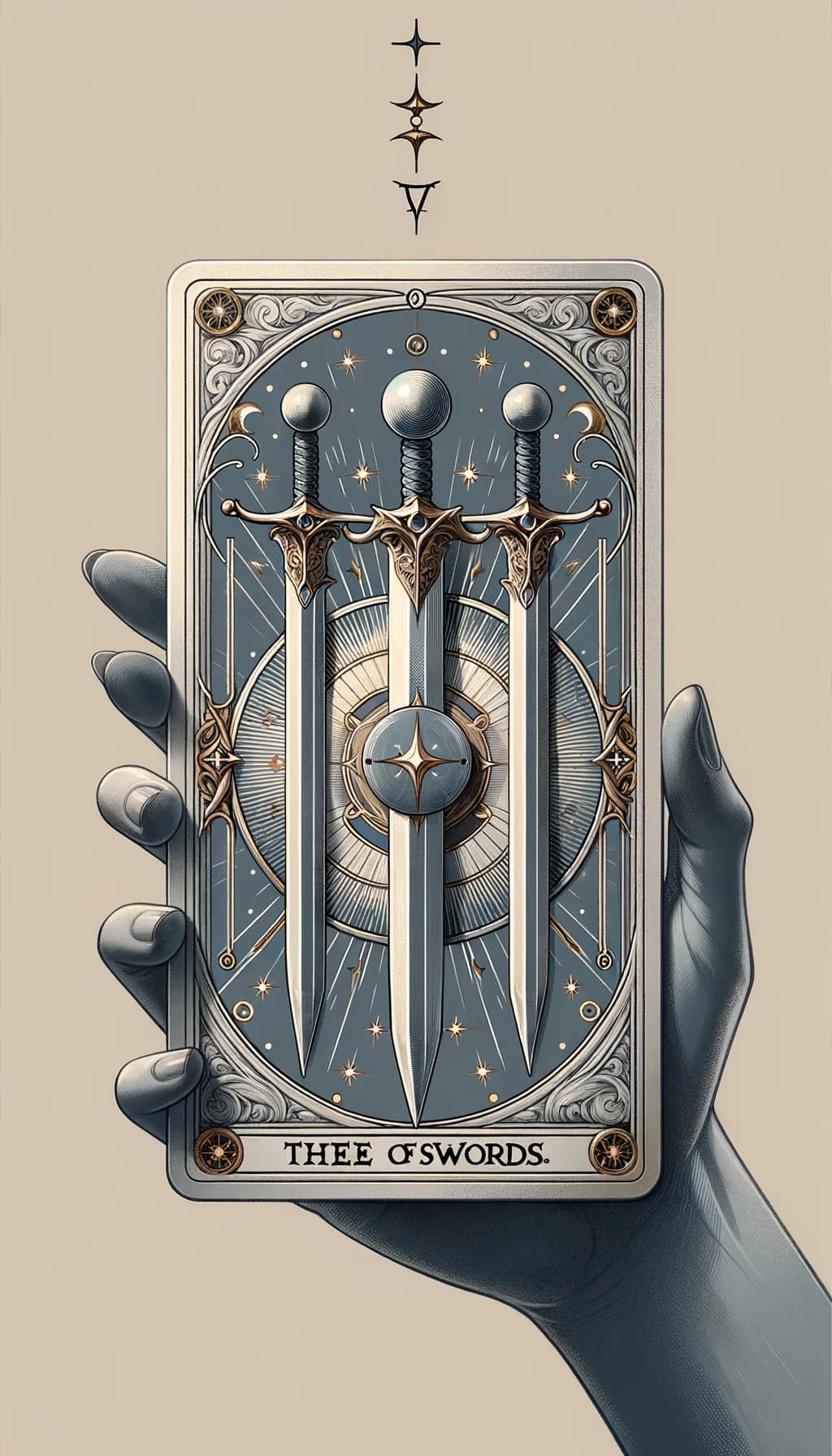
The Three of Swords identifies the specific wound the Six of Swords is carrying across the water: heartbreak, betrayal, or a painful truth that cannot be unheard. This combination appears frequently during separation and divorce readings, confirming that the grief is real and justified while simultaneously affirming that the decision to leave serves long-term healing. The swords in the boat are the same swords that pierced the heart.
Read full combination →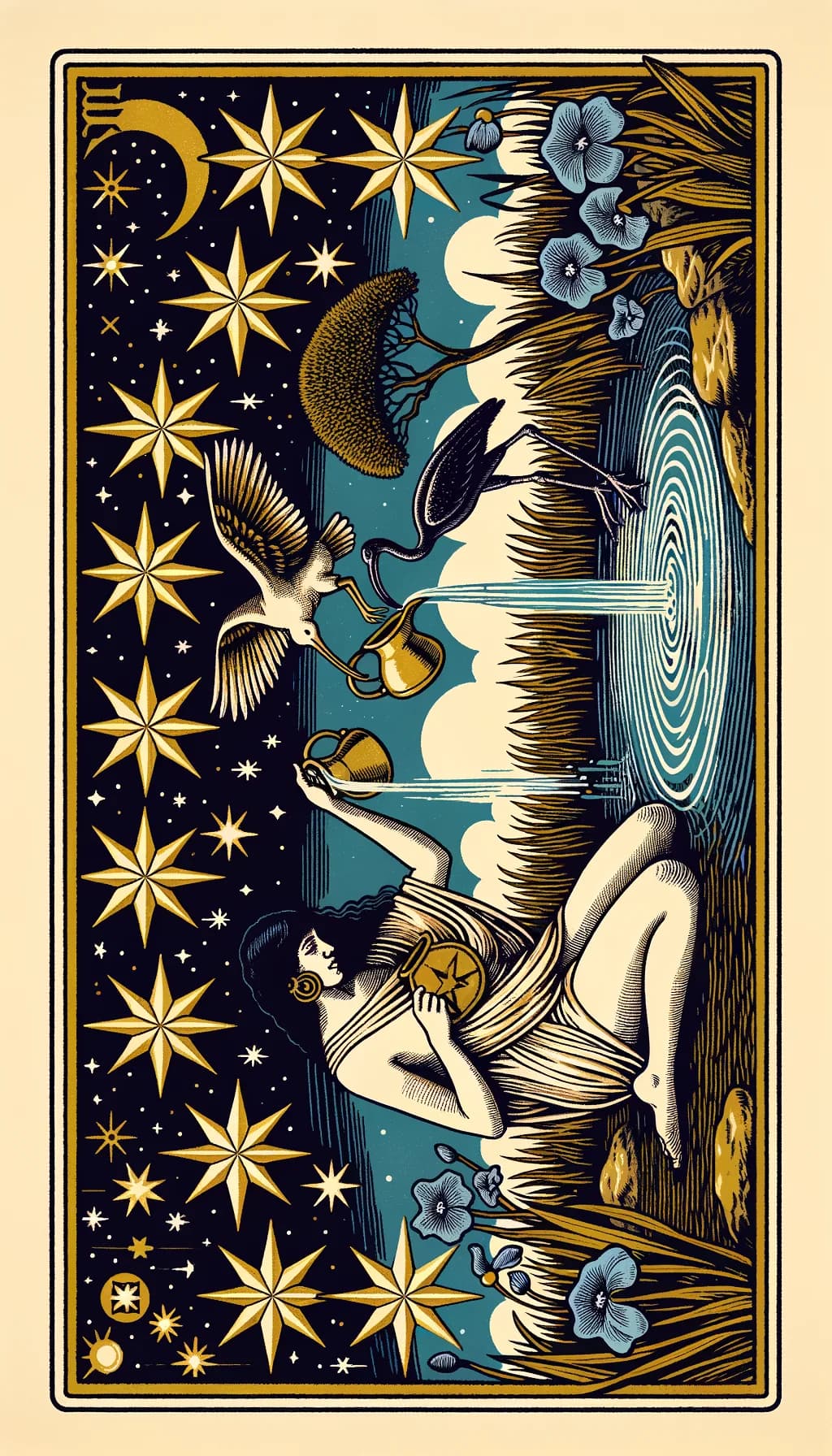
This pairing is one of the most healing combinations in tarot. The Star illuminates the distant shore the Six of Swords is sailing toward, confirming that the destination is genuine renewal rather than mere escape. Together they suggest that therapeutic or spiritual work undertaken during this transition period produces profound, lasting healing. Hope is not wishful thinking here — it is the realistic assessment that what lies ahead genuinely surpasses what is being left behind.
Read full combination →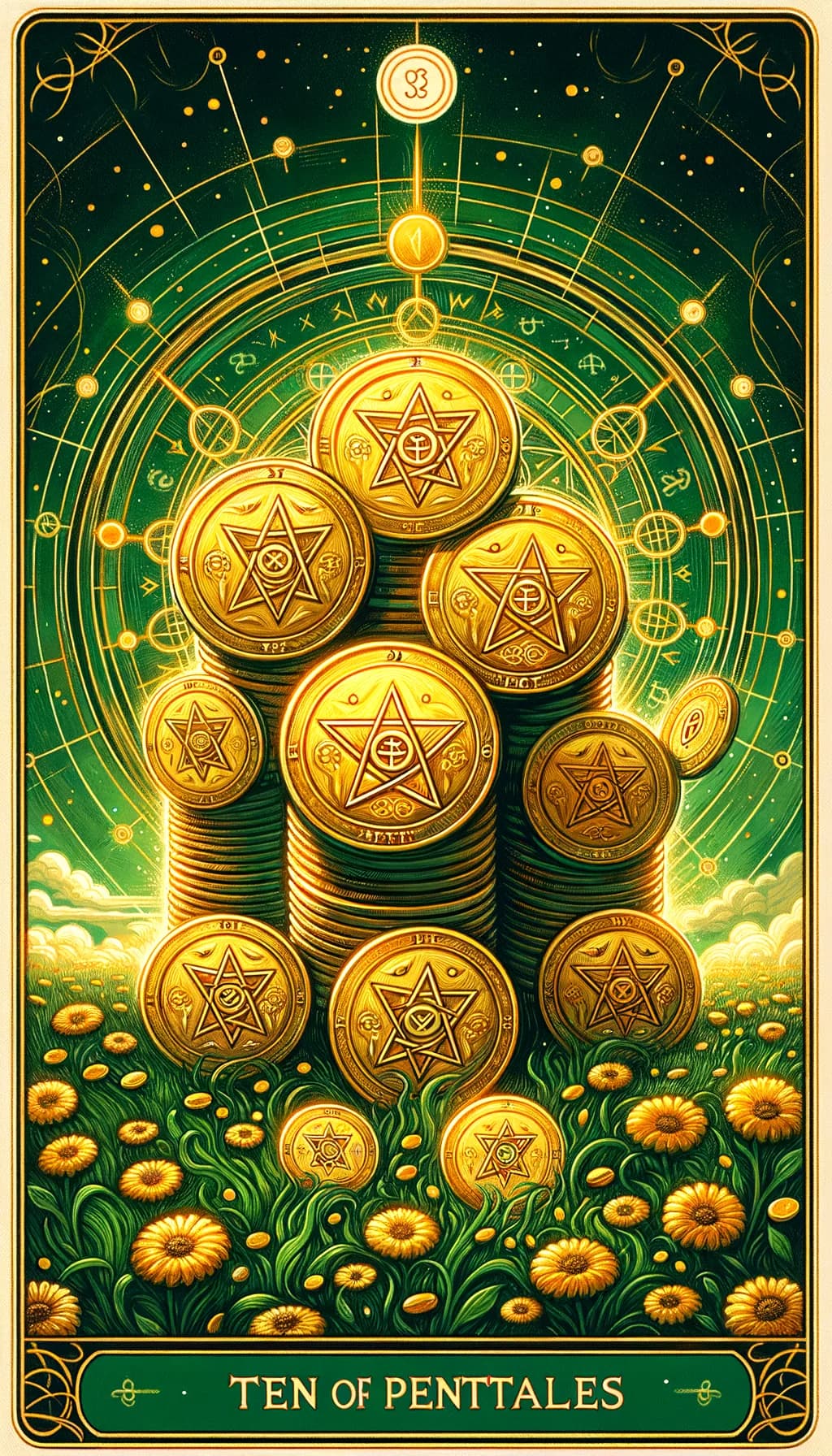
The Ten of Pentacles as the destination of the Six of Swords' journey suggests that this transition leads to lasting material stability and family security. This combination often appears when someone relocates for better opportunities, moves closer to supportive family, or makes financial decisions that prioritize long-term security over short-term comfort. The crossing is motivated by practical wisdom about what sustains a life.
Read full combination →
The Moon alongside the Six of Swords introduces uncertainty and possible deception into the transition. You may not have complete information about where you are heading, or fear and anxiety are distorting your perception of the journey. This pairing sometimes indicates travel across actual water at night or emigration to an unfamiliar culture. The ferryman may not be entirely trustworthy. Proceed with heightened awareness and verify the guidance you are receiving.
Read full combination →Journal Prompts for Six of Swords
What specific situation, relationship, or belief system am I currently crossing away from, and what are the six swords — the memories, lessons, and unresolved feelings — I am carrying in my boat?
Who serves as my ferryman right now, and am I allowing them to guide me fully, or am I resisting their help while still expecting safe passage?
If I imagine the distant shore I am heading toward, what does my life look like there — not in fantasy, but in realistic, concrete terms that I can begin building toward today?
Reading Insights for Six of Swords
Card Advice
When the Six of Swords appears in a spread, first identify the specific turbulence being left behind by examining surrounding cards — the source of the storm matters as much as the crossing itself. Note the card's position: in past position, the transition has already occurred and its lessons inform the present; in future position, the crossing is approaching and preparation is warranted. Ask the querent directly: 'What are you leaving?' and 'Who is helping you navigate this?' The ferryman is a critical detail — this card almost always indicates that guidance from another person is either present or urgently needed. Pay attention to whether the querent identifies with the ferryman or the passengers; some people are the ones being carried, others are the ones doing the carrying. In relationship spreads, this card frequently represents emotional distance that is functional rather than hostile — the necessary space between partners that allows cooling after conflict. In timing questions, the Six of Swords suggests days to weeks rather than months, reflecting the relatively brief duration of an active crossing versus the longer period of arriving and settling. The card's energy is kinetic but subdued — things are moving, but quietly.
As an Outcome
As an outcome, the Six of Swords promises peaceful resolution and successful transition through difficulty. While the journey may take time, you'll emerge with greater wisdom and emotional stability. The calmer waters ahead are not a fantasy but a genuine destination that your current efforts are steadily carrying you toward. Relationships, career situations, and inner emotional states all benefit from the measured, thoughtful approach to change that this card represents.
Six of Swords as a Person
The Six of Swords personality is the steady navigator who guides others through life's most turbulent passages with calm assurance and quiet strength. This person has weathered their own significant storms and emerged with the practical wisdom to help others do the same. They are often found in healing professions — therapy, counseling, social work, or spiritual guidance — where their firsthand understanding of transition makes them exceptionally effective. Their gift is the ability to hold space for grief while simultaneously pointing toward hope, never rushing the journey but always maintaining faith in the destination.
Draw Six of Swords in Your Reading
Ready to see how Six of Swords appears in context? Get a personalized AI-powered tarot reading now.