Ten of Wands Tarot Card
Yes or No: Maybe
The outcome you desire is achievable, but the Ten of Wands warns that the cost in personal energy, time, and well-being will be substantial. Before committing, honestly assess whether you can sustain the effort required without sacrificing your health or relationships. This card says 'yes, but at what price?' If the question involves taking on additional responsibility, the answer leans toward no — you are already carrying enough.
I release the belief that my worth is measured by how much I carry, and I trust that setting down what is not mine creates space for what truly is.
Element
Fire
Free Ten of Wands Reading
Premium AI Reading
Understanding Ten of Wands
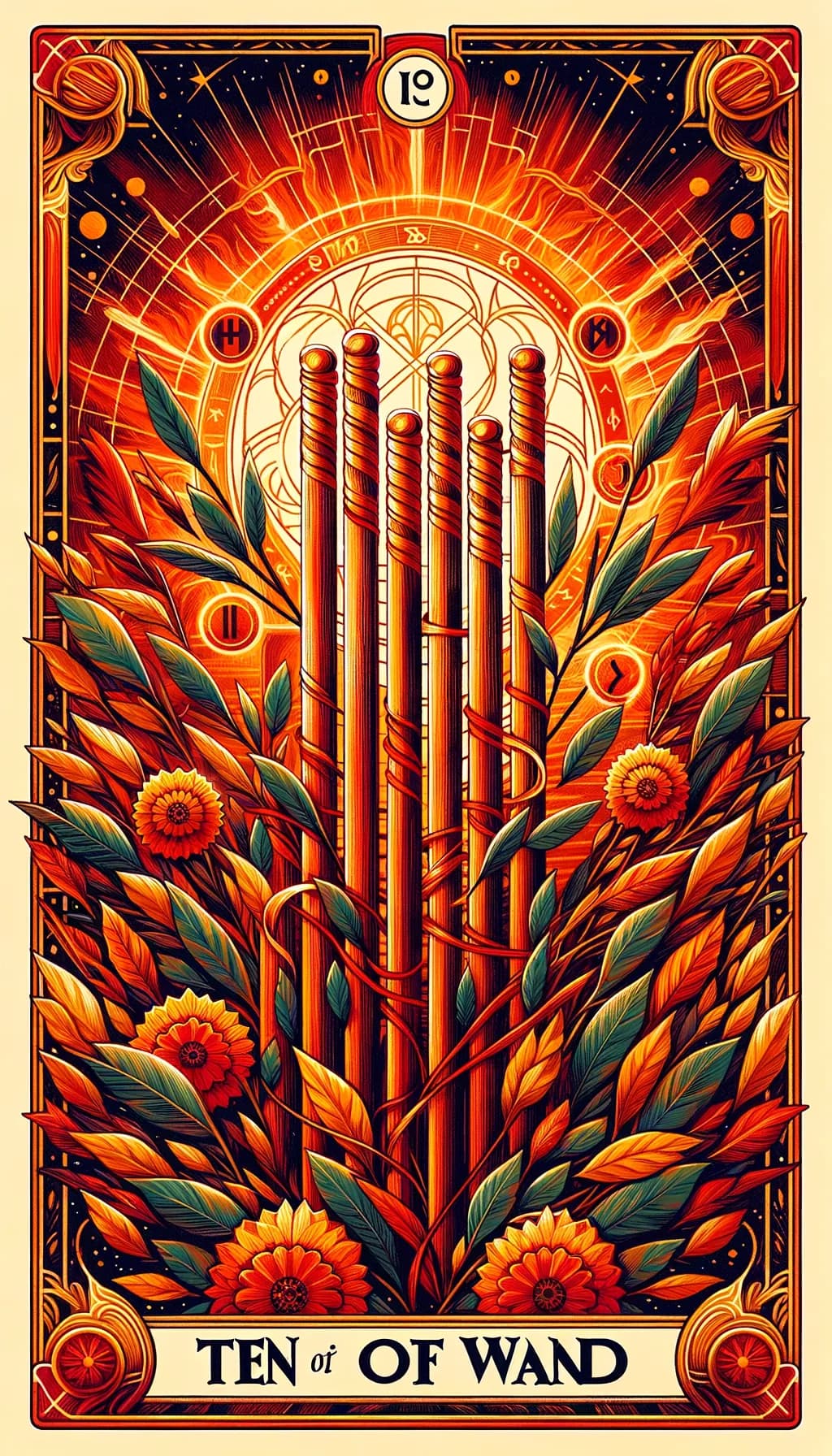
In the Rider-Waite-Smith deck, Pamela Colman Smith painted a figure hunched beneath ten heavy wands, their face completely hidden behind the bundle's mass as they trudge toward a distant cluster of houses. This is not the triumphant arrival of a hero — it is the exhausted final push of someone who gathered every stick along the journey and refused to leave any behind. Waite himself described this card as representing 'oppression' and a 'fortune which is not one's own,' hinting that much of what this figure carries may not truly belong to them. The ten wands are not bundled neatly; they splay outward at chaotic angles, suggesting responsibilities accumulated haphazardly rather than organized intentionally. Smith's genius lies in a devastating visual detail: the figure's arms wrap around the wands at chest height, meaning they chose to gather these burdens rather than having them placed upon their back. This self-imposed nature of the load is the card's central psychological insight. Numerologically, ten represents the completion and overflow of a cycle — fire energy pushed past its sustainable limit into a state where passion has calcified into obligation. The settlement in the distance sits on cultivated green land, confirming that this person's labor has produced real value. But the path remaining is still significant, and the wands obscure any clear view of the road ahead. The Ten of Wands speaks to anyone who has built something meaningful only to discover that maintaining it requires more than creating it ever did — the small business owner drowning in operations, the caregiver who never learned to accept help, the artist whose creative practice has become an administrative prison.
Symbolism & Imagery
ten wands splayed
The ten wands fan outward in disorganized angles rather than forming a neat bundle, revealing that these responsibilities were accumulated piecemeal over time — one project here, one obligation there — until the total became unmanageable. The chaotic arrangement also means the figure must grip harder to prevent any single wand from slipping, multiplying the effort required beyond what ten neatly organized duties would demand.
obscured face and path
Smith deliberately painted the wands blocking both the figure's face and their forward view. The face concealment strips the figure of individual identity — they have become their burden, indistinguishable from their workload. The blocked path ahead means they navigate by memory and habit rather than clear vision, a precise metaphor for how chronic overcommitment causes people to lose sight of why they started working so hard in the first place.
arms gripping at chest
The figure's arms wrap around the bundle at chest level, clasping the wands against their torso. This is crucial: the wands were not strapped to their back by someone else. This person actively gathered and holds onto every stick, indicating that the burden is largely self-chosen. The chest-level grip also compresses the heart center, symbolizing how overwork constricts emotional availability and capacity for joy.
distant settlement on green land
The houses visible beyond the path sit amid lush, cultivated green fields — evidence that this person's sustained effort has created genuine prosperity and stability in their environment. The settlement represents the tangible rewards of labor: a home, a community, financial security. Yet the remaining distance between the figure and this destination reveals that achievement alone does not end the burden; the final delivery is often the hardest stretch.
bent posture with forward motion
Despite being visibly bent and strained, the figure has not stopped walking. One foot is clearly ahead of the other, maintaining forward momentum through sheer willpower. This posture mirrors the physiological reality of chronic stress — the body adapts to strain by compensating with poor alignment, creating a feedback loop where the coping mechanism itself causes additional damage.
bare flat terrain
The ground between the figure and the settlement is bare and flat — no hills, no obstacles, no enemies. The only thing making this journey difficult is what the figure is carrying. Smith stripped the landscape of external challenges to emphasize that the struggle here is entirely internal and self-generated, a powerful visual argument that the solution lies in releasing, not in overcoming.
Ten of Wands Upright
The Ten of Wands upright confronts you with the consequences of accumulated yes's — every commitment you accepted, every task you volunteered for, every responsibility you absorbed because it seemed easier than explaining why someone else should handle it. This card frequently appears when you have crossed the invisible line between productive dedication and self-destructive overcommitment. Concrete scenarios include the project manager who cannot delegate because relinquishing control feels like admitting inadequacy, the eldest sibling who became the family's unofficial crisis counselor, or the freelancer juggling seven clients because turning down work triggers scarcity anxiety. The critical insight of this card is that your burden is largely self-imposed. Unlike the Nine of Wands, where external threats demand vigilance, the Ten shows a figure whose only adversary is their own inability to set limits. The settlement ahead confirms that your efforts have produced legitimate results — this is not wasted labor. But the card insists you examine the cost-benefit ratio honestly. You are approaching your destination, but you may arrive too depleted to enjoy what you have built. The fire element here has burned down to embers, producing more smoke than light. Strategic release of even two or three obligations could transform your remaining journey from a death march into a manageable walk.
Love & Relationships
In love readings, the Ten of Wands upright identifies relationships where one partner has become the load-bearing wall — handling emotional processing, logistics, conflict resolution, social planning, and household management while the other partner remains passively comfortable. This is not necessarily a toxic dynamic; it often develops gradually as one person's competence becomes the relationship's default operating system. The burdened partner stops asking for help because requesting it requires more energy than just doing the task themselves. If you are single, this card suggests you are so consumed by existing obligations that romance registers as yet another demand on your depleted reserves rather than a source of renewal. The card urges honest inventory: which relationship responsibilities are genuinely yours, and which have you absorbed because vulnerability feels less safe than exhaustion? Resentment is the predictable destination if the current distribution continues unchanged.
Career & Work
Professionally, the Ten of Wands appears when you have become institutionally indispensable in a way that traps rather than empowers you. This manifests as the employee who cannot take vacation because critical processes exist only in their head, the manager who reviews every team output because delegation feels like gambling with their reputation, or the entrepreneur who handles accounting, marketing, client relations, and operations personally because hiring help seems premature. The card reveals that your professional identity has fused with your productivity — you unconsciously believe that reducing output means reducing your worth. This is unsustainable. The card specifically warns against confusing busyness with effectiveness; the most impactful professionals are often those who ruthlessly protect their focus rather than those who absorb every available task.
Finances
The Ten of Wands financially indicates that managing money has become another source of overwhelm — perhaps you are juggling multiple debt payments, supporting dependents, managing complex investment portfolios without professional help, or maintaining financial obligations that made sense individually but collectively crush your budget. The card suggests that financial simplification is not laziness but wisdom. Consolidating accounts, automating recurring payments, hiring a financial advisor for complex situations, or honestly reassessing which financial commitments you can sustainably maintain would restore your sense of agency over money rather than feeling enslaved by it.
Health
The Ten of Wands is one of the tarot's most direct burnout indicators. The hunched figure mirrors the literal postural effects of chronic stress: tension headaches, cervical and lumbar pain, tight shoulders, jaw clenching, and the immune suppression that accompanies sustained cortisol elevation. This card does not predict illness so much as describe the physiological reality of your current pace. Pay particular attention to adrenal fatigue symptoms — persistent exhaustion unrelieved by sleep, difficulty concentrating, and reliance on caffeine or sugar to function. Your body is communicating through symptoms what your mind refuses to acknowledge through reason.
Ten of Wands Reversed
The Ten of Wands reversed describes the moment when the unsustainable finally breaks — and this breaking can manifest constructively or destructively depending on whether it happens by choice or by collapse. In its most empowering expression, this reversal represents the deliberate act of setting down burdens: resigning from the committee, telling your family you cannot host this year, hiring an assistant, or simply acknowledging aloud that you cannot do everything. This conscious unburdening feels terrifying because it disrupts an identity built on being capable and available, but it creates immediate relief and long-term sustainability. In its more difficult expression, the reversed Ten of Wands indicates that the weight has already fallen — dropped responsibilities, missed deadlines, broken commitments, or physical collapse that forces rest your conscious mind would never have permitted. Some readers encounter this reversal as passive resistance: the person who stops shouldering everything but does so through withdrawal, resentment, or passive aggression rather than honest communication. There is also a shadow meaning here involving the refusal of appropriate responsibility — swinging from martyrdom to avoidance, dropping essential duties alongside unnecessary ones because distinguishing between them requires energy you no longer have. The key question with this reversal is whether the release is strategic or chaotic, chosen or forced.
Love & Relationships
In love readings, the reversed Ten of Wands often signals the critical conversation where the overburdened partner finally names the imbalance. This can be a breakthrough moment — the beginning of genuine redistribution and renewed partnership — or the beginning of the end, if the other partner responds with defensiveness or indifference. For some, this reversal indicates emotional withdrawal: you have stopped trying to carry the relationship because you are simply too depleted, leading to a period of detachment that may alarm your partner into action or confirm that the dynamic cannot change. If single, this card reversed suggests you are actively creating space in your life for connection, shedding obligations that previously consumed all relational bandwidth.
Career & Work
Professionally reversed, the Ten of Wands often appears during active transitions away from unsustainable work situations — handing in notice at a crushing job, successfully training a replacement, or restructuring a role to match realistic capacity. This reversal can also indicate the aftermath of workplace burnout: forced leave, reduced hours, or the humbling recognition that perfectionism was never a professional asset but a personal compulsion wearing a productive disguise. The card encourages examining which professional burdens you dropped and whether you released the right ones or simply the ones that fell first.
Finances
Financially, this reversal suggests simplifying your money management approach or successfully delegating financial responsibilities. You might be consolidating accounts, automating payments, or hiring professionals to handle complex financial matters. The card indicates relief from financial overwhelm through better organization and boundary-setting around money-related responsibilities. However, ensure you're not avoiding necessary financial planning in your desire to reduce burden.
Health
Health-wise, the reversed Ten of Wands indicates recovery from burnout through conscious lifestyle changes and better boundary-setting. You're likely reducing stress through delegation, saying no to non-essential commitments, and prioritizing rest and self-care. This card suggests you're learning that taking care of yourself isn't selfish but necessary for sustained well-being. Physical tension and stress-related symptoms should begin improving as you release unnecessary pressures.
Ten of Wands: Yes or No?
The outcome you desire is achievable, but the Ten of Wands warns that the cost in personal energy, time, and well-being will be substantial. Before committing, honestly assess whether you can sustain the effort required without sacrificing your health or relationships. This card says 'yes, but at what price?' If the question involves taking on additional responsibility, the answer leans toward no — you are already carrying enough.
Ten of Wands Combinations
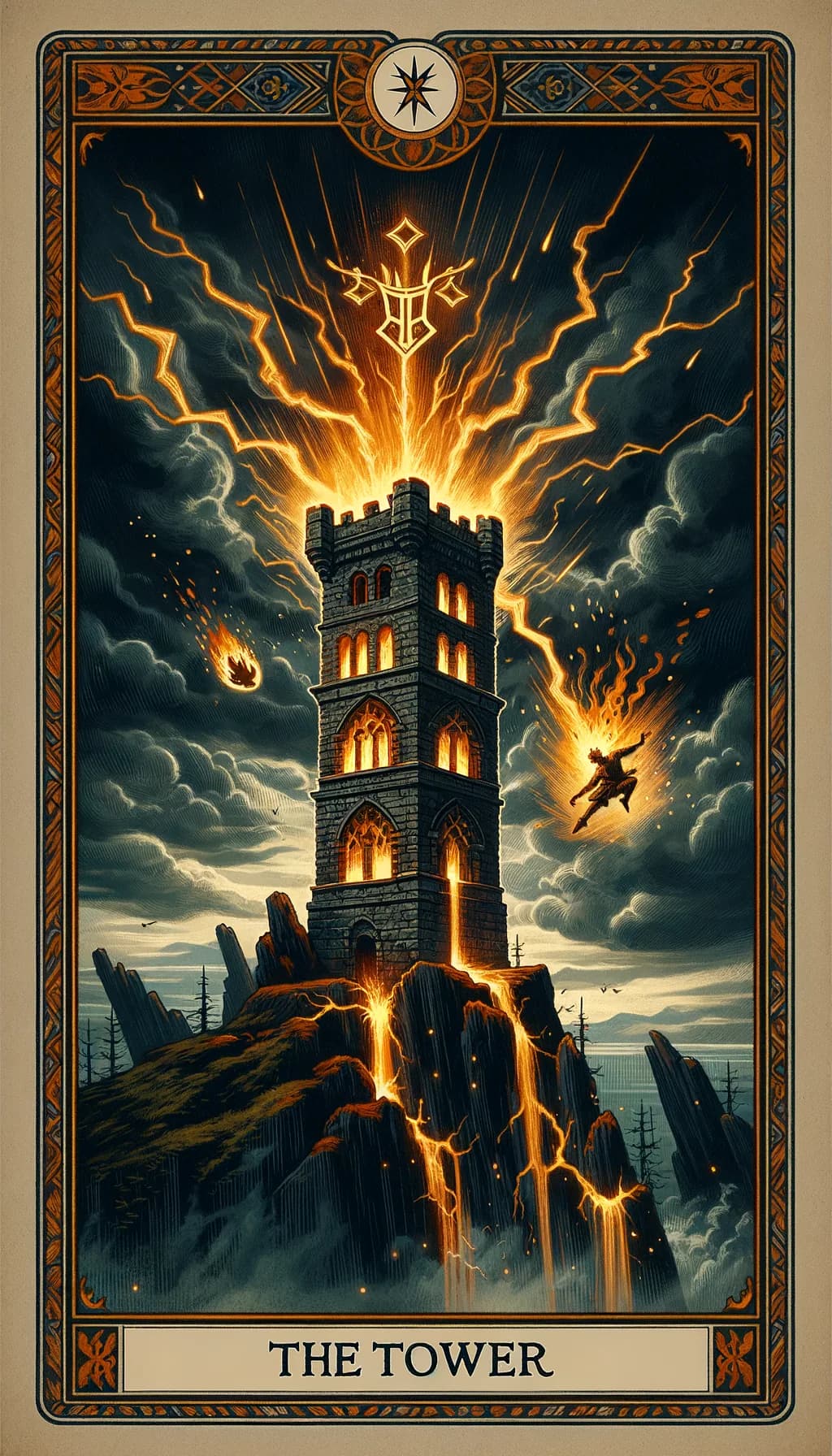
A forced dismantling of the unsustainable structure you have built. The burdens you refuse to release voluntarily will be stripped away by sudden, disruptive events — job loss, health crisis, or relationship rupture. This combination warns that voluntary simplification now prevents involuntary destruction later. The Tower's lightning strikes the tower of obligations you've erected.
Read full combination →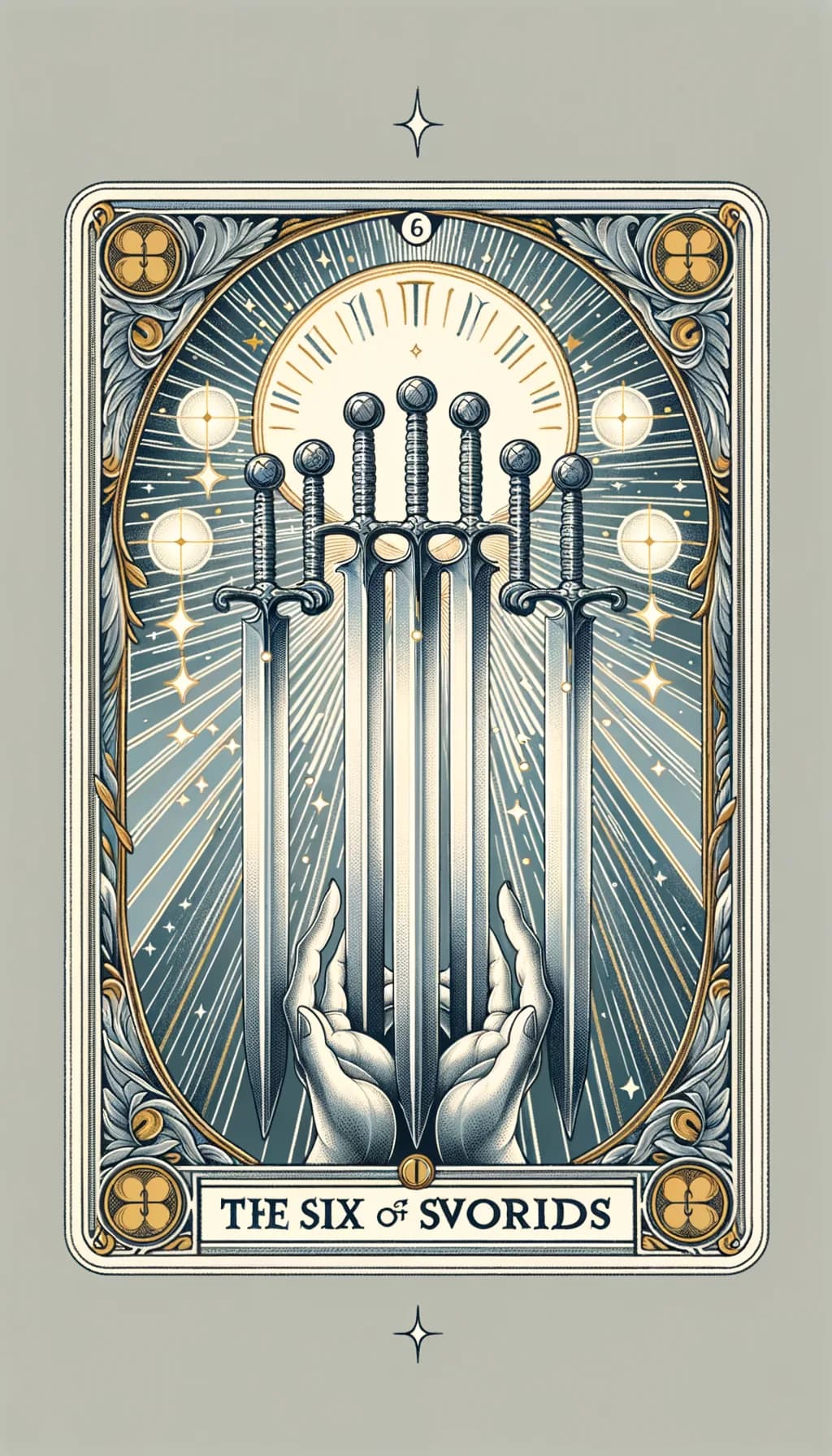
You are transitioning away from an overburdened situation toward calmer conditions, carrying only what is essential for the journey forward. This combination suggests a deliberate geographical or situational move — changing jobs, relocating, ending a draining commitment — that immediately reduces your burden. The intellectual clarity of Swords helps you choose wisely what to bring and what to leave behind.
Read full combination →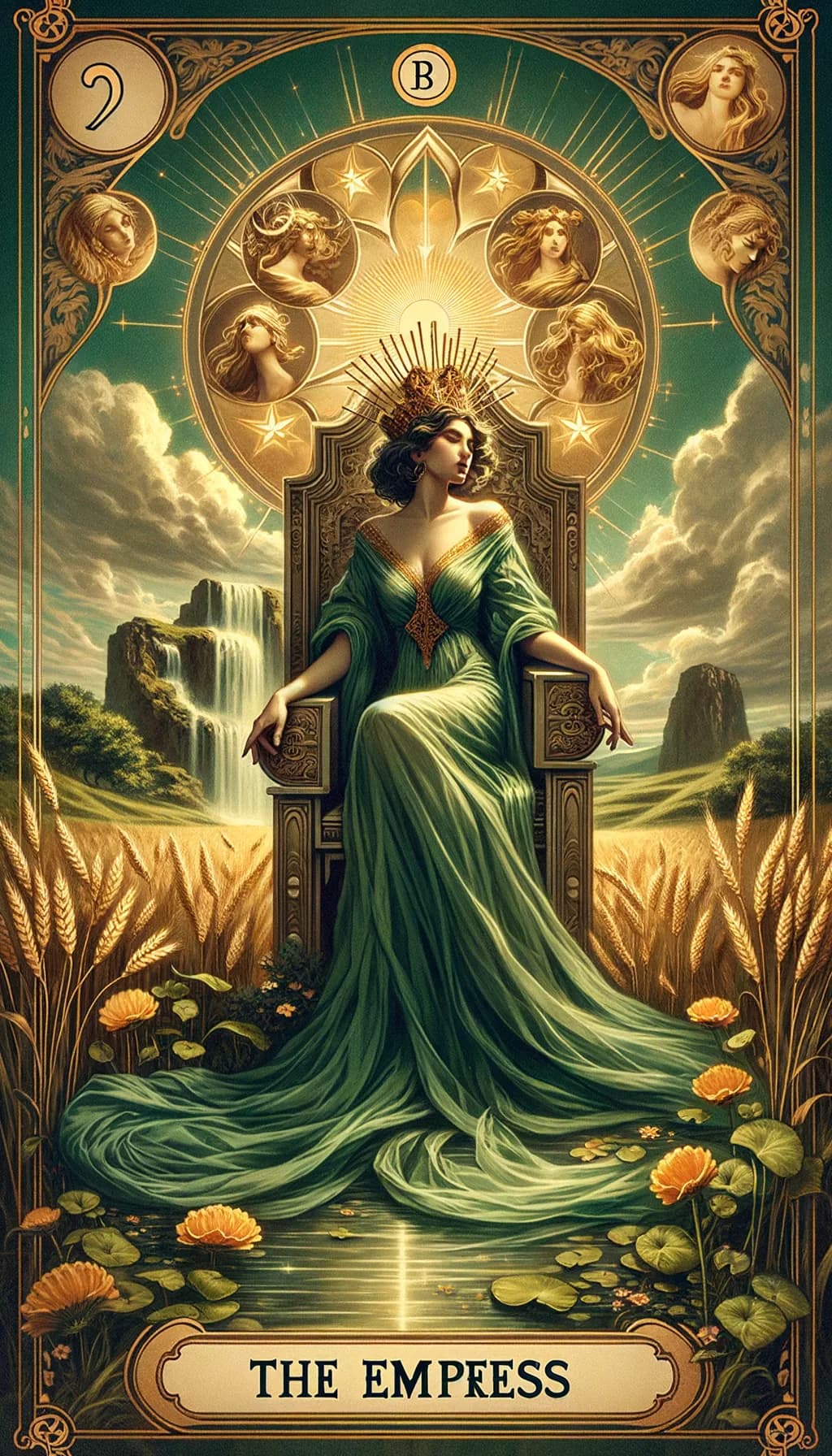
Your overwork is starving the nurturing, creative, and receptive aspects of your life. The Empress alongside the Ten of Wands specifically warns that productivity has overtaken fertility — you are producing output but not creating anything that nourishes you. This combination calls for reconnection with pleasure, beauty, nature, and the body's wisdom about sustainable rhythms.
Read full combination →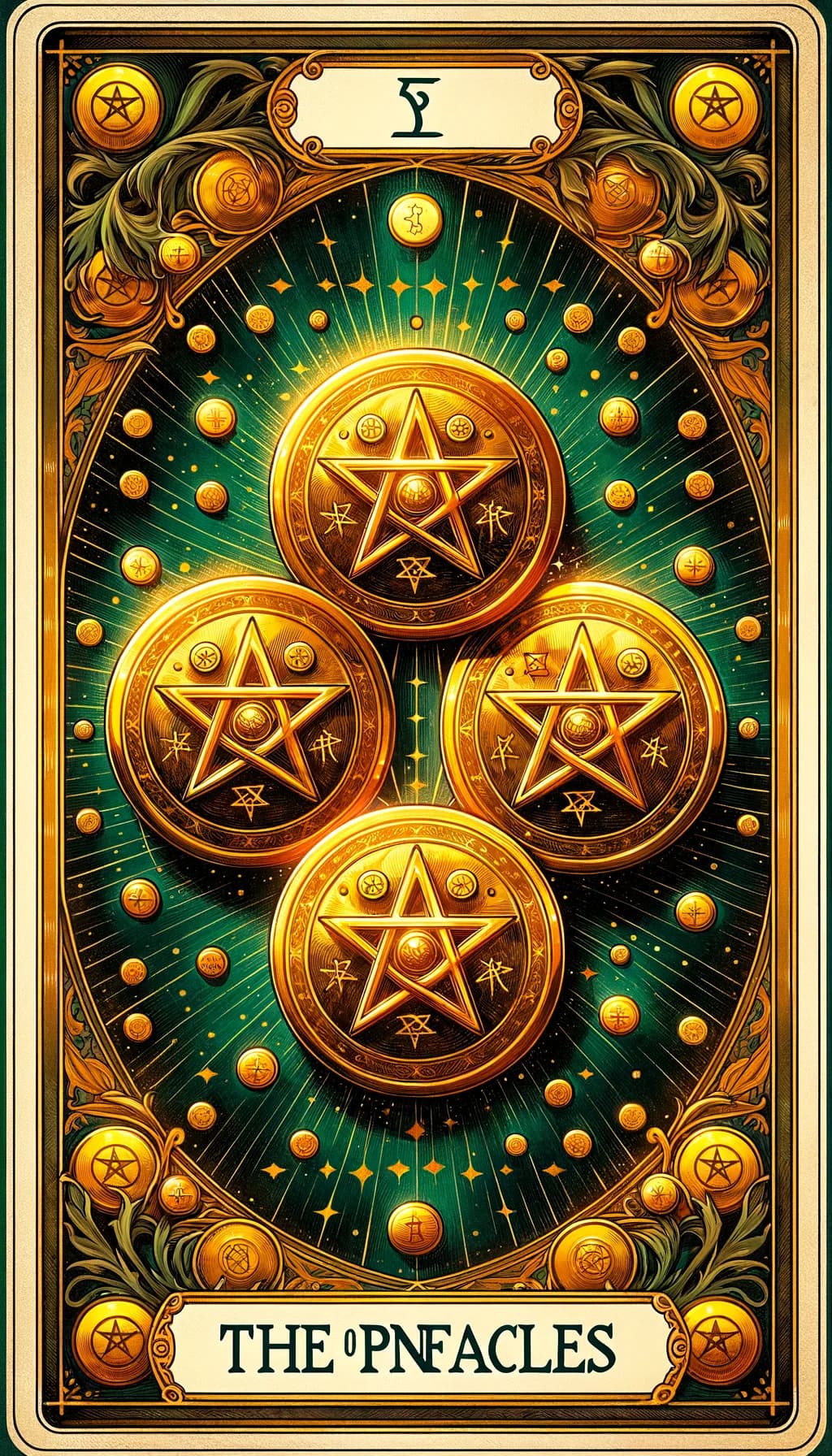
The solution to your burden is collaborative effort and skilled delegation. The Three of Pentacles reveals that capable people are available and willing to share the workload — you simply have not asked or have not trusted their competence. This pairing often appears when team restructuring or apprenticeship arrangements would dramatically reduce your personal load.
Read full combination →
A new creative spark is trying to ignite, but your hands are too full of old commitments to receive it. This pairing creates urgent tension: the inspiration represented by the Ace cannot take root while you are consumed by the accumulated obligations of the Ten. Something must be released before something new can begin. The cycle demands completion before renewal.
Read full combination →Journal Prompts for Ten of Wands
List every responsibility you currently carry, then mark each one honestly: is this something only I can do, something I chose because asking for help feels vulnerable, or something I absorbed by default because no one else stepped up?
When did you first learn that your value was tied to your usefulness — and how does that early lesson show up in your current pattern of overcommitment?
If you could set down three obligations tomorrow without any negative consequences, which three would you choose, and what does that choice reveal about where resentment has been quietly building?
Reading Insights for Ten of Wands
Card Advice
When the Ten of Wands appears in a spread, immediately examine the surrounding cards for clues about which specific burdens the querent is carrying and whether the situation is self-imposed or externally mandated. In past position, it reveals that current circumstances grew from a period of chronic overcommitment. In present position, it demands practical action: ask the querent to name, specifically, the three heaviest responsibilities they are currently carrying, then identify which of those three they chose versus which were imposed. In future position, it serves as a preventive warning — current trajectory leads to burnout, and course correction is still possible. Pay close attention to whether the querent's language includes phrases like 'I have to' versus 'I choose to,' as this distinction reveals their relationship with their burden. Cards appearing after the Ten of Wands in a spread often indicate what becomes possible once the load is lightened. The card reads very differently beside Pentacles (material overcommitment) versus Cups (emotional overcommitment) versus Swords (mental overcommitment).
As an Outcome
As an outcome, the Ten of Wands suggests success achieved through significant effort and sacrifice. While you'll reach your goal, consider whether the cost was worth it and plan more sustainable approaches for future endeavors. The completion you seek will arrive, but it will demand every ounce of your remaining reserves to cross the finish line. Use the wisdom gained from this experience to restructure your relationship with responsibility going forward, ensuring that future ambitions include a realistic plan for distributing the inevitable weight of success.
Ten of Wands as a Person
The Ten of Wands personality is the indomitable workhorse—someone whose capacity for sustained effort borders on legendary but whose inability to set boundaries transforms their greatest strength into their most dangerous vulnerability. These individuals are the pillars of their families, organizations, and communities, the ones everyone relies upon precisely because they never say no and never drop a ball. Their sense of duty is profound, often rooted in early experiences that taught them their worth was measured by their usefulness. They are extraordinarily dependable and frequently heroic in their willingness to sacrifice personal comfort for collective benefit. Their essential growth challenge is learning that asking for help is not weakness, that delegation is not abandonment, and that their intrinsic value exists independently of their productivity.
Draw Ten of Wands in Your Reading
Ready to see how Ten of Wands appears in context? Get a personalized AI-powered tarot reading now.